Triple-Stack Dwarf Containers: Indian Railways Tests 50% Capacity Boost
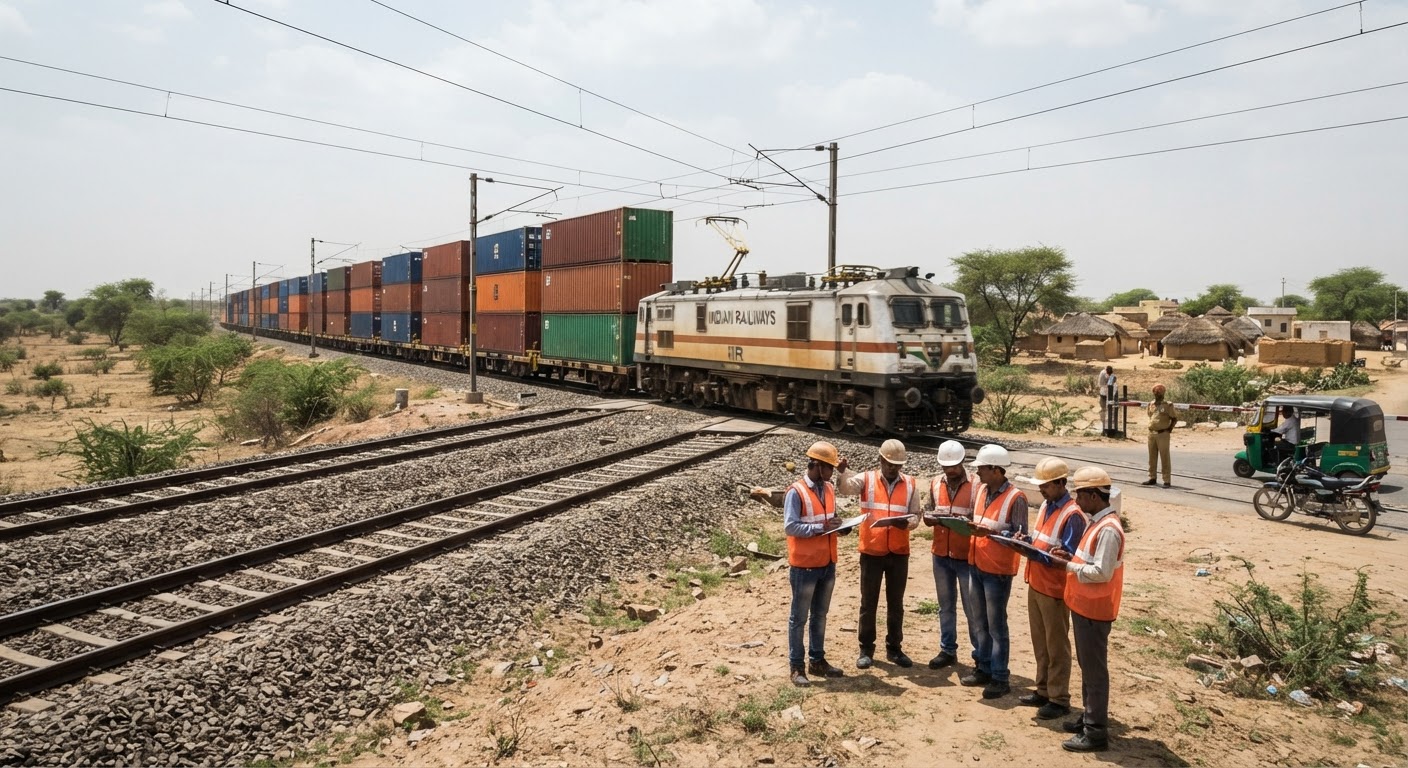
Indian Railways is pushing the boundaries of freight logistics with the successful trial of triple-stack dwarf container trains. This innovative initiative is designed to drastically enhance freight capacity, with projections indicating that the amount of goods transported per journey could increase by 50%.
Successful Trial: Pitampur to JNPT
The technical trials were largely facilitated through the Western Dedicated Freight Corridor (WDFC). A major milestone was achieved during a successful run spanning 1,114 kilometers, traveling from Pitampur, Madhya Pradesh, to the Jawaharlal Nehru Port Trust (JNPT). During this operation, the train successfully moved:
- 206 containers
- A total weight of approximately 4,500 tons
The Advantage of Dwarf Containers
While standard ISO containers are restricted by their height, dwarf containers are engineered with a reduced profile. This allows for a triple-stack configuration that reaches a height of approximately 18 feet. Because this exceeds the standard 15-foot height of Overhead Equipment (OHE) lines, the project involves necessary infrastructure modifications.
The efficiency gains of these specialized containers are significant:
- Volume Efficiency: Dwarf containers provide 67% more volume in double-stack configurations compared to traditional ISO containers.
- Load Capacity: Two dwarf containers can carry 71 tons, significantly outperforming the 40-ton capacity of standard units.
Economic Impact and Operational Efficiency
By enabling a single train to handle the workload of three, this shift is expected to reduce manpower requirements and ease traffic congestion. The financial benefits are equally substantial, with the following projections:
- Approximately 17% savings in haulage costs.
- A potential revenue increase of 40% to 50%.
This strategic move highlights a broader effort to modernize India's logistics network by maximizing infrastructure utilization and increasing electrification.