Udaipur-Jodhpur Rail Trip to Shrink from 7 to 4 Hours
The Mavli-Marwar broad-gauge conversion will cut Udaipur-Jodhpur travel time from 7 to 4 hours, boosting tourism and trade.
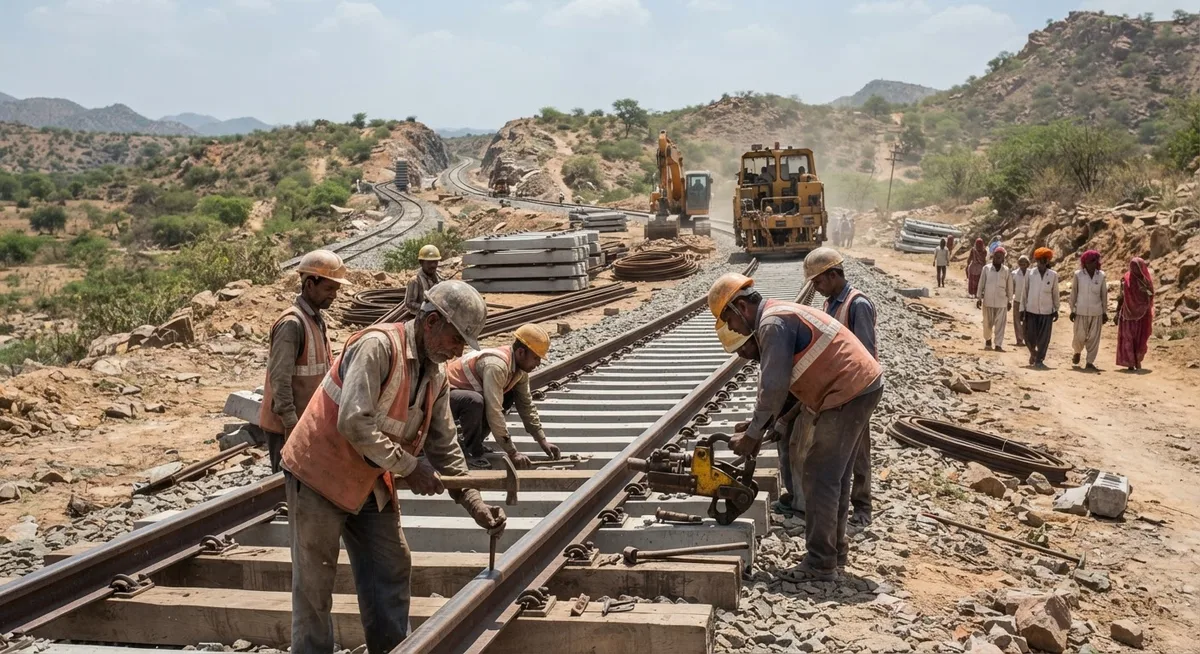
The Mavli–Marwar railway corridor is undergoing a massive transformation that is set to change how people travel between Udaipur and Jodhpur. Through an ongoing broad-gauge conversion project, Indian Railways aims to slash the travel distance by approximately 250 kilometers. This significant shift will effectively reduce the transit time between these two major cities from the current seven hours to just four hours.
Two-Phase Project Transformation
The infrastructure development is being executed in two primary stages to modernize the existing metre-gauge track:
- Phase 1: This covers an 82-to-85 kilometer stretch from Nathdwara to Devgarh Madariya. This phase is already over 95 percent complete, and successful speed trials have been conducted at 121 kmph.
- Phase 2: This involves the 72-to-75 kilometer section from Devgarh Madariya to Marwar Junction. The Railway Ministry has already granted approval for a final location survey for this section.
Funding for Survey Progress
To ensure the project maintains its momentum, Railway Minister Ashwini Vaishnaw has previously allocated ₹12 crore specifically to facilitate the survey process for the second phase. This funding is intended to accelerate the transition toward full operational status.
A Major Boost for Tourism and Trade
Once the revamped line is fully operational, it is expected to provide a significant economic boost to the region. The improved Udaipur Jodhpur rail connectivity will enhance freight movement and trade, while also providing direct rail access to world-famous landmarks, including:
- The historic Kumbhalgarh Fort
- The Todgarh Wildlife Sanctuary
Current Travel Challenges
At present, direct rail travel between these two regions remains limited. Passengers are often forced to use indirect routes, which can extend journey times to eight or even ten hours. The North Western Railway is currently overseeing the development, supported by the Mewar Rail Vikas Parishad, which has been working closely with the Railway Ministry to ensure the project advances smoothly.