Vande Bharat Brake Failure: SER Probes Dangerous 463km Journey
South Eastern Railway investigates how an empty Vande Bharat rake traveled 463km with faulty brakes despite warnings from loco pilots.
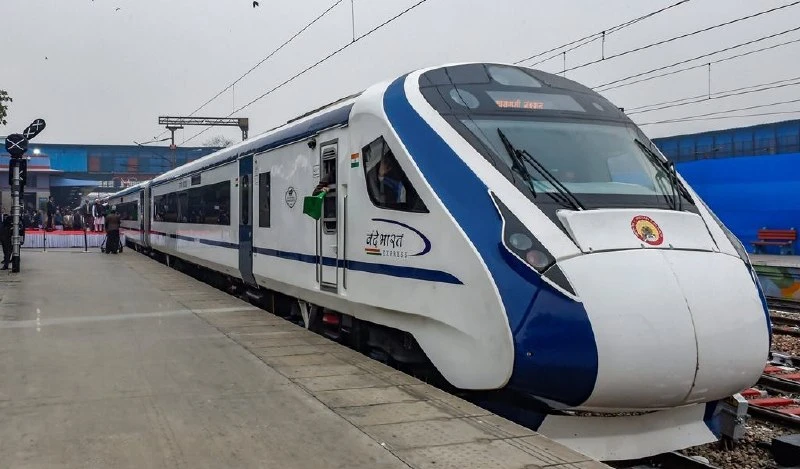
A major safety lapse has come to light as the South Eastern Railway (SER) launches an official investigation into a terrifying journey involving an empty Vande Bharat rake. The train reportedly traveled 463 kilometers with a Vande Bharat brake failure, raising serious questions about railway safety protocols and operational negligence.
The Incident: 463 Kilometers Without Coach Brakes
On October 24, 2026, an empty Vande Bharat chair car rake was being transported from Hatia, Jharkhand, to Jhansi, Uttar Pradesh. The rake was being pulled by a freight locomotive rather than a passenger engine. During the journey, it was discovered that the braking systems on the coaches were essentially non-functional.
An inspection conducted at Deen Dayal Upadhyaya (DDU) station in the Chandauli district of Uttar Pradesh revealed that the braking systems on all the Vande Bharat coaches had been isolated. This meant that for the entire 463-kilometer stretch, the train was relying solely on the freight locomotive's brakes and regenerative braking to stop, leaving almost no margin for error in an emergency.
Warnings Ignored by Controllers
The most alarming aspect of this incident is that the technical failure was identified almost immediately, yet the train was cleared to continue its journey. The sequence of events highlights a significant breakdown in communication:
- Departure from Hatia: The initial loco pilot conducted a mandatory brake feel and power test and immediately reported that the brake power was ineffective.
- Formal Complaint Filed: Despite the pilot filing a formal written complaint with the section controller and the traction loco controller at Ranchi, the train was permitted to proceed.
- Second Warning at Muri: A second loco pilot, who took over the engine at Muri station, also reported that the brakes failed to respond to reductions in brake pipe pressure.
The decision by controllers to ignore repeated warnings from train crews represents a severe breakdown in safety protocols.
Investigation and Systemic Negligence
Following the discovery at DDU station, the South Eastern Railway issued an order on November 7, 2026, tasking the Divisional Railway Manager (DRM) of Ranchi with a detailed probe to fix responsibility for the lapse.
Key Findings of the Preliminary Probe:
- C&W Staff Negligence: Coach and Wagon (C&W) staff failed to conduct a mandatory physical brake check before the train's departure.
- Controller Failure: Railway controllers ignored direct warnings from the loco pilots, allowing the train to move despite known issues.
- Technical Unfamiliarity: Authorities noted that the crew's lack of familiarity with the integration of Vande Bharat's braking systems also contributed to the error.
The South Eastern Railway has emphasized that operating any train without adequate brake power is a severe safety violation that risks major accidents and threatens the integrity of railway operations.