Vande Bharat Safety Scare: 463km Journey with No Coach Brakes!
South Eastern Railway investigates a Vande Bharat rake that traveled 463 km with isolated brakes, ignoring multiple warnings from loco pilots.
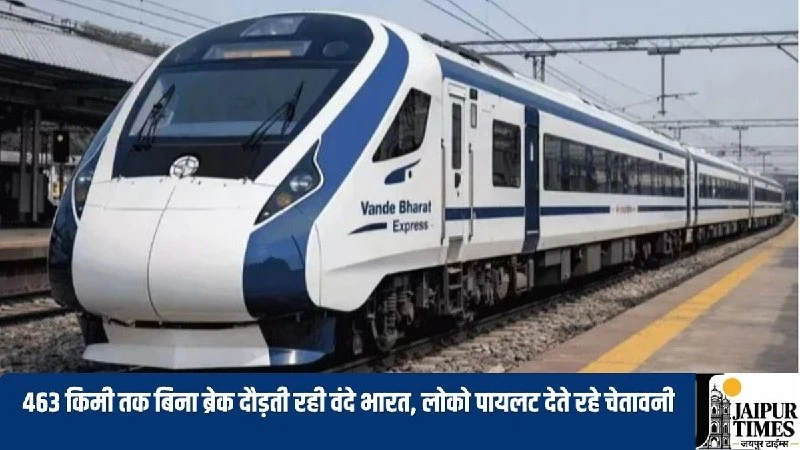
A massive safety lapse has sent shockwaves through the South Eastern Railway (SER) after a Vande Bharat rake was found to have traveled hundreds of kilometers without functioning coach brakes. The incident has triggered a high-level investigation into what officials are describing as a grave violation of safety protocols.
The Dangerous Journey from Hatia to Jhansi
The incident occurred on October 24, while an empty Vande Bharat chair car rake was being transported from Hatia, Jharkhand, to Jhansi, Uttar Pradesh. The rake was being moved under the power of a freight locomotive.
Upon the train's arrival at Deen Dayal Upadhyaya (DDU) station in Chandauli, Uttar Pradesh, a technical inspection revealed a chilling reality: the braking systems on all Vande Bharat coaches had been isolated. This meant the entire train was forced to rely solely on the locomotive's independent and regenerative brakes for its entire 463-kilometer journey.
Warnings Ignored by Railway Authorities
What makes this incident particularly alarming is that the crew raised multiple red flags during the transit, yet the train was permitted to continue its journey.
- Initial Alarm: After departing Hatia, the loco pilot performed a mandatory brake feel and power test. The pilot reported the braking performance as "very poor and ineffective" and immediately filed a written complaint at Ranchi station.
- Second Warning: As the train passed Muri station, a second loco pilot alerted controllers that brake pipe pressure drops were failing to engage the coach brakes.
Despite these repeated and urgent warnings from the pilots, the train was not halted, allowing the defective rake to proceed toward its destination.
A Systemic Failure of Protocol
The SER has issued an official order on November 7, tasking the Divisional Railway Manager (DRM) of Ranchi to conduct a thorough probe to identify those responsible for this negligence. A preliminary inquiry has pointed toward multiple failures in protocol:
- C&W Negligence: Carriage and Wagon (C&W) staff allegedly neglected to verify the braking status of the rake before its departure.
- Controller Oversight: Section and traction controllers reportedly ignored the warnings submitted by the crew during the transit.
- Crew Familiarity: The train crew has also been faulted for failing to manually verify the application of brakes on the coaches, potentially due to a lack of familiarity with the specific Vande Bharat braking architecture.
The SER has characterized the incident as a grave safety violation, warning that operating any train without adequate brake power could lead to major accidents, endangering both personnel and overall railway operations.
This incident comes in the wake of a similar safety lapse reported during the November 11 derailment of the Kolkata-Sairang Express in Assam, raising serious concerns regarding technical oversight in modern rolling stock operations.