Indian Railways transports a live human heart for the first time on Vande Bharat Express
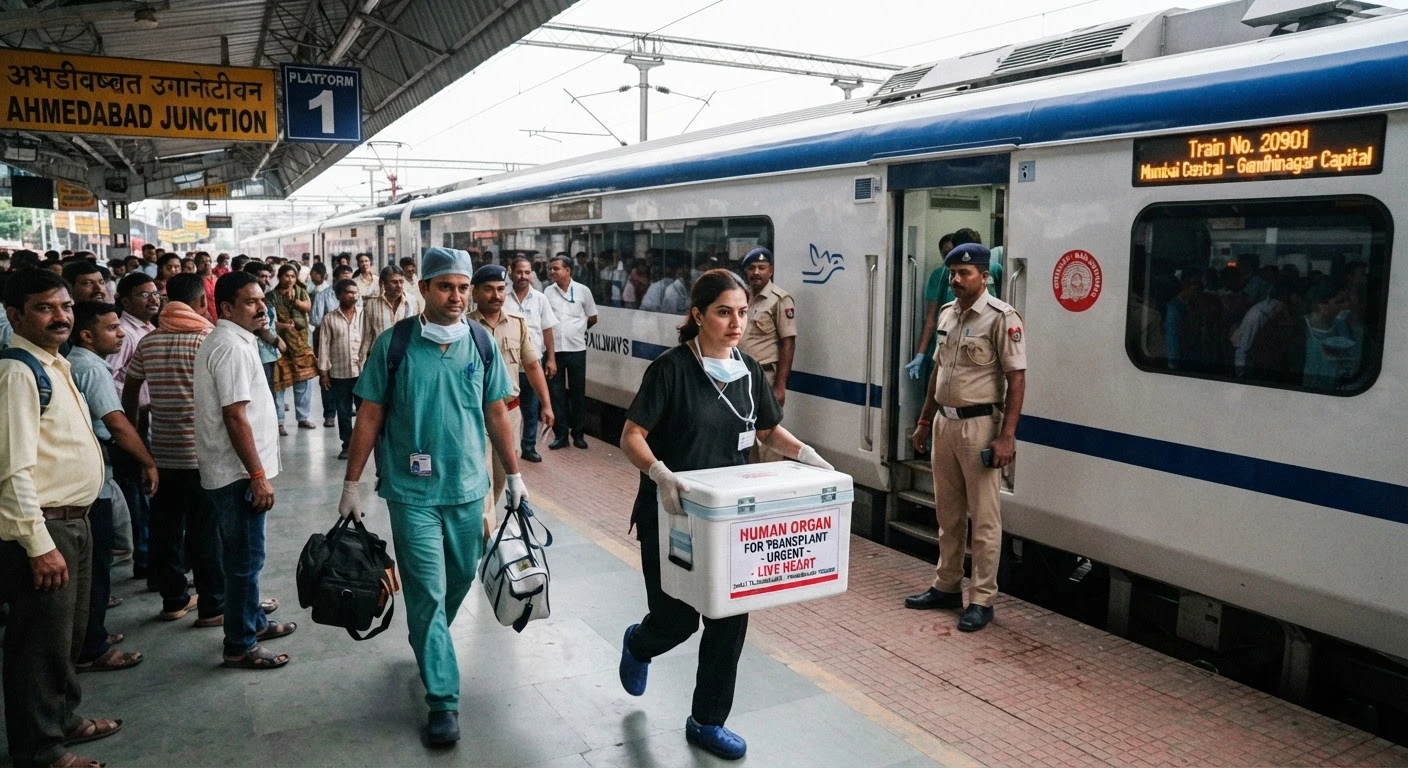
In a landmark achievement for Indian medical logistics, the Indian Railways successfully transported a live human heart via the Vande Bharat Express on July 31, 2026. This mission, executed aboard the Mumbai Central–Gandhinagar Capital Vande Bharat Express (Train No. 20901), proved to be a vital lifeline for a patient awaiting a transplant at the U.N. Mehta Institute of Cardiology & Research Centre in Ahmedabad.
Key highlights of this mission include:
- The organ was harvested from a 36-year-old donor in Surat and reached Ahmedabad in approximately 3 hours and 45 minutes.
- The heart was picked up at 9:18 AM and reached the hospital by 12:55 PM.
- Heavy rainfall in South Gujarat necessitated this rail-based solution after flight services were disrupted.
- A dedicated Green Corridor was established by the RPF and Gujarat State Police to ensure rapid transit from the station to the hospital.
A Critical Lifeline During Monsoon Disruptions
When time is of the essence, organ transportation requires absolute precision. With severe weather conditions grounding air transport in South Gujarat, the Vande Bharat Express emerged as the most reliable and efficient mode of transport. By choosing the high-speed rail network, medical teams were able to keep the heart within its critical viability window, ensuring the successful transplant operation at the U.N. Mehta Institute.
Strategic Coordination and Future Potential
The success of this mission was the result of seamless collaboration between the Indian Railways, the Railway Protection Force (RPF), the Gujarat State Police, and various medical teams. Ahmedabad Divisional Railway Manager (DRM) Ved Prakash praised the team for their flawless execution, while Chief Minister Bhupendra Patel highlighted the effort as a unique example of public service.
This mission marks a significant shift in how India’s railway infrastructure can be utilized for emergency healthcare. By leveraging the speed and punctuality of the Vande Bharat fleet, railway authorities have opened a new chapter in medical logistics, proving that the network is capable of supporting life-saving missions even under challenging circumstances. Officials are now hopeful that this model will be adopted more frequently, potentially saving more lives by bridging the gap between donors and recipients across the country.