Western Dedicated Freight Corridor achieves full operation across 1506 km
Kush Singh17 September 20262 min read11 viewsDevelopment
Western Dedicated Freight Corridor achieves full operation across 1506 km

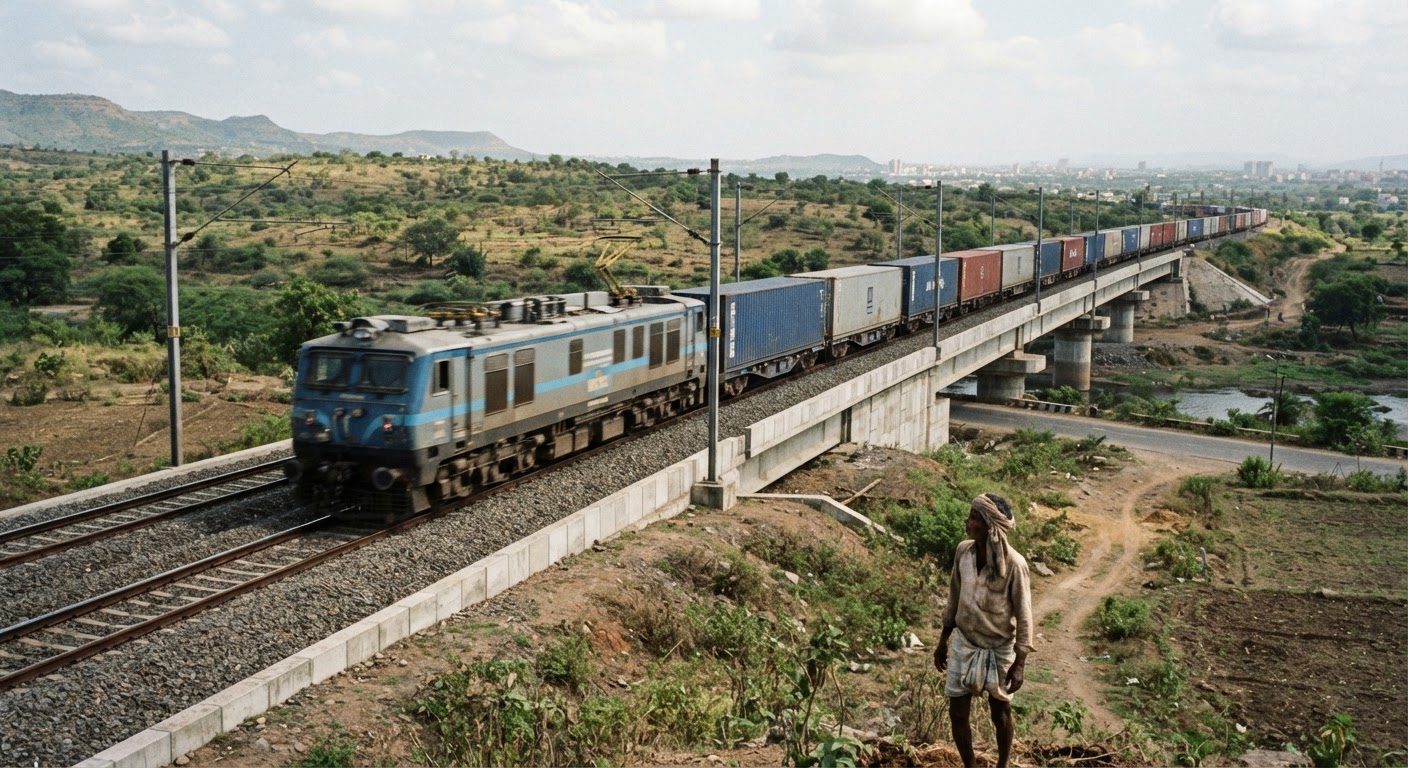
The Western Dedicated Freight Corridor is now fully operational with its expansive route spanning 1506 km from Dadri to the area near Mumbai. This achievement establishes a comprehensive freight network reaching 2843 km in total length, significantly altering the national logistics landscape. Freight travel time is now cut in half across these critical transit lines and logistics costs are expected to drop by nearly eight per cent of GDP following this infrastructure expansion as confirmed by official reports regarding the corridor development. Prime Minister Narendra Modi inaugurated the final three sections of the Western Dedicated Freight Corridor on September 8 2026 covering 326 kilometers of track with a project cost exceeding ₹20700 crore. Prime Minister Modi noted that the freight corridors are becoming the backbone of national trade moving goods trains onto separate tracks to generate massive savings in fuel and time while Railway Minister Ashwini Vaishnaw emphasised that physical construction work gathered significant pace after 2014 marking the successful conclusion of a complex two-decade infrastructure effort.

Corridor Performance and Future Expansion

The Western Dedicated Freight Corridor set a new record by interchanging 431 trains in a single day on September 11 2026 surpassing the previous high of 419 trains recorded on August 30 2026 according to the Dedicated Freight Corridor Corporation of India Limited or DFCCIL. Average freight train speeds on these dedicated routes now exceed 50 kmph which is roughly twice that of the conventional rail network while the system currently handles between 426 and 443 freight trains every single day across the network. The 2026 Union Budget outlined plans for a new 2052 km East West greenfield corridor connecting Dankuni and Surat with DFCCIL currently assigned to prepare the detailed project report for this expansion aiming to link eastern industrial hubs with western ports. Unlocking the full economic potential requires focused efforts on terminal operations and improving feeder connectivity to reduce last-mile logistics bottlenecks. Direct rail connections to ports like JNPT, Pipavav, Mundra, and Kandla will make goods movement more predictable, boosting the evacuation capacity of JNPT to 100 freight trains daily and assisting India in competing with major global economies.

HelloRail की हर खबर सबसे पहलेJoin Channel
Share:

Comments

Leave a comment