

























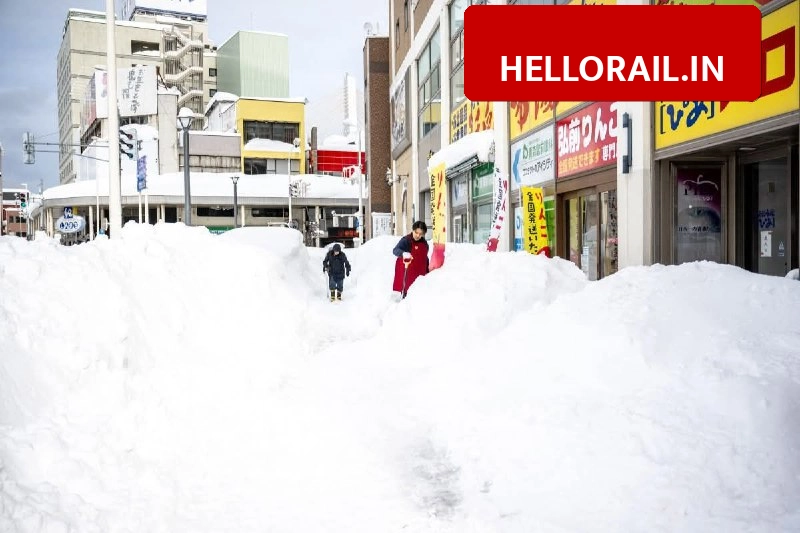

Japan is currently facing a severe winter crisis as record-breaking snowfall has claimed the lives of at least 30 people over the last two weeks. The heavy snow began around January 20 and conditions worsened significantly by early February. Authorities have confirmed that the death toll rose quickly from just 10 reports in late January to 30 confirmed fatalities by February 2, 2026. Along with the loss of life, hundreds of people have been injured during snow removal activities.
How has public transport been affected?
The transportation network has taken a massive hit due to the extreme weather conditions. Over a period of three days starting January 25, railway operators had to suspend more than 1,400 train services. This disruption affected roughly 414,000 passengers across the region. Additionally, air travel faced major delays, leaving about 9,000 travelers stranded at New Chitose Airport during the peak of the storm due to flight cancellations and lack of train connectivity.
Which areas are suffering the most?
Niigata Prefecture has recorded the highest number of casualties with 12 confirmed deaths. Akita Prefecture follows with 6 deaths, while Aomori and Hokkaido have reported 4 and 3 fatalities respectively. In total, injuries have been reported in 12 different prefectures, with at least 324 people hurt. Aomori Prefecture saw a record 183 centimeters of snow in just one day, which is nearly three times the average amount usually seen at this time of year.
What is the government doing to help?
Prime Minister Sanae Takaichi held a special cabinet meeting on February 2 to manage the disaster response. Recognizing the severity of the situation, the central government has deployed troops to northern regions to help clear massive snow drifts. Aomori Prefecture officially requested help from the Ground Self-Defense Forces for the first time since 2005 to assist with snow removal and prevent buildings from collapsing under the heavy weight of the accumulated snow.