











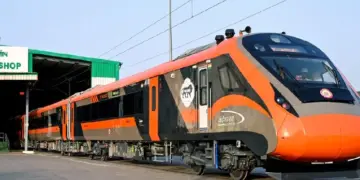

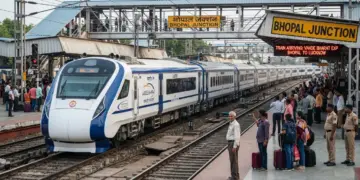
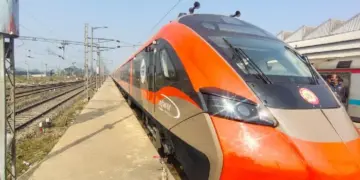




Union Railway Minister Ashwini Vaishnav announced a new Bullet Train project connecting Delhi to Siliguri during his visit to Kolkata on June 6, 2026. This high-speed corridor will connect four major states including Delhi, Uttar Pradesh, Bihar, and West Bengal. The project aims to drastically reduce travel time between the national capital and North Bengal.
What is the route and travel time of the new Bullet Train
The high-speed rail will run from Delhi to Siliguri via Lucknow, Varanasi, and Patna. The journey, which currently takes around 20 hours, will be completed in just 6 hours. The project will be split into two main corridors: Delhi-Varanasi and Varanasi-Siliguri. The trains are designed to run at speeds between 300 to 350 km/h.
Key details of the Delhi-Siliguri corridor
| Feature | Details |
|---|---|
| Estimated Cost | Over 1.5 Lakh Crore Rupees |
| Implementing Agency | NHSRCL |
| Major Stations | New Delhi, Noida (Jewar Airport), Mathura, Agra, Etawah, Lucknow, Prayagraj, Varanasi, Ghazipur, Patna, Siliguri (NJP) |
| Current Status | Initial paperwork and upcoming land surveys |
| Future Extension | Possible extension to Guwahati, Assam |
How will this project impact connectivity
This will be India’s second bullet train project after the Mumbai-Ahmedabad corridor. It will provide a massive boost to the economy, trade, and tourism in North Bengal and the Northeast region. The National High-Speed Rail Corporation Limited (NHSRCL) will handle the Detailed Project Report (DPR) and feasibility studies in the coming months.
Frequently Asked Questions (FAQs)
Which cities will be covered in the Delhi-Siliguri Bullet Train route?
The route includes New Delhi, Noida (Jewar Airport), Mathura, Agra, Etawah, Lucknow, Prayagraj, Varanasi, Ghazipur, Patna, and Siliguri.
What is the expected speed and cost of this project?
The trains will run at 300 to 350 km/h, and the initial estimated cost is over 1.5 lakh crore rupees.