


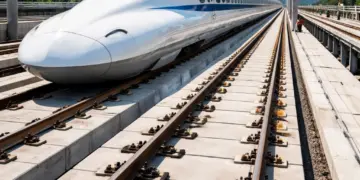

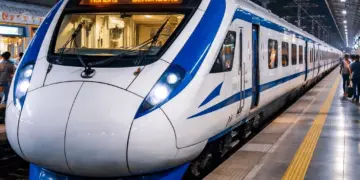
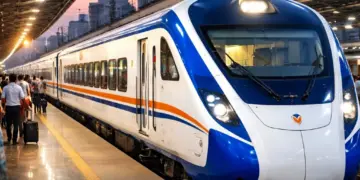
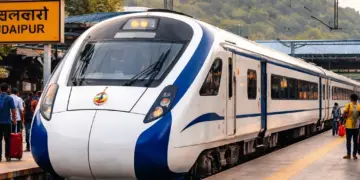
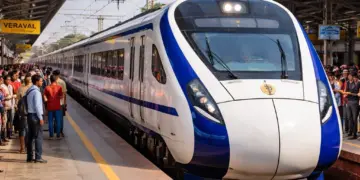
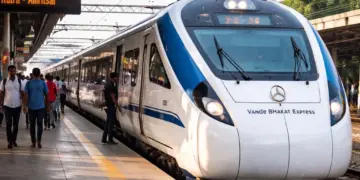


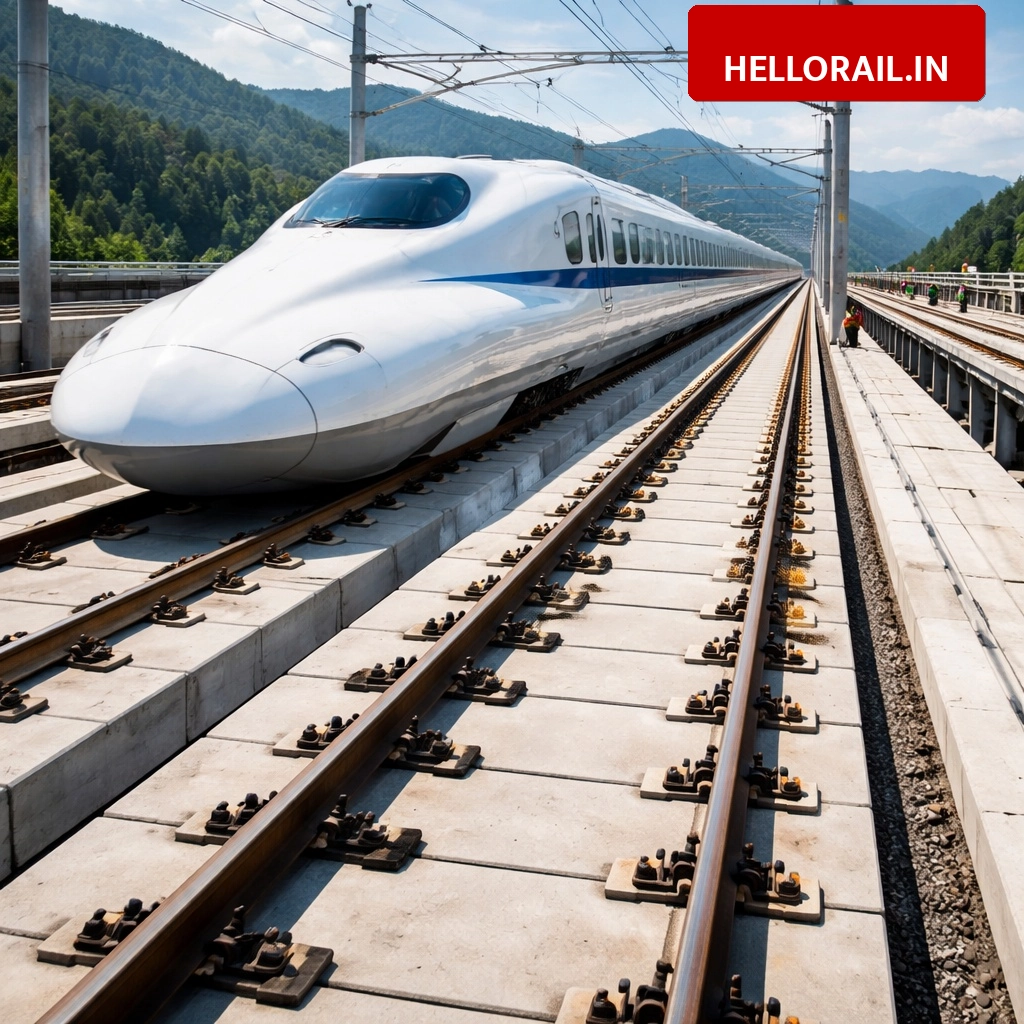

The Mumbai-Ahmedabad High-Speed Rail project is adopting the advanced J-Slab ballastless track system to ensure a stable and smooth journey. This technology, inspired by Japan’s Shinkansen, allows trains to run safely at speeds up to 320 kmph. The National High Speed Rail Corporation Limited (NHSRCL) is managing the construction and implementation of this system across the corridor.
ℹ: Vande Bharat Sleeper: Indian Railways to launch trains on 9 new routes including Delhi-Mumbai।
What is J-Slab technology and how does it work?
The J-Slab system is a ballastless track, meaning it does not use traditional stones (ballast) to support the rails. It consists of four main parts: a reinforced concrete track bed, cement asphalt mortar (CAM), pre-cast track slabs, and rails with special fasteners. This setup provides higher precision and requires less maintenance compared to old tracks.
Current progress of the Bullet Train tracks
Construction is moving forward with dedicated manufacturing plants in Kim and Anand, Gujarat. The project uses fully mechanized installation with specialized Japanese-style machinery made in India.
| Component | Progress/Detail |
|---|---|
| RC Track Bed | 185 route km laid |
| Track Slabs | 188 route km manufactured |
| Slab Installation | Completed over 70 km |
| Viaduct Work | 349 km completed |
| Piers Constructed | 443 km completed |
| Track-bed Construction | Over 374 track-km progressed |
When will the first Bullet Train run?
India’s first indigenous high-speed train, named B28, is being manufactured by BEML at its Aditya plant in Bengaluru. This train is expected to be ready by early 2027. Commercial services are planned to start in August 2027 on the Surat-Vapi section, while the full corridor target is December 2029.
Frequently Asked Questions (FAQs)
What is the benefit of J-Slab track technology?
It ensures greater stability and durability for trains running at 320 kmph and reduces the need for frequent maintenance.
When will the first commercial Bullet Train service start?
Commercial services are planned for August 2027 on the Surat-Vapi section, with the B28 indigenous train expected by early 2027.