








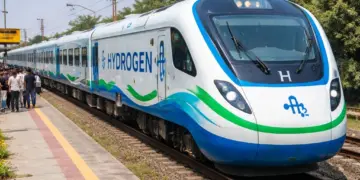





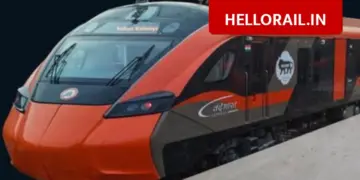






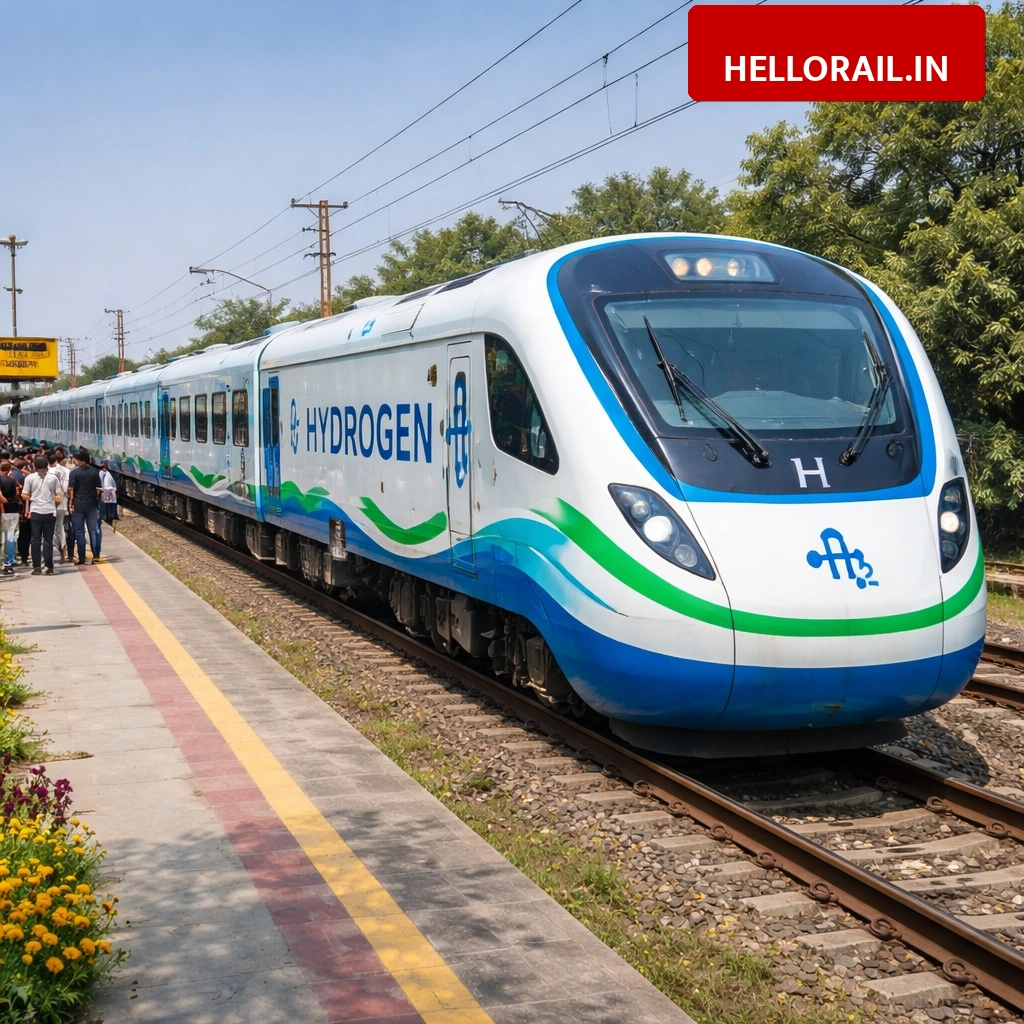

Indian Railways completed the first successful trial of its hydrogen-powered train between Delhi and Jind on June 26, 2026. This move is part of the government’s Zero Carbon Mission by 2030. The trial focused on checking the stability of the train and its emergency braking performance.
What are the technical details of the Hydrogen Train?
The train uses a 1200 KW hydrogen fuel cell propulsion system to generate electricity. It is designed to run at a maximum speed of 75 kmph. Instead of smoke or pollution, this train only releases water vapour into the air. The Ministry of Railways approved a 10-car trainset for the Jind-Sonipat section on May 27, 2026.
How is the safety and infrastructure being managed?
The Petroleum and Explosives Safety Organisation (PESO) has already given the license for the hydrogen storage and refuelling plant at Jind. To ensure safety, the facility has leak detectors and flame detectors. The Research Designs and Standards Organisation (RDSO) has approved the maintenance and operation manuals for the trainset and the plant.
| Feature | Details |
|---|---|
| Route | Delhi to Jind (Trial), Jind-Sonipat (Commercial) |
| Max Speed | 75 kmph |
| Power System | 1200 KW Hydrogen Fuel Cell |
| Emission | Water Vapour only |
| Train Size | 10-car trainset |
Frequently Asked Questions (FAQs)
यह ट्रेन किस रूट पर कमर्शियल तौर पर चलेगी?
यह ट्रेन Northern Railway के Jind-Sonipat सेक्शन पर कमर्शियल ऑपरेशन के लिए तैयार है।
Hydrogen ट्रेन की रफ़्तार कितनी होगी?
इस ट्रेन को अधिकतम 75 kmph की रफ़्तार से चलने के लिए डिजाइन किया गया है।