


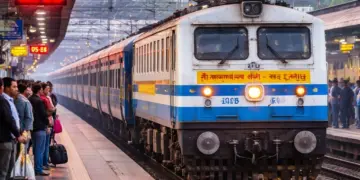
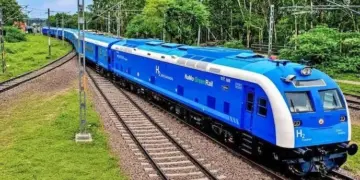

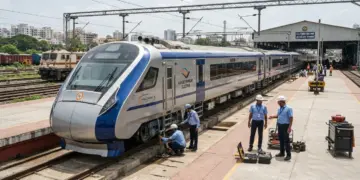
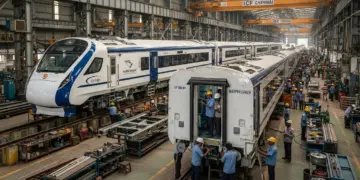
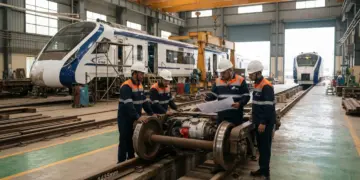
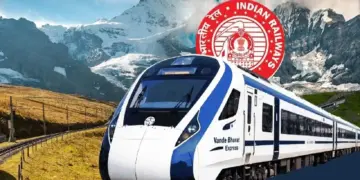
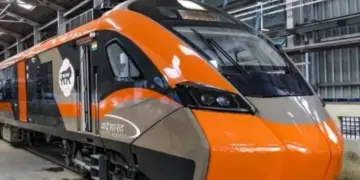



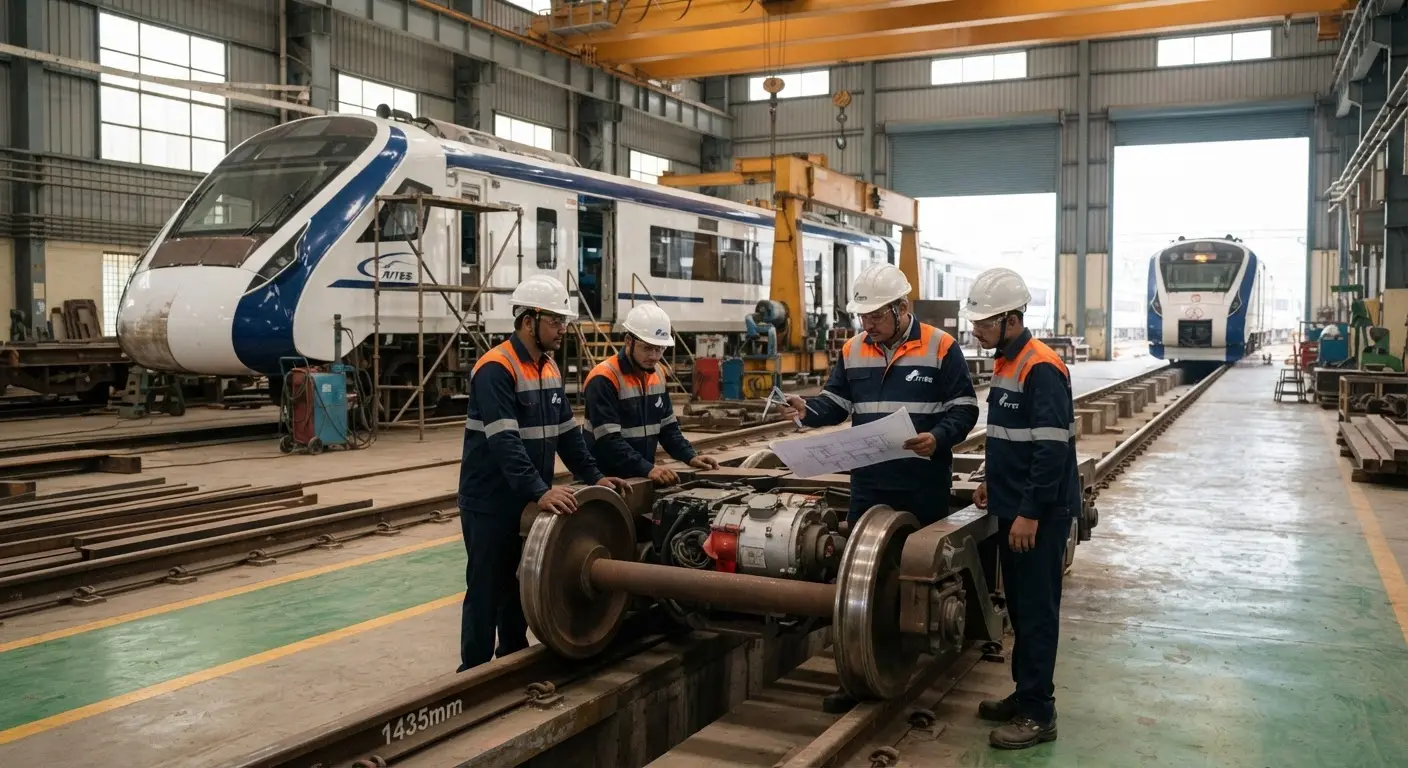

RITES Limited, the public sector undertaking under the Ministry of Railways, has officially launched the development of a standard-gauge (1,435 mm) prototype of the Vande Bharat train. This strategic move is designed to transition the indigenous train technology from India’s domestic broad-gauge (1,676 mm) network to the standard gauge used by most global railway systems, paving the way for international exports.
Key highlights of the initiative include:
* Standard Gauge Shift: Development of a 1,435 mm gauge prototype to meet global railway infrastructure standards.
* Global Expansion: RITES aims to secure at least one export order per quarter as part of its international rolling stock strategy.
* Target Markets: Focus areas include South Asia (Nepal, Sri Lanka, Bangladesh), Africa, Latin America (Chile, Brazil, Argentina), Australia, and Europe.
* Competitive Pricing: A 16-coach Vande Bharat trainset is estimated to cost between Rs 1.3 and Rs 1.5 billion.
* Performance Standards: The train maintains high-speed performance, including acceleration from 0 to 100 kmph in approximately 52 seconds.
Aligning Indian Engineering with Global Standards
Rahul Mithal, Chairman and Managing Director of RITES, confirmed that work on the prototype is set to accelerate significantly in the coming months. The company is working in close coordination with Indian Railways and is currently in talks with several nations that have expressed interest in the Vande Bharat platform. Once the design and production phases are completed, the export variant will undergo rigorous trial operations in the client countries to ensure compatibility with their existing networks.
A Strategic Vision for Export
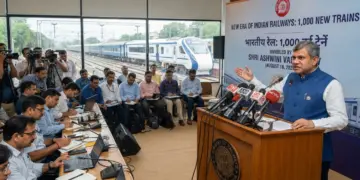
This export-oriented initiative follows a clear directive from Railway Minister Ashwini Vaishnaw, who in October 2025 outlined the vision for India to emerge as a global hub for high-speed rail technology. Industry experts suggest that the Vande Bharat’s primary strength lies in its cost-effectiveness, which allows it to compete directly with established semi-high-speed train manufacturers in Japan and Europe. By offering a proven, affordable, and high-performance trainset, India is positioning itself to become a significant player in the global railway manufacturing sector, marking a new chapter in the nation’s “Make in India” success story.