
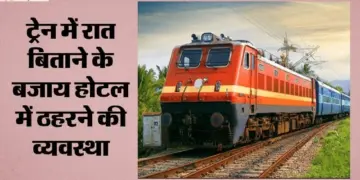

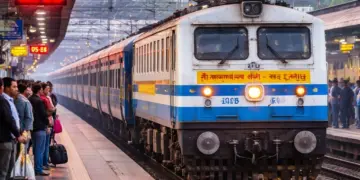
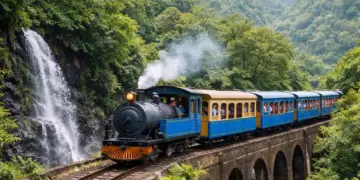

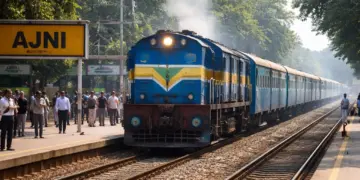


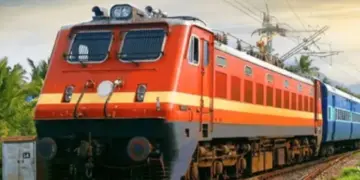

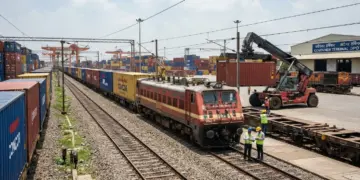



Many passengers are curious about the fuel efficiency of the giant locomotives that pull Indian Railways trains across the country. The mileage of a train is not fixed like a car or bike; it changes based on the number of coaches, the load, and how often it stops at stations. Data suggests that a standard passenger train actually consumes significantly more diesel per kilometer compared to an express train because of frequent halts.
How much fuel does a train engine consume per kilometer?
According to technical reports and data, the fuel consumption of a diesel locomotive depends heavily on the type of service it provides. A 12-coach passenger train consumes approximately 6 liters of diesel to cover a distance of just 1 kilometer. Surprisingly, an Express train with the same number of coaches is more efficient, using only about 4.5 liters for the same distance.
The consumption naturally increases for longer and heavier trains. A 24-coach Superfast train requires about 6 liters of fuel per kilometer. The main reason for high consumption in passenger trains is the frequent braking and acceleration. Every time a train stops at a small station, the engine needs extra power to pull the heavy load back to speed, which burns more diesel.
| Train Type | No. of Coaches | Approx Fuel Per KM |
|---|---|---|
| Passenger Train | 12 | 6 Liters |
| Express Train | 12 | 4.5 Liters |
| Superfast Train | 24 | 6 Liters |
What is the current status of Railway electrification?
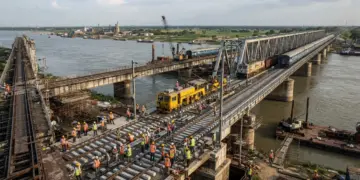
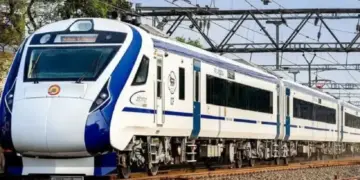
To reduce this heavy dependency on diesel and cut down costs, Indian Railways is rapidly switching to electric traction. As of February 2026, the railways have completed 99.4% electrification of the broad gauge network. This massive shift has resulted in a diesel saving of 178 crore liters in 2024-25 compared to 2016-17 levels. This transition saves the department roughly ₹14,000 crore annually.
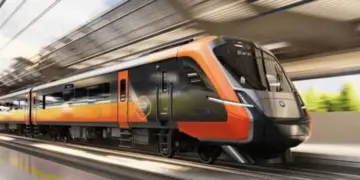
Railway Minister Ashwini Vaishnaw has stated that the target is to achieve 100% electrification by the end of the financial year 2025-26. The department is also testing new technologies like the LNG-Diesel dual-fuel DEMU train, which was recently trialed in Sabarmati. The ultimate goal is for Indian Railways to become a ‘Net Zero Carbon Emitter’ by 2030.