
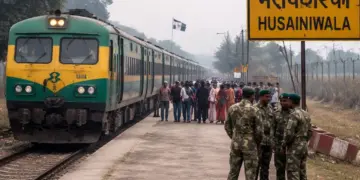
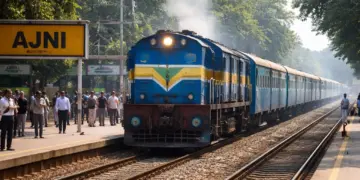



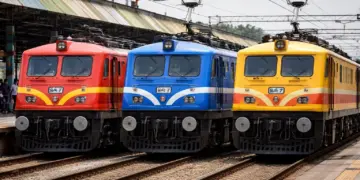





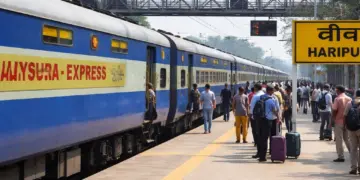



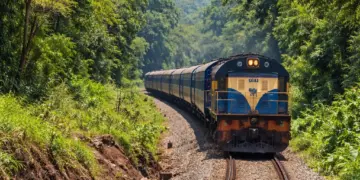


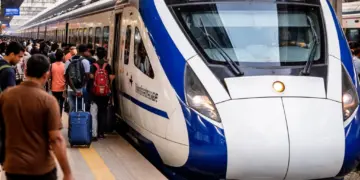




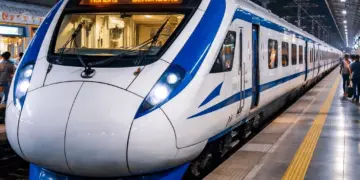
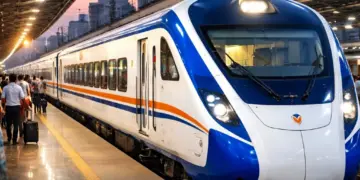





Indian Railways has significantly upgraded its track infrastructure to allow trains to run faster and safer. Railway Minister Ashwini Vaishnaw and Prime Minister Narendra Modi recently highlighted these developments, noting that a large portion of the network is now fit for semi-high-speed operations. This move will help reduce travel time and improve the punctuality of trains like the Vande Bharat Express.
🚨: Railway theft prevention: Why you cannot use train fans at home।
What are the current track speed limits
The railway network has seen a major jump in speed capacity compared to 2014. Currently, 80% of the tracks are fit for speeds of 110 kmph, while 23% of the tracks can support speeds up to 130 kmph. This infrastructure boost ensures that passengers reach their destinations faster with fewer delays.
Key infrastructure and technology upgrades
To support these speeds, the railways have focused on renewing tracks and using stronger materials. Long panels have been installed to make the ride smoother and reduce jerks for passengers. Advanced testing tools are also being used to find and fix faults before they cause problems.
| Feature | Details |
|---|---|
| Track Renewal | 55,000 KM renewed since 2014 |
| Long Panels (260m) | 44,000 KM laid for smooth travel |
| Heavy Rails (60 KG) | Used across 80,000 KM |
| Fencing | 17,500 KM installed on high-speed tracks |
| Testing Tools | USFD, GPS OMS, and Magnetic tests |
How has safety improved for passengers
The use of new technology has led to a nearly 90% reduction in rail and weld failures. Fencing has been put up on high-speed sections to stop cattle and people from crossing the tracks. Because of these changes, consequential train accidents dropped from 135 in 2014-15 to 16 in 2025-26.
Frequently Asked Questions (FAQs)
How much of the railway track is fit for 130 kmph speed?
Approximately 23% of the Indian Railways track network is currently fit for train operations at speeds of 130 kmph.
What measures were taken to reduce accidents on high-speed tracks?
Railways installed 17,500 KM of fencing and used USFD and GPS OMS systems to detect faults, reducing accidents by 89% since 2014-15.
{“@context”: “https://schema.org”, “@type”: “FAQPage”, “mainEntity”: [{“@type”: “Question”, “name”: “How much of the railway track is fit for 130 kmph speed?”, “acceptedAnswer”: {“@type”: “Answer”, “text”: “Approximately 23% of the Indian Railways track network is currently fit for train operations at speeds of 130 kmph.”}}, {“@type”: “Question”, “name”: “What measures were taken to reduce accidents on high-speed tracks?”, “acceptedAnswer”: {“@type”: “Answer”, “text”: “Railways installed 17,500 KM of fencing and used USFD and GPS OMS systems to detect faults, reducing accidents by 89% since 2014-15.”}}]}