






















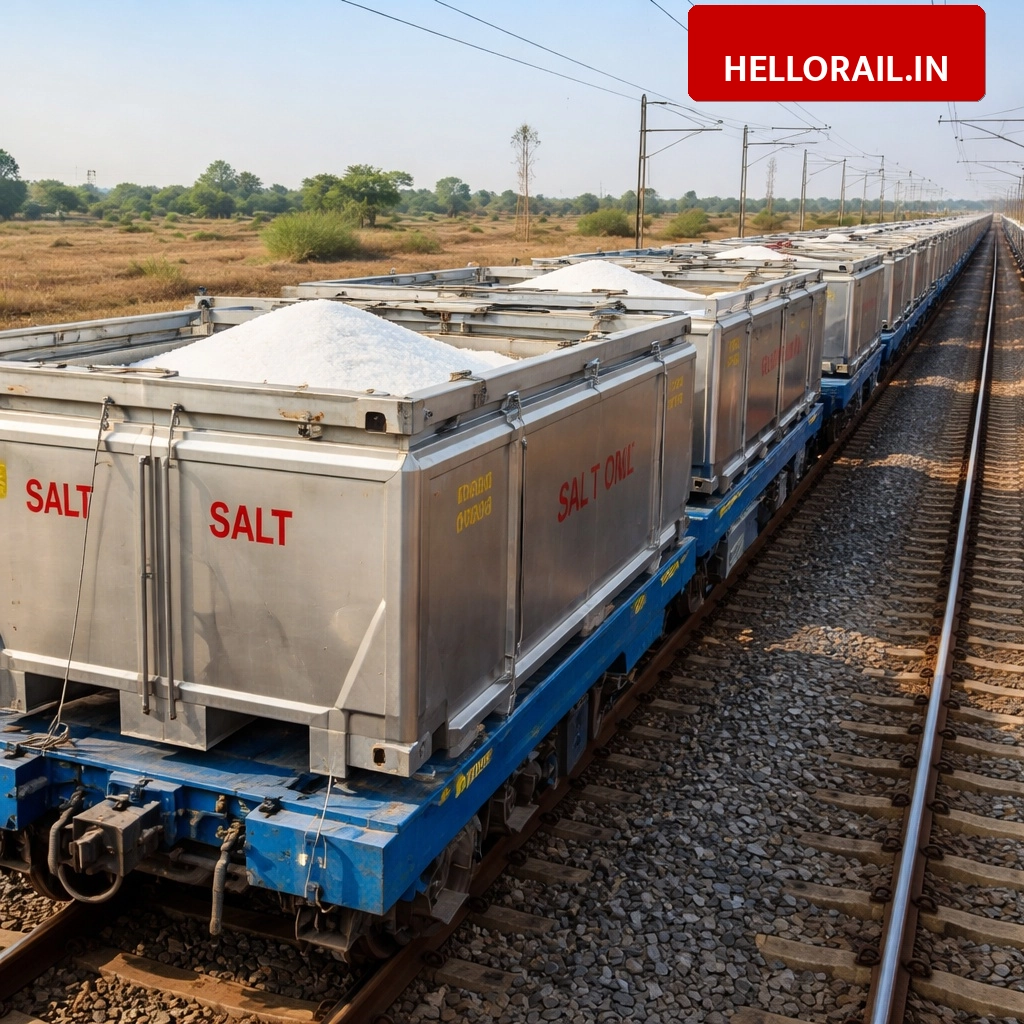

Indian Railways conducted a successful trial for transporting salt using specialized stainless steel containers on February 10, 2026. The experiment took place on the Bhimasar-Gandhidham route under the Ahmedabad Division of the Western Zone. This move is part of the Reform Express initiative to modernize cargo operations and reduce losses during transport.
What are the technical details of the new containers?
The containers were developed by Jindal Stainless using 304 grade stainless steel for the body and JT Grade for the underframe to prevent rust. These containers were fabricated by Kalyani Cast Tech Private Limited as per RDSO Lucknow specifications. The use of stainless steel makes them 100% rust-free and significantly more durable than traditional wagons.
| Feature | Details |
|---|---|
| Capacity per Wagon | 68.4 Tonnes |
| Train Capacity (48 Wagons) | Approx 3,300 Tonnes |
| Loading Time | Less than 15 minutes |
| Unloading Time | Around 5 minutes |
| Expected Lifespan | 15 to 20 years |
How will this change salt transportation for the railways?
Union Minister Ashwini Vaishnaw stated that this system allows for direct loading at production sites and flexible unloading at warehouses. This reduces the need for manual cleaning and the use of tarpaulins. The design prevents water seepage and protects the salt from contamination, which improves the overall quality of the cargo.
Railway officials noted that the new containers require much less maintenance and will reduce CO2 emissions by replacing road trailers. While the current trial focused on salt, these containers can also be used for other bulk materials like cement, food grains, and fertilizers in the future.
Frequently Asked Questions (FAQs)
What is the main benefit of using stainless steel containers for salt?
Salt is highly corrosive, and stainless steel prevents rust and wagon damage. This extends the container’s life to 15-20 years and ensures the cargo remains safe from moisture.
How fast is the loading and unloading process in this new system?
Loading takes less than 15 minutes per container using a silo or Poclain machine, while unloading takes about 5 minutes via hydraulic tipping trucks.