


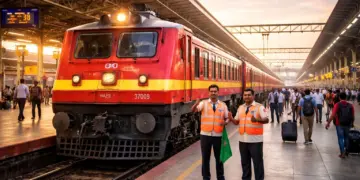






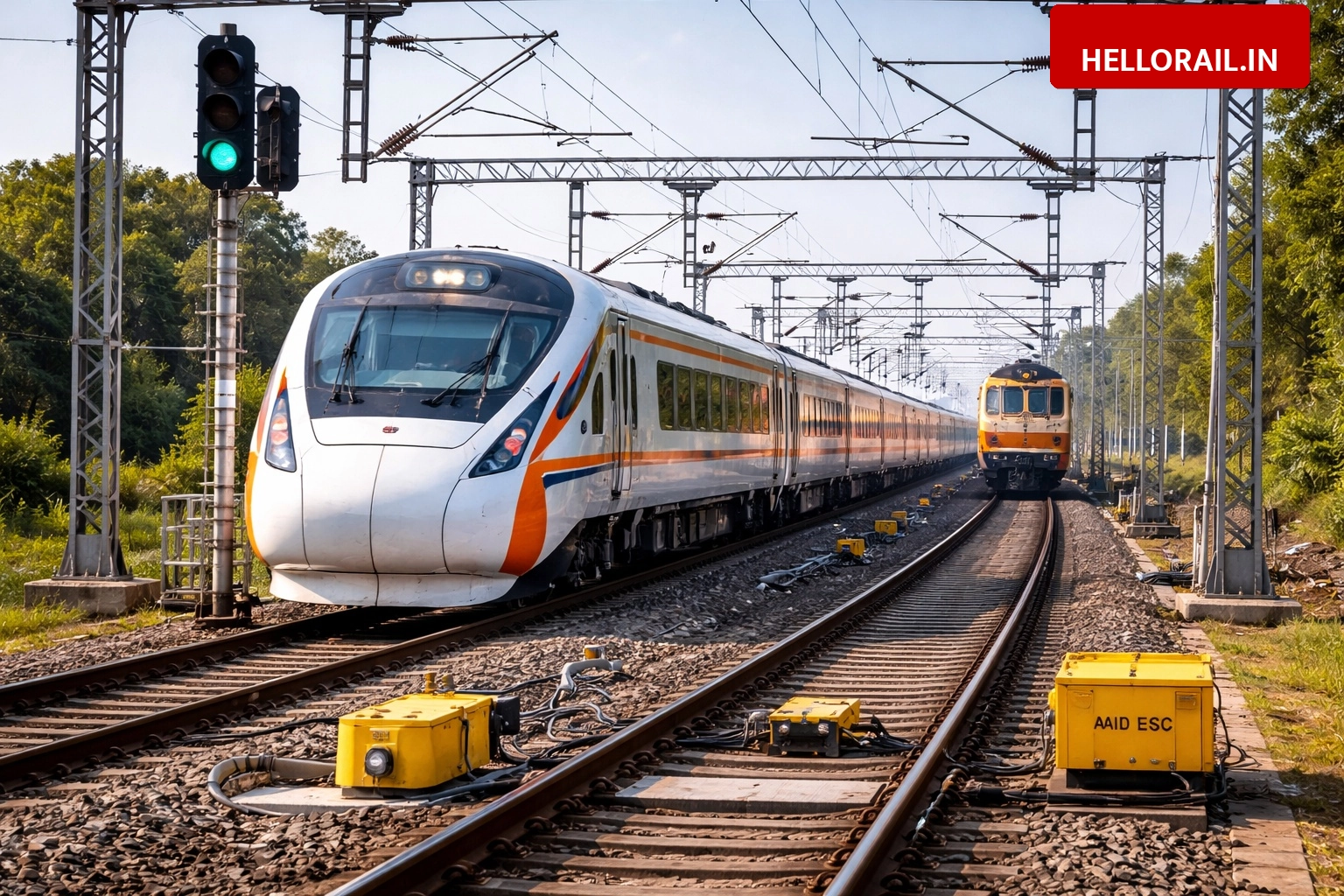

North Eastern Railway is preparing to significantly enhance passenger safety by installing the indigenous ‘Kavach’ system across 551 kilometers of tracks. The railway authorities have approved a dedicated budget of ₹492.21 crore for this project, focusing primarily on the Lucknow division. This initiative is designed to prevent train collisions and ensure operational efficiency even during challenging weather conditions like heavy fog.
Which routes and divisions will be covered under this project
The first phase of this safety project focuses on several critical sections within the North Eastern Railway zone. Major routes selected for the installation include the Manaknagar – Lucknow Junction – Malhaur stretch and the Sitapur City – Budhwal section. Other vital segments such as Budhwal – Gorakhpur Cantt and Budhwal – Barabanki are also part of the initial rollout. While the Lucknow division is the primary focus, parts of the Varanasi division like the Gorakhpur Cantt – Goldinganj section will also receive this technology. The long-term goal is to cover a total of 1,441 kilometers across three divisions.
Key features and progress of the Kavach 4.0 installation
The project involves a massive infrastructure setup, including the installation of 108 telecom towers along the 551 km rail section. Survey work for these towers is finished, and 20 towers have already been erected on the Gorakhpur-Basti route. Additionally, a separate tender of ₹123.95 crore was finalized to equip 136 locomotives with the necessary Kavach hardware. CPRO Pankaj Kumar Singh mentioned that the latest Kavach 4.0 version will be used for this project.
| Project Feature | Details |
|---|---|
| Approved Budget | ₹492.21 Crore |
| First Phase Distance | 551 Route Kilometers |
| Number of Towers | 108 Telecom Towers |
| Locomotives Included | 136 Engines |
| Technology Used | Kavach 4.0 with RFID and OFC |
The Kavach system works by using a network of optical fiber cables and RFID tags. It provides automatic braking features that activate if a loco pilot accidentally passes a red signal or if two trains are detected on the same track. During the winter season, the system displays signal information directly in the locomotive cabin, helping pilots navigate through dense fog safely. This technology also maintains the speed of the train within the prescribed limits automatically.