













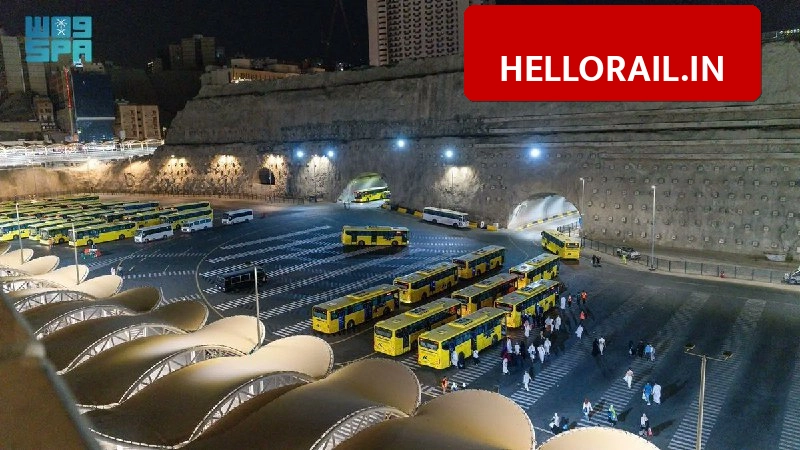

The transport network in Makkah has recorded a massive achievement during the first ten days of Ramadan. Official data released by the Saudi Press Agency (SPA) confirms that over 31 million passengers utilized the public transport system. This period, covering the first third of the holy month, saw a significant influx of pilgrims and visitors moving between the Holy Sites and the city center.
📰: Bihar Railway News: 83 New ROBs Approved to End Traffic Jams, 110 More Coming Next Year।
How is the Transport System Managing the Crowd?
To handle the heavy rush of worshippers, the authorities deployed a robust network of trains and buses. The Haramain High-Speed Railway played a crucial role, operating more than 3,662 trips. This service provided a capacity of over 1.7 million seats, ensuring fast and comfortable travel between Makkah, Jeddah, and Madinah for international visitors and residents alike.
Within the city, the Makkah Bus Project remained highly active. A fleet of 400 buses ran across 12 main routes, covering 450 stops. This includes the newly launched electric Masar BRT network, which helps reduce noise and emissions in the crowded central area. The coordination between the Transport General Authority and other agencies ensured a 91% compliance rate among operators.
| Service Type | Key Statistics |
|---|---|
| Total Passengers | 31 Million+ |
| Haramain Railway | 3,662 Trips |
| Bus Fleet | 400 Buses |
| Reporting Period | First 10 Days of Ramadan |
Important Guidelines for Pilgrims and Expats
For Indians and other expatriates planning to perform Umrah, strict adherence to local rules is necessary. All pilgrims must obtain official permits through the Nusuk or Tawakkalna platforms. Authorities have emphasized that private vehicles are strictly restricted from entering the central zones around the Grand Mosque during peak prayer times to prevent traffic congestion.
Travelers are advised to rely on public transport or authorized shuttle services. The system uses an Automated Fare Collection method via smart cards, making travel cashless and smooth. Additionally, a mandatory 15-minute gap between Adhan and Iqamah for Isha and Fajr prayers is being enforced to manage the flow of people arriving and departing from the mosques.