


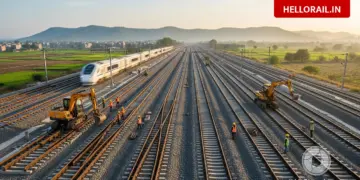
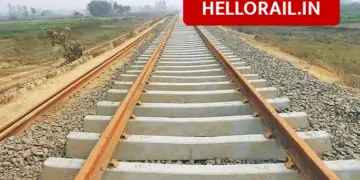
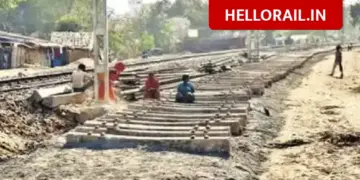







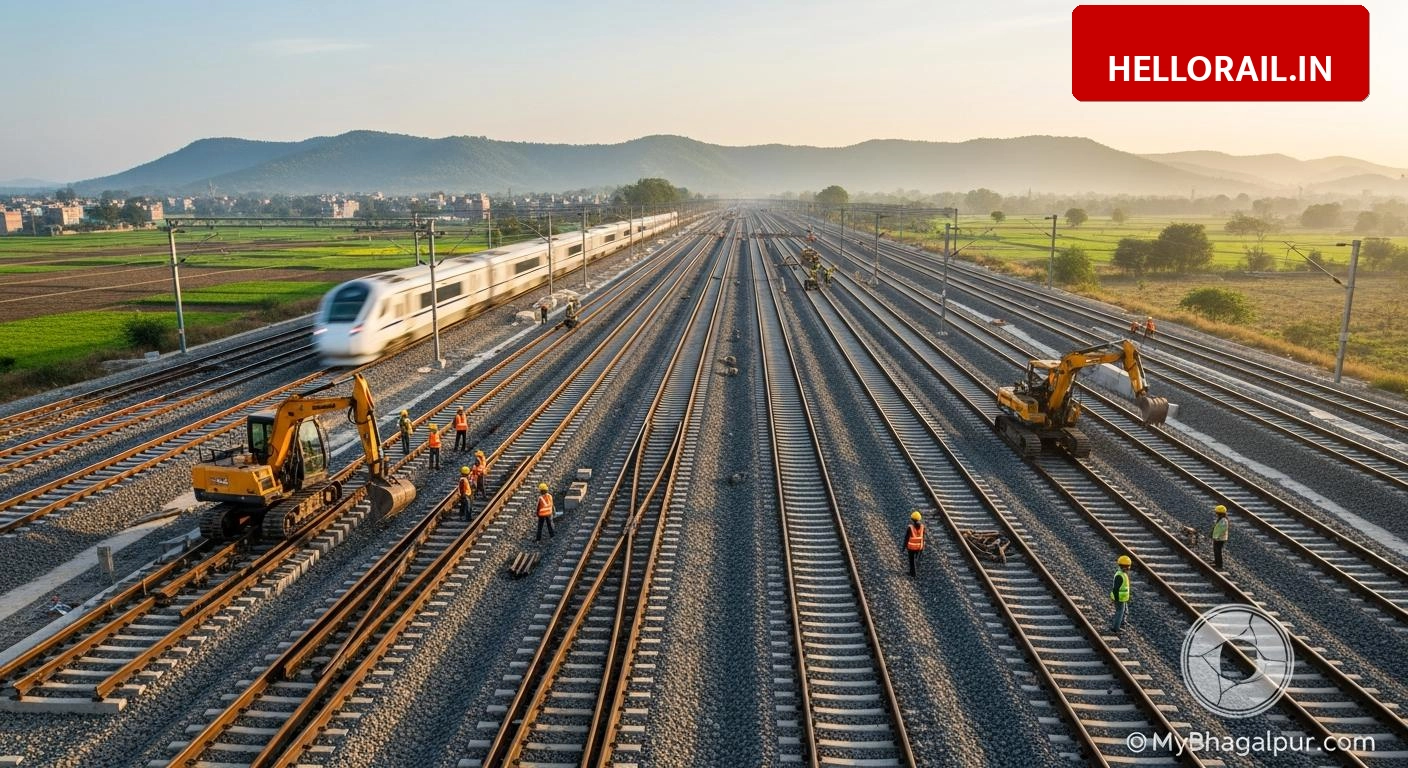

Passengers travelling through Bihar have received a major update regarding rail infrastructure. The Indian Railways has officially approved a massive project worth Rs 17,000 crore to expand the railway network. This project involves constructing third and fourth railway lines along the busy 400 km route from Pandit Deen Dayal Upadhyay (DDU) Junction to Jhajha via Patna. This development falls under the Danapur division of the East Central Railway (ECR) and aims to solve long-standing traffic issues on this busy corridor.
👉: Trains on Madar-Palanpur Route to be Affected in February due to Engineering Work, Check List Here।
When will the work start and what are the phases?
According to reports, the construction work is scheduled to begin in March 2026. The project will be executed in multiple phases to ensure smooth operations. The East Central Railway CPRO has confirmed that land acquisition is currently ongoing for the Jhajha-Kiul section. The original railway line on this route was built between 1860 and 1870, and this upgrade is essential for modern traffic needs. The identified segments for the new lines include:
- DDU to Danapur
- Danapur to Fatuha
- Fatuha to Bakhtiyarpur
- Bakhtiyarpur to Punarakh
- Punarakh to Kiul
- Kiul to Jhajha
How is the budget distributed for land acquisition?
A significant portion of the budget is allocated for acquiring land across different stretches. The government has set aside specific amounts for different sections to ensure the land is available for laying the new tracks. Here is the breakdown of the estimated costs for land acquisition in key areas:
| Section | Distance | Estimated Cost |
|---|---|---|
| Bakhtiyarpur – Fatuha | 24 km | Rs 931 Crore |
| Bakhtiyarpur – Punarakh | 30 km | Rs 392 Crore |
| Punarakh – Kiul | – | Rs 2,514 Crore |
| Kiul – Jhajha | – | Rs 903 Crore |
Why is this project important for common passengers?
This route is a critical part of the Delhi-Howrah main line and currently handles huge pressure. More than 290 trains pass through this section daily, leading to congestion and delays. The addition of third and fourth lines will separate train traffic effectively. Once completed, this will allow passenger trains to run more punctually and will also increase the speed of freight movement across the region.