
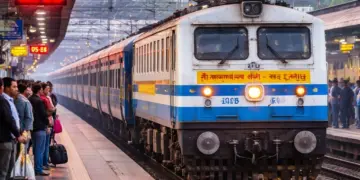




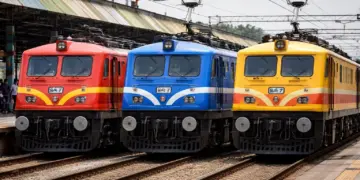









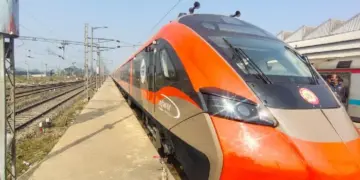




Union Railway Minister Ashwini Vaishnaw announced a massive expansion plan for the Indian Railways. The government will lay 36,000 kilometers of new tracks and introduce 3,000 new regular train services over the next five years. This move aims to increase travel capacity for middle and lower-middle-class passengers.
What are the key highlights of the new railway plan?
The ministry is focusing on a large-scale infrastructure boost to modernize the network. Apart from new tracks, the government wants to double the train-originating capacity of major Indian cities by 2030. The plan also includes the creation of 7,000 kilometers of dedicated passenger corridors by 2047 to ensure faster and smoother travel.
Recent infrastructure updates and investments
The government has already taken several steps to improve the current network. A look at the recent data shows significant progress in track renewal and new projects.
| Project/Update | Details |
|---|---|
| New Track Laying | 36,000 km planned |
| New Train Services | 3,000 trains in 5 years |
| Track Renewal (2014-Feb 2026) | 54,600 km completed |
| Multi-tracking Projects | 901 km increase by 2030-31 |
| Multi-tracking Budget | ₹23,437 crore approved |
| Bullet Train Progress | 15 km per month growth |
How will technology and safety be improved?
Minister Ashwini Vaishnaw mentioned the use of drones and rail-cum-road vehicles to make maintenance safer and more efficient. The Bullet Train project is also moving forward, with the Surat to Bilimora section expected to launch in August 2027. Additionally, a ₹285.01 crore project is underway to upgrade electric traction on the Mahbubnagar-Secunderabad-Medakchal section.
Frequently Asked Questions (FAQs)
How many new trains will be started in the next five years?
Union Railway Minister Ashwini Vaishnaw announced that 3,000 new regular train services will be added to the network over the next five years.
What is the target for dedicated passenger corridors?
Indian Railways plans to build approximately 7,000 kilometers of dedicated passenger corridors by the year 2047.