
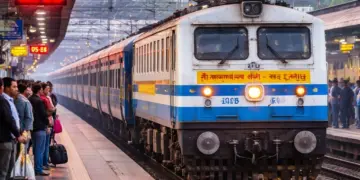
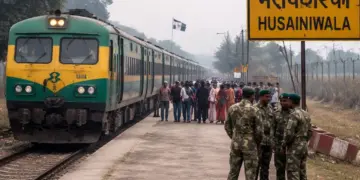
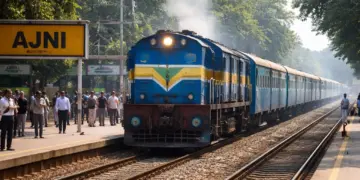







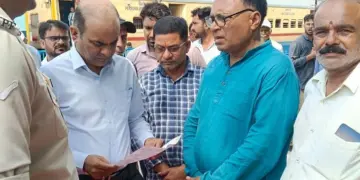



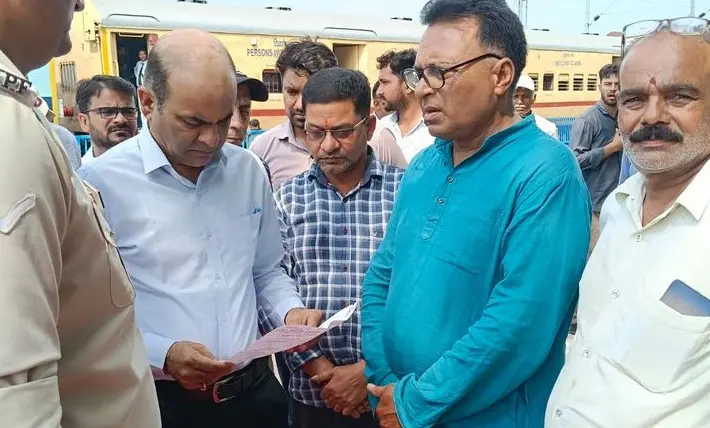

The North Central Railway has achieved a major infrastructure milestone with the successful commissioning of a new 21.267-kilometer double and electrified railway line in the Khurhand-Atarra-Badausa section. This project, which falls under the Jhansi Division, marks a significant step forward in enhancing the region’s rail capacity and operational efficiency. The completion follows a rigorous inspection process, including a site review by Divisional Railway Manager (DRM) Aniruddh Kumar in early July 2026, and a final safety certification of the 25 KV AC electric traction system conducted by Principal Chief Electrical Engineer Shri J.C.S. Bora on July 21, 2026.
Key highlights of the project include:
- Completion of a 21.267 km double-track electrified section.
- Successful integration of the Khurhand-Atarra-Badausa stretch into the main network.
- Validation of the 25 KV AC electric traction system for enhanced speed and safety.
- Increased regional connectivity to support growing commuter demand.
Badausa Station Demands New Stoppages
Following the operationalization of this new line, local trade associations in Badausa have formally requested the introduction of additional train stoppages at the station. Representing a catchment area of approximately 123 surrounding villages, the association emphasized that thousands of daily commuters rely on Badausa for their transit needs. They argue that the upgraded infrastructure should now be matched with better train services to leverage the improved track capacity.
Strategic Context for Indian Railways
While the demand for new stoppages grows, the timing of this request is notable. Indian Railways is currently in the process of auditing its network, with reports indicating a plan to eliminate over 300 experimental train halts across the country. The goal of this initiative is to improve the overall punctuality and average speed of express and mail trains. Balancing the genuine connectivity needs of the Badausa region with the national mandate for faster, more efficient rail operations remains a key challenge for the Jhansi Division. Moving forward, the electrification of this section is expected to significantly reduce the carbon footprint of rail services in the region while lowering operational costs through increased energy efficiency.