









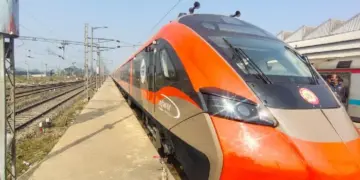

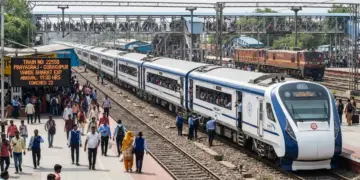
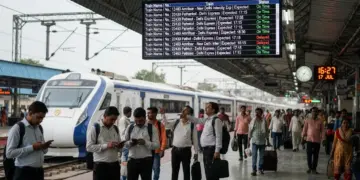
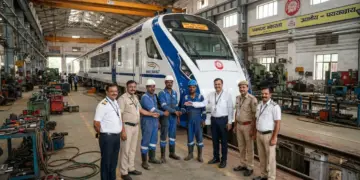



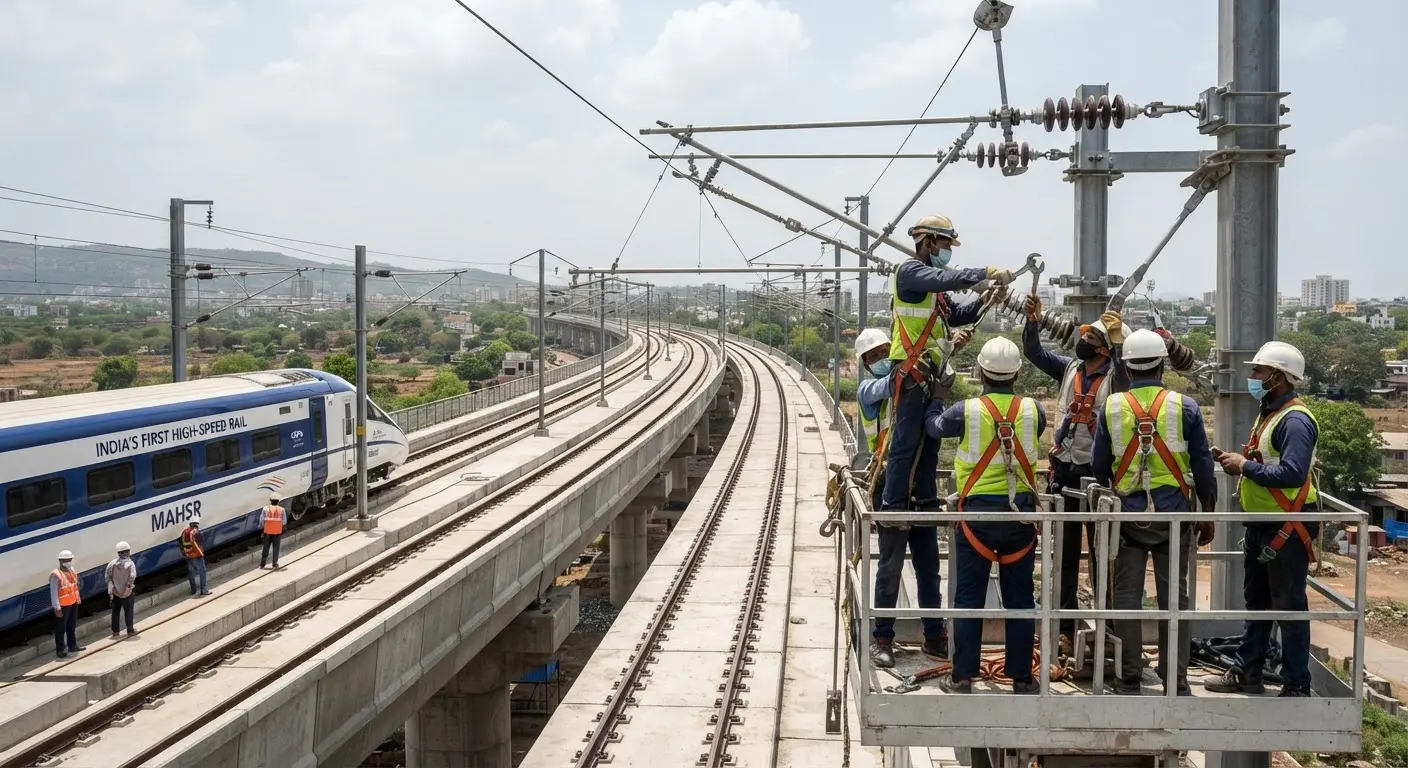

The ambitious Mumbai-Ahmedabad High-Speed Rail (MAHSR) project has achieved a major milestone as work on its advanced electrification system gains momentum. This corridor marks a historic shift for Indian Railways, as it will be the first in the country to deploy the 2×25 kV Overhead Traction System. Designed to support trains running at speeds of up to 320 km/h, this technology brings world-class Japanese Shinkansen standards to Indian soil, with the National High Speed Rail Corporation Limited (NHSRCL) leading the project under a collaborative framework with Japan.
Key highlights of the electrification progress include:
- Deployment of the 2×25 kV Overhead Traction System for high-speed operations.
- Power sourced from the National Power Grid across 14 dedicated Traction Substations.
- Infrastructure spanning 1,125 track kilometers with 22,000 steel masts.
- Safety integration featuring 28 earthquake detection seismometers.
- First operational segment between Surat and Vapi expected by August 2027.
Robust Power Distribution Network
To ensure consistent power for the 508-kilometer corridor, electricity will be drawn from the National Power Grid and distributed through 14 Traction Substations. These are strategically located with five in Maharashtra (Mumbai, Thane, Virar, Boisar, and Thane Depot) and nine in Gujarat (Vapi, Bilimora, Surat, Bharuch, Vadodara, Anand, Mahemdabad, Ahmedabad, and Sabarmati Depot). The network also includes 31 Switching Posts for rapid fault isolation and 16 Distribution Substations to power stations, signaling, and maintenance facilities.
Infrastructure and Safety Standards
The system utilizes a compound catenary system—a first for India—which ensures a stable power supply to the train’s pantograph even at peak velocities. Supporting this are over 25,700 cantilever assemblies. Safety remains a top priority, with a centralized control system for real-time monitoring and advanced earthquake detection technology that automatically halts trains if seismic activity is detected. Furthermore, the project is a major win for the ‘Make in India’ initiative, as key components are being manufactured domestically, driving local job creation and technical expertise.
Timeline and Future Impact
The NHSRCL is working toward a target of launching the first operational section between Surat and Vapi in August 2027. Once the entire corridor is fully functional, passengers can expect to cover the distance between Mumbai and Ahmedabad in approximately 1 hour and 58 minutes. This project is set to serve as the definitive blueprint for future high-speed rail developments across the Indian railway network.