











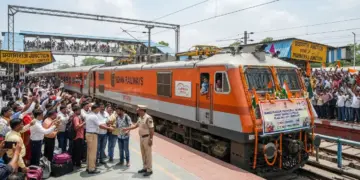

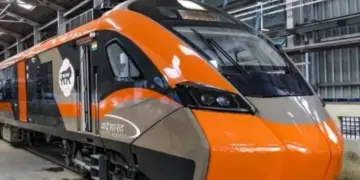


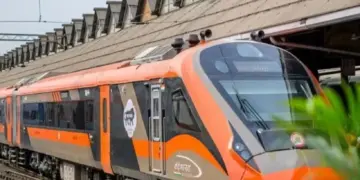
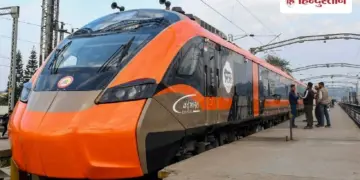
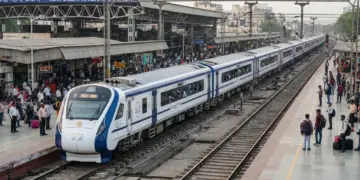

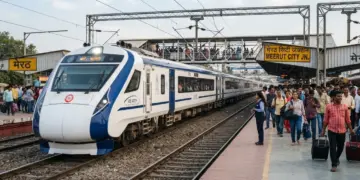


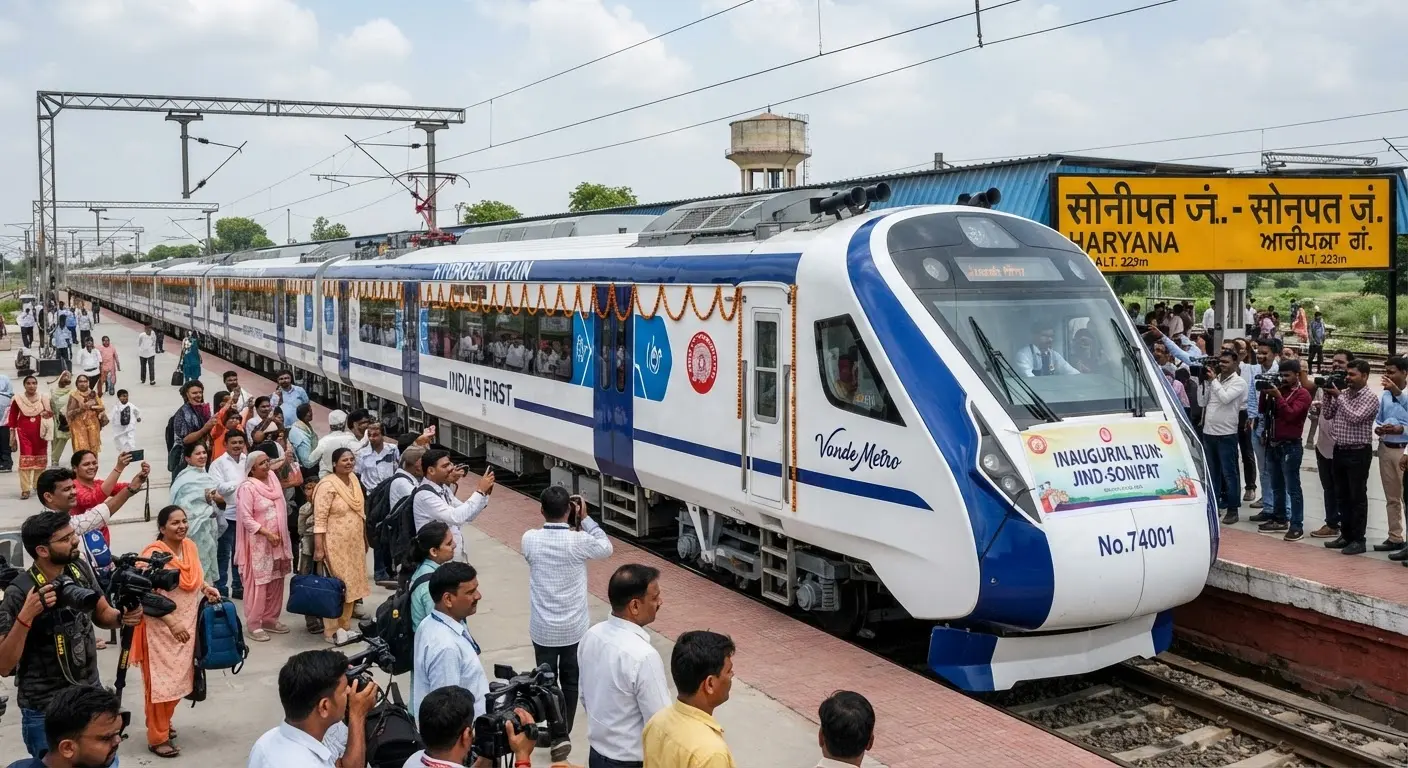

India has officially entered the era of sustainable rail travel as the country’s first hydrogen fuel cell-powered passenger train achieves a significant milestone. Since its inauguration by Prime Minister Narendra Modi on July 17, 2026, the train has successfully transitioned into commercial service on the 89-kilometer Jind-Sonipat route in Haryana. In just its first five days of operation, the train has covered an impressive 900 kilometers, marking a major step forward in India’s green transport journey.
- Route: Jind to Sonipat (89 km)
- Operational Start: July 17, 2026
- Daily Performance: Two round trips covering 356 km
- Fare Range: Rs 10 to Rs 25 (matching DMU rates)
- Environmental Impact: Zero-emission technology with water vapor as the only byproduct
Operational Efficiency and Technology
To ensure that this new green initiative remains accessible to everyone, Indian Railways has kept the ticket pricing consistent with standard Diesel Multiple Unit (DMU) services, with fares ranging between Rs 10 and Rs 25. The train currently completes two daily round trips, departing Jind Junction at 7:40 AM and Sonipat at 10:40 AM.
Technically, the project is a collaborative effort involving Hyderabad-based Medha Servo Drives, which handled the conversion, and Canada’s Ballard Power Systems, which provided the fuel cells. The hydrogen production infrastructure is being developed by Green H Electrolysis. While a single 89 km trip consumes approximately 95 kg of hydrogen, official data shows that the daily two round trips require roughly 300 kg of hydrogen.
Future of Green Rail in India
While early financial analysis from December 2022 suggested that hydrogen engine operational costs could be 27% higher than diesel, railway officials remain optimistic. They expect costs to drop significantly as the technology matures and scales. The long-term vision is to achieve lifetime cost savings compared to traditional diesel trains while drastically reducing the carbon footprint.
This initiative is a cornerstone of the National Green Hydrogen Mission, aimed at achieving net-zero carbon emissions by 2030. By utilizing hydrogen and oxygen to generate electricity, these trains provide a viable, sustainable alternative, particularly for non-electrified routes where traditional infrastructure remains difficult or uneconomical to install.