






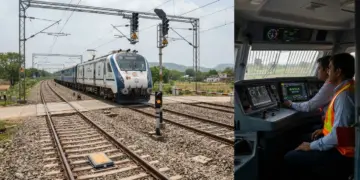
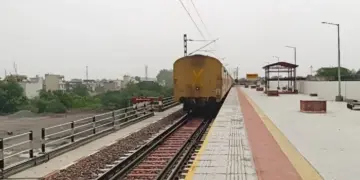

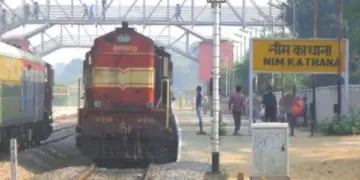


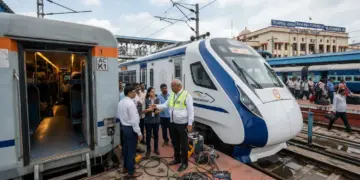
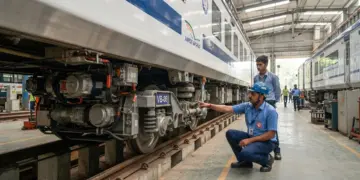


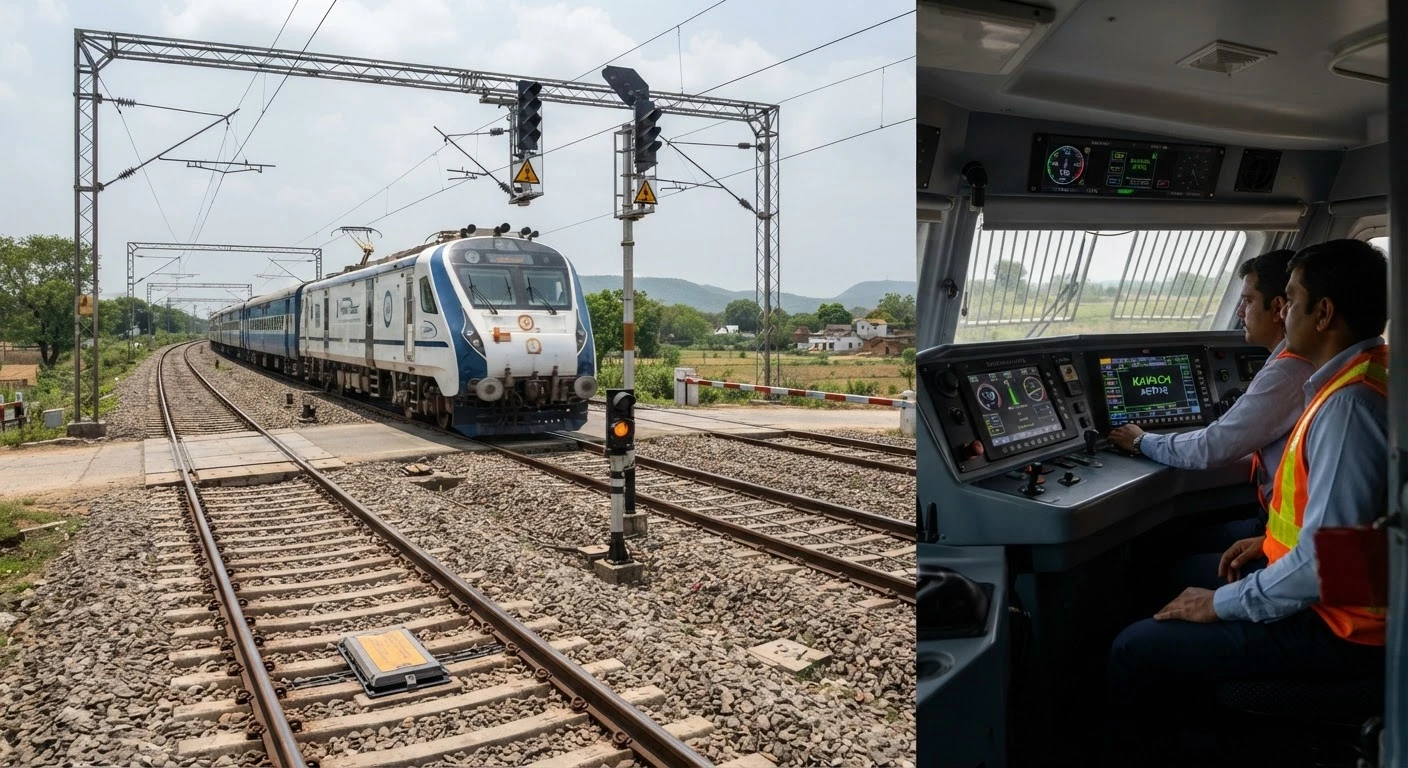

Indian Railways has marked a major milestone in passenger safety by commissioning the advanced KAVACH 4.0 automatic train protection system on the Mirzapur–Pandit Deen Dayal Upadhyaya (DDU) section. This deployment is a vital step in fortifying the high-density Delhi-Howrah corridor, which is among the busiest and most critical rail routes in the country. The latest rollout includes a significant 50-kilometer stretch between DDU and Bhabua Road, ensuring enhanced operational safety particularly during challenging weather conditions.
Key highlights of the KAVACH 4.0 deployment include:
- 2,569 route kilometers already covered by KAVACH 4.0 across the national network as of July 20, 2026.
- 1,146 kilometers of the high-density Delhi-Howrah corridor are now equipped with this safety technology.
- Safety Integrity Level-4 (SIL-4) certification, ensuring the highest global standards for rail safety.
- SURAKSHA platform introduced for real-time monitoring and predictive maintenance.
- ₹3,874 crore utilized for KAVACH infrastructure up to June 2026, with an additional ₹2,066 crore allocated for 2026-27.
Advanced Protection for Loco Pilots
Union Railway Minister Ashwini Vaishnaw, while addressing the Lok Sabha on July 29, 2026, emphasized that KAVACH 4.0 acts as a critical safety net for loco pilots. By automatically applying brakes when necessary, the system mitigates human error and prevents potential collisions. The version 4.0, which received official approval from the Research Designs and Standards Organisation (RDSO) on July 16, 2024, introduces several technical improvements, including higher location accuracy and seamless integration with existing Electronic Interlocking Systems.
Infrastructure and Future Growth
To support the nationwide expansion of KAVACH, Indian Railways has undertaken massive infrastructure upgrades. This includes the installation of 1,668 telecom towers, the laying of 11,253 km of optical fiber cable, and the establishment of data centers at 988 stations. Furthermore, the development of an indigenous Universal Braking Algorithm is expected to accelerate the installation process across other key routes, including the Delhi-Mumbai corridor.
These sustained investments are already delivering results. Reports indicate that only two consequential train accidents occurred during the first three months of the 2026-27 financial year, a testament to the effectiveness of integrating modern technology into India’s vast railway network.