



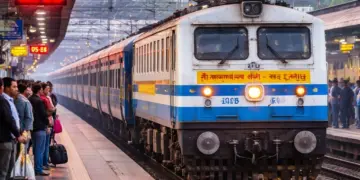





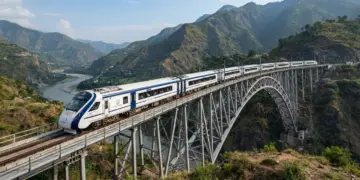
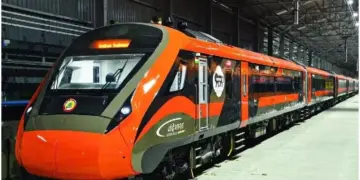
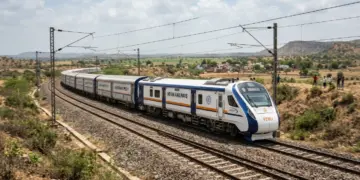
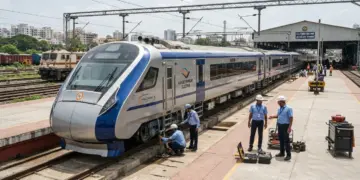
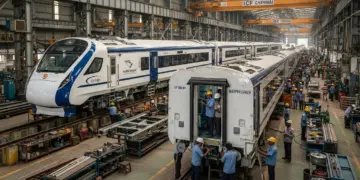
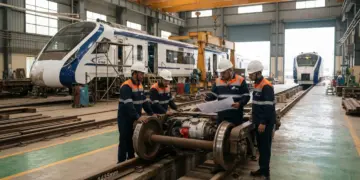
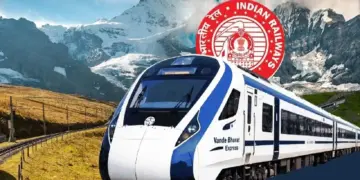



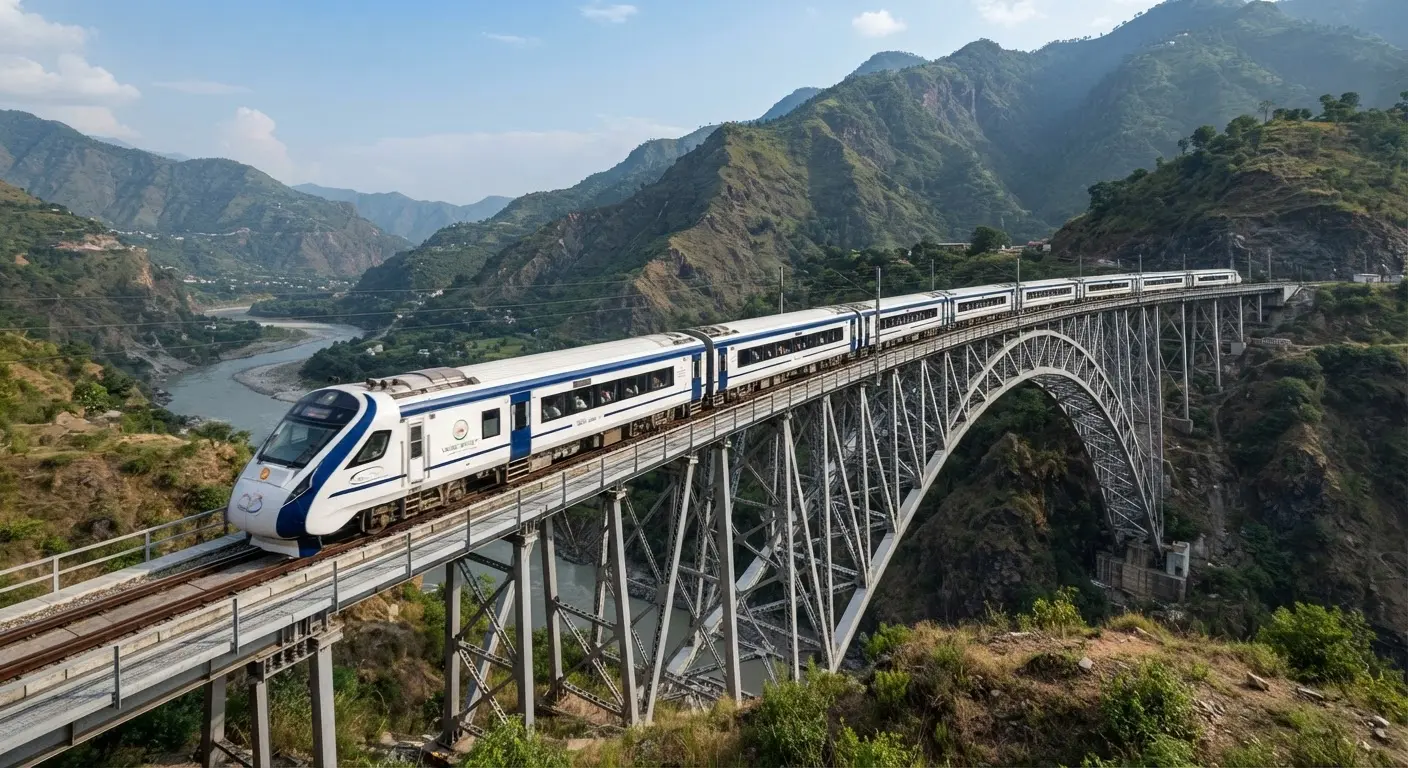

The Indian Railways has achieved a significant engineering and operational milestone as the Vande Bharat Express officially began traversing the Chenab Bridge at a speed of 100 kmph. Northern Railway recently shared captivating footage of the semi-high-speed train crossing this architectural marvel, highlighting the progress made in connecting the Kashmir Valley to the rest of the nation. This development marks a major step forward for the 111-km rail section between Shri Mata Vaishno Devi Katra and Banihal.
Key highlights of the operational update include:
- The maximum permissible speed on the Katra-Banihal section has been increased to 100 kmph.
- This replaces the previous speed limits of 85 kmph (Katra to Sangaldan) and 75 kmph (Sangaldan to Banihal).
- The Chenab Bridge is officially recognized as the world’s highest rail arch bridge.
- The project was executed by the Konkan Railway Corporation under the supervision of Indian Railways.
Enhancing Connectivity to the Kashmir Valley
This speed enhancement is a critical component of the broader effort to integrate the Kashmir region into India’s national railway network. By increasing the operational speed, Indian Railways aims to significantly improve travel efficiency and reduce transit times for passengers moving through the Jammu division. The visuals shared by Northern Railway on August 19 and 20, 2026, underscore the engineering prowess required to navigate this challenging terrain.
A Triumph of Indian Engineering
The construction of the rail link between Shri Mata Vaishno Devi Katra and Banihal is considered one of the most complex infrastructure projects undertaken by the national transporter. Traversing through the Himalayas, the route includes numerous tunnels and bridges, with the Chenab Bridge serving as the crown jewel. By successfully running the Vande Bharat Express at 100 kmph across this bridge, the Railways has demonstrated its capability to manage high-speed operations in difficult mountainous regions. This operational upgrade not only boosts connectivity but also serves as a testament to the ongoing transformation of Indian infrastructure, ensuring that the dream of seamless all-weather connectivity to the Kashmir Valley is becoming a reality for millions of passengers.