

















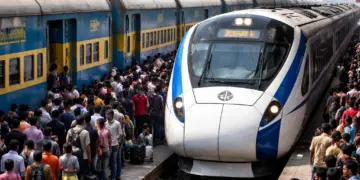








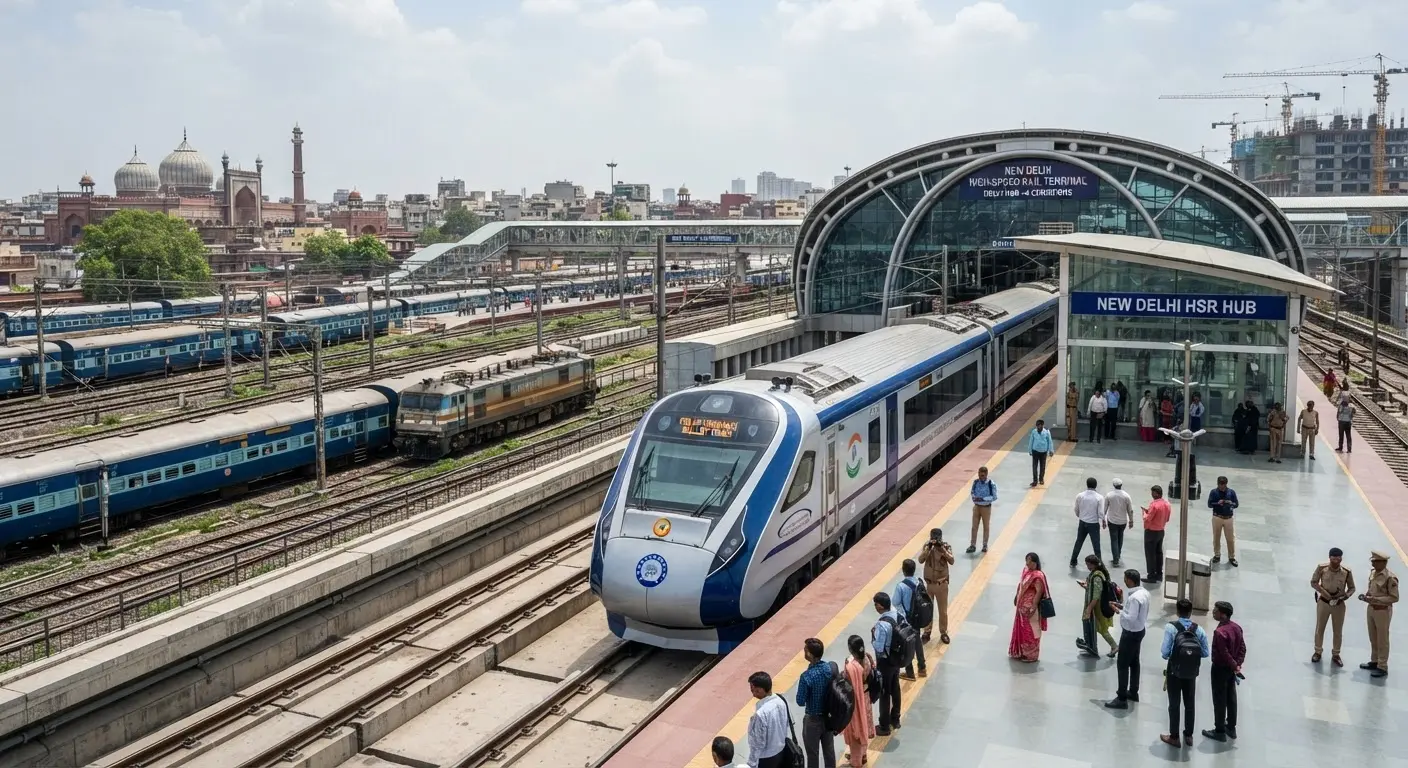

New Delhi is set to undergo a massive transport transformation as the central government prepares to launch four ambitious high-speed rail corridors radiating from the national capital. These projects, managed by the National High-Speed Rail Corporation Limited (NHSRCL) and Indian Railways, are part of a larger plan involving seven national corridors with an estimated cost of Rs 2 lakh crore. These initiatives aim to drastically reduce travel times and redefine inter-city connectivity across India.
- Delhi-Varanasi Corridor: A 813-865 km line passing through Noida, Agra, and Lucknow, designed to cut travel time to just 3 hours 50 minutes.
- Delhi-Siliguri Corridor: Spanning 1,705 km, this will be India’s longest, potentially reducing travel time from 20 hours to 6 hours.
- Delhi-Ahmedabad Corridor: Covering 886 km through Jaipur and Udaipur, this line will integrate with the existing Mumbai-Ahmedabad project.
- Delhi-Amritsar-Jammu Corridor: An estimated 450-500 km route aiming to connect the capital to Amritsar in two hours, with future extensions to Katra.
Strategic Progress and Project Status
The Delhi-Varanasi line is already seeing movement, with tenders for structural design work currently underway. Similarly, the Delhi-Jaipur-Udaipur-Ahmedabad corridor has its Detailed Project Report (DPR) ready and is currently awaiting final financial approvals from the Centre and state governments. Meanwhile, preliminary surveys and route alignments are being conducted for the Delhi-Amritsar-Jammu stretch, and feasibility studies are ongoing for the expansive Delhi-Siliguri route.
Lessons from the Mumbai-Ahmedabad Bullet Train
While these new routes are in the pipeline, the flagship Mumbai-Ahmedabad high-speed rail project continues to reach significant milestones. The first phase, connecting Surat and Bilimora (47 km), is targeted to be operational by August 2027, with the full corridor expected to be completed by the end of 2028. Recent engineering feats, such as the successful launch of 13 heavy portal beams in Ahmedabad—including a massive 1,640 metric tonne beam—showcase the rapid progress being made. To ensure these future projects remain on track, a parliamentary committee has advised that all land acquisition and statutory clearances must be finalized before formal project approvals are granted, ensuring a smoother construction phase for these massive infrastructure endeavors.