





















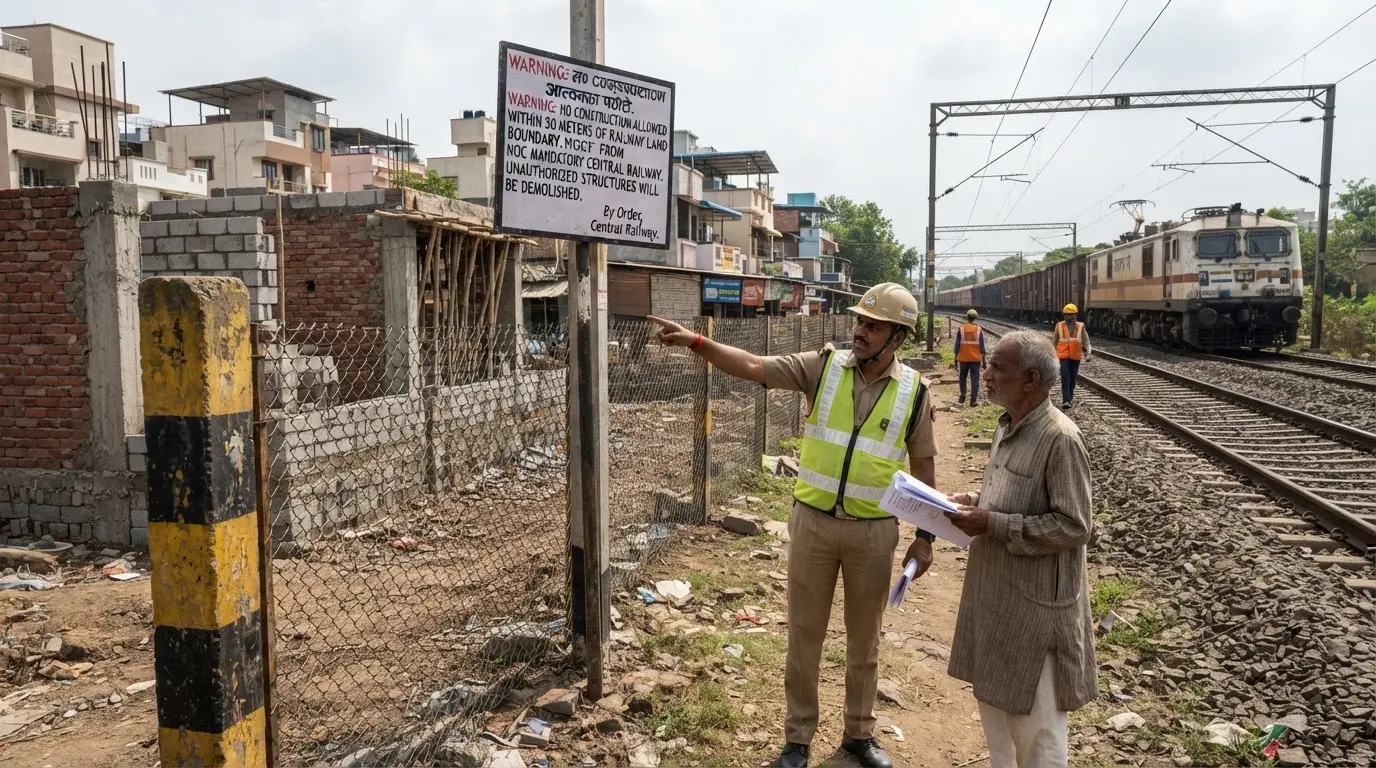

Indian Railways has issued a stern reminder to property owners, developers, and construction agencies regarding the strict regulations governing structures near railway land. To ensure safety and facilitate the seamless execution of infrastructure projects, the national transporter has reiterated that a No-Objection Certificate (NOC) is mandatory for any construction activity within 30 meters of the official railway land boundary. Recent warnings were formally issued by Central Railway on July 14 and 15, 2026, following a noticeable rise in unauthorized developments near project corridors.
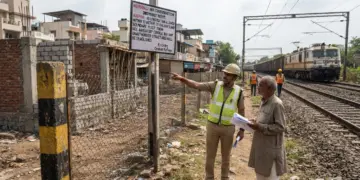
- The 30-meter restricted zone is measured from the official Railway Land Boundary, not the railway tracks.
- All constructions without a valid NOC are deemed unauthorized and ineligible for compensation.
- Central Railway is utilizing drone mapping and videography to document land status and prevent fraudulent claims.
- Local authorities must verify railway NOCs before approving any building proposals near railway land.
Understanding the 30-Meter Rule
It is crucial for landowners to understand that the 30-meter buffer is calculated from the official Railway Land Boundary. This regulation is not new; it is strictly governed by the Indian Railways Works Manual (IRWM), a Railway Board directive dated June 25, 2015, and the Unified Development Control and Promotion Regulations (UDCPR). These mandates have been integrated into local building bye-laws across the country to standardize safety protocols.
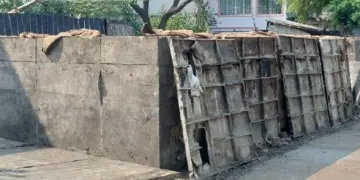
According to railway officials, any entity proceeding with construction without obtaining the required NOC does so at their own risk. Property owners will bear the entire financial burden of such projects, which may include the cost of mandatory demolition if the structure is found to be in violation of these safety guidelines.
Preventing Delays and Fraudulent Claims
Dr. Swapnil Nila, Chief Public Relations Officer of Central Railway, emphasized that unauthorized structures act as a major roadblock to national infrastructure development. These illegal buildings not only delay critical railway projects but also complicate the land acquisition and compensation process. To mitigate these issues, Central Railway has launched drone mapping and videographic surveys along its corridors. This technology allows the railway to create a precise digital record of land conditions, effectively curbing the potential for fraudulent compensation claims in the future.
Furthermore, the Railways has reached out to local governing bodies—including Gram Panchayats, Nagar Parishads, and various Planning Authorities—urging them to perform due diligence. Local authorities are now expected to confirm the presence of a valid railway NOC before granting any building permissions near railway property, ensuring that development remains safe, legal, and compliant with national standards.