



















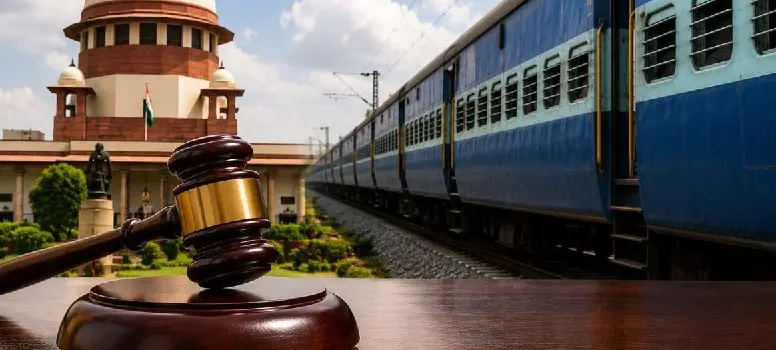

In a significant legal development for rail passengers across India, the Supreme Court has ruled that families of train accident victims cannot be denied compensation simply because a valid ticket was not recovered from the deceased. This landmark judgment, delivered on July 17, 2026, by a bench of Justices Sanjay Karol and N. Kotiswar Singh, provides much-needed relief to families who have previously faced claim rejections due to missing travel documents.
Key takeaways from the Supreme Court order include:
- The Railway Act is a welfare legislation and must be interpreted broadly.
- The principle of ‘no-fault liability’ under Section 124A means compensation is provided without needing to prove negligence.
- Claimants can now submit an affidavit as initial proof, shifting the burden to the Railways to disprove the claim.
- The Court ordered 8 lakh rupees in compensation for the family of a passenger who died in 2015.
- The Railways must pay the compensation within four weeks, with 8% annual interest applicable from March 2016 in case of delay.
Upholding Passenger Rights
The ruling stems from a case involving the tragic death of Chandrakant Thakkar, who fell from the Ahmedabad-Howrah Mail in November 2015. Previously, the Railway Claims Tribunal and the Madhya Pradesh High Court had dismissed the compensation plea filed by his widow, Lata, citing the absence of a ticket. By overturning these orders, the Supreme Court has clarified that the lack of a ticket does not automatically categorize a passenger as illegal or strip them of their rights to compensation under the law.
Addressing Safety and Overcrowding
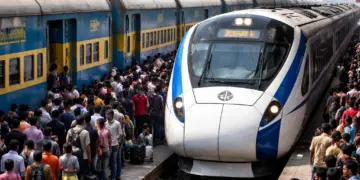
Beyond the legal compensation, the Supreme Court bench addressed the broader issue of passenger safety. The Court expressed serious concerns regarding severe train overcrowding, which frequently leads to accidents. To mitigate these risks, the judges suggested that the Indian Railways should increase the deployment of staff for better crowd management. Furthermore, the Court advised the national transporter to move away from using discriminatory terms like ‘second class passenger’ to describe individuals, suggesting that such terminology should only refer to the type of coach. While emphasizing the Railways’ duty, the Court also reminded passengers of their shared responsibility to travel safely and adhere to safety protocols.
This ruling serves as a massive win for transparency and fairness in the claims process, ensuring that the families of victims are not further burdened by bureaucratic hurdles during their time of grief.