














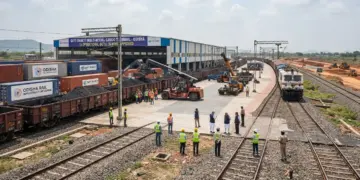









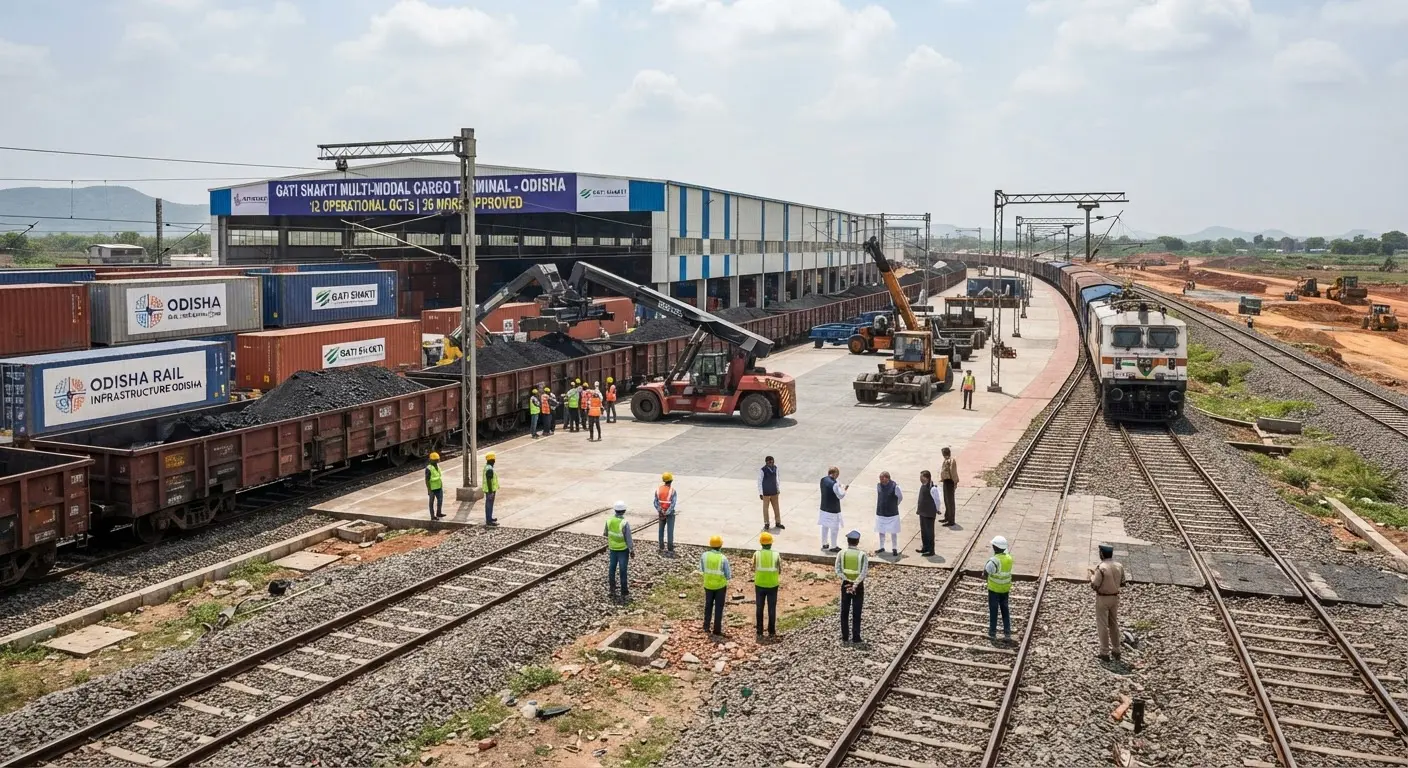

Odisha is witnessing a significant transformation in its railway cargo infrastructure as 12 Gati Shakti Multi-Modal Cargo Terminals (GCTs) are now fully operational across the state. Furthermore, the government has granted in-principle approval for 36 additional locations to be developed in the near future. This major push for logistics efficiency was confirmed by Union Railway Minister Ashwini Vaishnaw in a written reply to the Lok Sabha on Wednesday, July 24, 2026. Additionally, a proposal to establish a new terminal at Porjanpur in the Keonjhar constituency is currently under active consideration.
- 12 Gati Shakti Cargo Terminals are already operational across Odisha.
- 36 new locations have received in-principle approval for future development.
- Nationwide, 142 GCTs are now commissioned with a capacity of over 224 million tonnes per annum (MTPA).
- The initiative has attracted ₹10,000 crore in private investment across India.
Strengthening Industrial Connectivity
These terminals are strategically positioned in critical industrial hubs, including Paradeep—which hosts three of these terminals—as well as Jajpur Kendujhar Road, Jharsuguda, Cuttack, Sambalpur, and Sundargarh. By integrating modern infrastructure such as warehouses and silos, these facilities are designed to handle a wide variety of commodities including coal, steel, cement, fertilizers, and foodgrains.
Economic Impact and Logistics Efficiency
On a national scale, the Gati Shakti policy is yielding impressive results. During the 2025-26 fiscal year, the existing 142 terminals successfully handled 146 million tonnes of freight. The primary goal of this expansion is to lower the logistical burden on industries by reducing first-mile and last-mile costs while significantly improving wagon turnaround times.
By facilitating a shift from road to rail, these terminals not only provide a more sustainable transport solution but also act as a catalyst for regional economic growth and job creation. The involvement of the private sector, which has invested approximately ₹10,000 crore, underscores the success of the policy in creating a more efficient, cost-effective, and robust multimodal logistics network for India’s growing economy.