



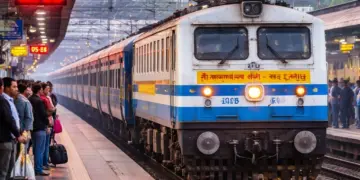
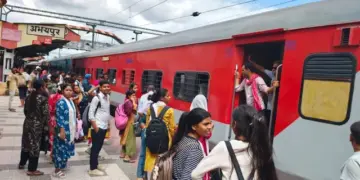

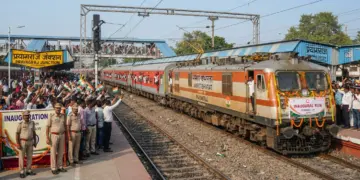
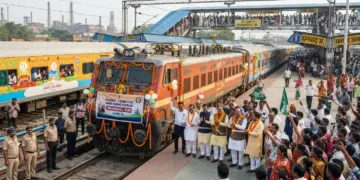

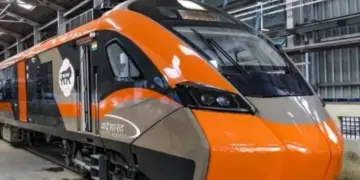

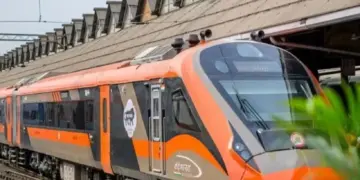


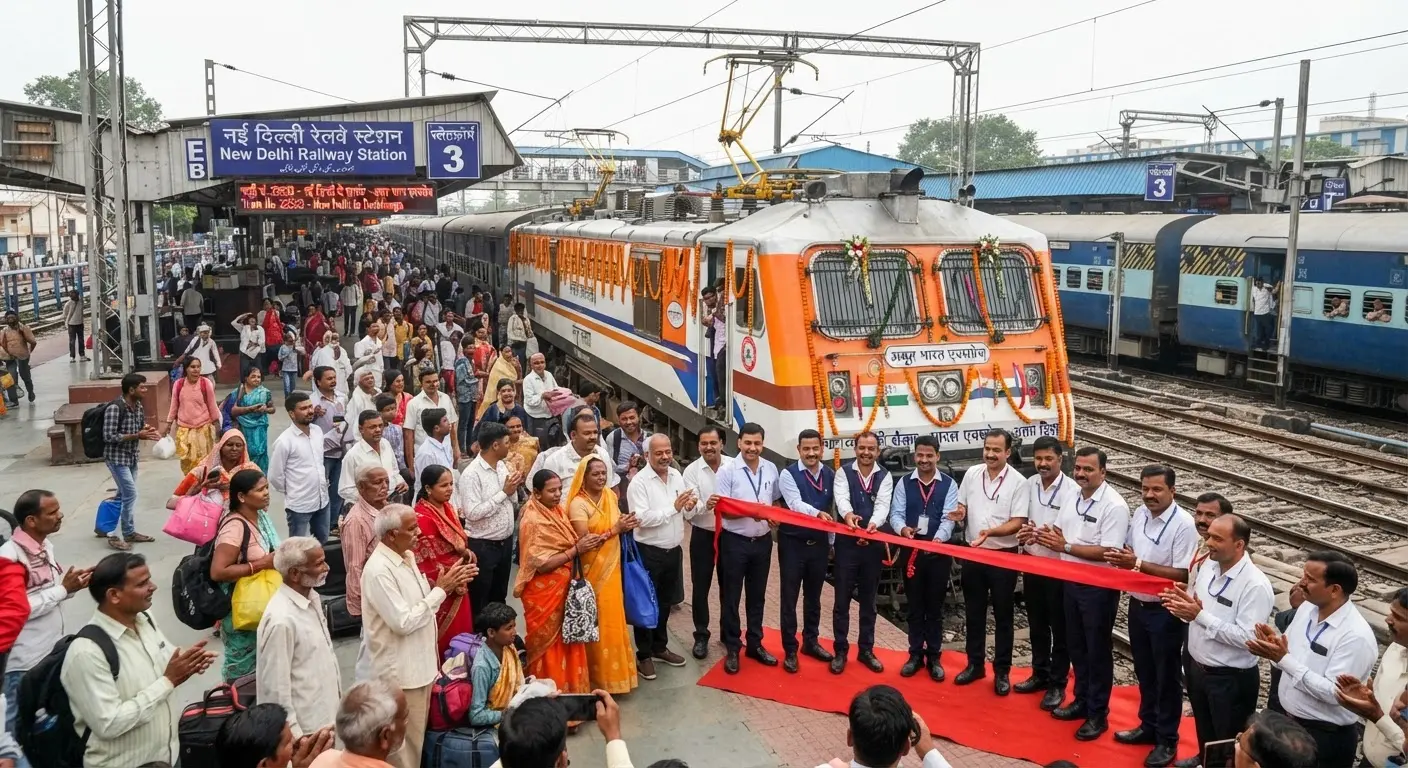

The Indian Railway Board has officially approved the introduction of seven new Amrit Bharat Express trains, marking a significant expansion of the national rail network. Designed to provide comfortable, long-distance travel at affordable fares, these trains specifically cater to the needs of lower and lower-middle-income passengers. With these additions, the total fleet of Amrit Bharat Express services will reach 57, supporting the government’s Amrit Mahotsav vision to modernize 75 key rail corridors by 2027.
Key highlights of the expansion include:
- Total fleet increase: The network will now encompass 57 Amrit Bharat Express trains.
- Strategic connectivity: New routes bridge critical gaps between northern, central, western, and southern India.
- Enhanced accessibility: Services focus on long-distance routes with high passenger demand.
- Collaborative planning: Routes were finalized based on zonal feedback and infrastructure assessments.
New Routes and Key Connectivity
Among the newly sanctioned services, the Dhanbad-Coimbatore Amrit Bharat Express (Train No. 22363/22364) stands out as a vital link between Jharkhand and Tamil Nadu, passing through Odisha, Andhra Pradesh, and Telangana. Additionally, the Charlapalli-Gorakhpur Amrit Bharat Express (Train No. 22075/22076) will connect Telangana and Uttar Pradesh with major halts in Bhopal and Lucknow.
For passengers traveling to India’s financial capital, the Gorakhpur-Bandra Terminus Amrit Bharat Express (Train No. 15085/15086) provides a direct weekly connection, while the Subedarganj-Lokmanya Tilak Terminus Amrit Bharat Express (Train No. 14121/14122) and the Prayagraj-Lokmanya Tilak Terminus Amrit Bharat Express (Train No. 20436/20435) offer improved access to Mumbai from Uttar Pradesh. Rounding out the new additions are the Gorakhpur-Delhi Amrit Bharat Express (Train No. 15095/15096) and the Prayagraj-Udhna Amrit Bharat Express (Train No. 20437/20438), which will facilitate travel to the national capital and Gujarat, respectively.
Future Outlook and Implementation
Officials, including Kapinjal Kishore Sharma of the Northeast Frontier Railway, have reported high occupancy rates and positive feedback on existing services, validating the demand for this model. While the routes have received official approval between August 13 and August 17, 2026, the specific commencement dates for these services remain subject to final scheduling by the respective railway zones. As the Indian Railways continues to finalize manufacturing tenders and staffing requirements, these trains are poised to become a cornerstone of accessible, long-distance rail travel across the country.