


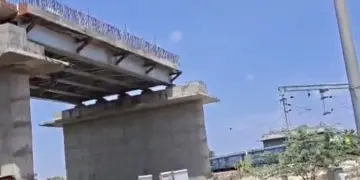
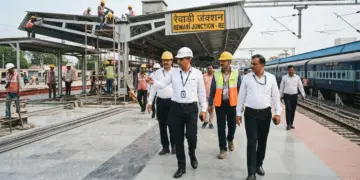





The long-awaited construction of two vital Road Overbridges (ROBs) in Jamshedpur has moved a step closer to reality as the South Eastern Railway has officially issued a tender worth ₹112.83 crore. This infrastructure project aims to eliminate congestion at the Barigora and Govindpur railway crossings, significantly improving traffic flow and passenger safety in the region.
Key highlights of the project include:
- Total project cost: ₹112.83 crore, fully funded by the Indian Railways.
- Allocation: ₹43.85 crore for the Govindpur ROB (LC-137) and ₹68.98 crore for the Barigora ROB (LC-138).
- The Govindpur ROB will feature a ‘T’-shaped design to minimize local displacement.
- The Barigora ROB is designed as a ‘Through-type’ bridge to support heavy vehicular traffic.
- Foundation stone was virtually laid by Prime Minister Narendra Modi on February 26, 2024.
Overcoming Funding Hurdles
Initially planned as a cost-sharing model between the state government and Indian Railways, the project faced significant stagnation due to a lack of interest from the state authorities. However, following persistent advocacy by local Member of Parliament Bidyut Baran Mahato, the Railway Ministry made the strategic decision to bear 100% of the project cost. This decision was formally confirmed by South Eastern Railway General Manager Anil Kumar Mishra, ensuring the project could proceed despite previous financial roadblocks.
Design Innovations and Local Concerns
To address concerns regarding land acquisition and the displacement of residents, the authorities have optimized the project designs. The Govindpur ROB’s ‘T’-shaped structure is specifically engineered to reduce the number of affected homes from 93 down to approximately 30. Despite this progress, frustration remains high among the local community. On July 17, 2026, residents and panchayat representatives staged protests at the Barigora crossing, demanding an immediate start to construction.
Local political leaders, including AJSU Party District Secretary Kritiwas Mandal, have called for the railway authorities to finalize the agency selection process and begin work on a war footing within 15 days. As of mid-July 2026, the tender process is in its final stages, and residents remain hopeful that the sound of construction machinery will soon replace the sound of protests at these busy crossings.