India Launches First Hydrogen Train and Unveils Major Rail Infrastructure Projects in Haryana
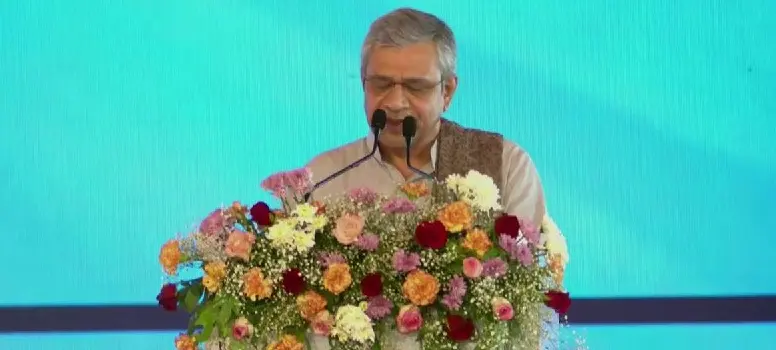
India has officially entered the era of sustainable rail travel with the launch of its first indigenous hydrogen-powered train. Flagged off by Prime Minister Narendra Modi from Jind, Haryana, on July 17, 2026, this milestone marks a significant shift toward green energy for the national transporter. The initiative is part of the broader ‘Hydrogen for Heritage’ project, which aligns with India’s long-term goal of achieving Net Zero emissions by 2070.
Key highlights of the announcement include:
• India’s first hydrogen train, featuring 10 coaches, operates on the Jind-Sonipat section with a top speed of 75 kmph.
• The propulsion system utilizes a 1200 kW hydrogen fuel cell, emitting only water vapor.
• Prime Minister Modi inaugurated and laid foundation stones for projects worth ₹14,700 crore in Jind and approximately ₹25,000–₹26,800 crore across the region.
• 75 stations were redeveloped under the Amrit Bharat Station Scheme at a cost of ₹1,570 crore.
• Two new Vande Bharat Sleeper trains were introduced on the Delhi-Patna and Varanasi-Chheharta routes.
Advancing the Green Rail Revolution
The hydrogen train, fully designed and manufactured under the ‘Atmanirbhar Bharat’ vision, represents a leap in domestic engineering. Beyond this, Indian Railways is nearing the completion of its massive electrification drive. As of May 31, 2026, the network has achieved 99.6% electrification, covering 70,002 out of 70,271 Route Kilometres. The remaining 269 RKM are slated for completion within the 2026-27 financial year, keeping the railways on track for net-zero carbon emissions by 2030.
Infrastructure and Passenger Experience Upgrades
In addition to the hydrogen project, the government is aggressively modernizing passenger infrastructure. Under the Amrit Bharat Station Scheme, 75 redeveloped stations have been unveiled across 20 states, offering world-class amenities to travelers. This is part of a larger mission to transform over 1,300 stations nationwide.
Furthermore, the Vande Bharat fleet continues to expand. The addition of two new Vande Bharat Sleeper trains brings the total count to 106 active services, now operating across 105 distinct routes. The new services connecting Delhi to Patna and Varanasi to Chheharta (near Amritsar) are expected to significantly ease travel demand and enhance the passenger experience for long-distance commuters.