








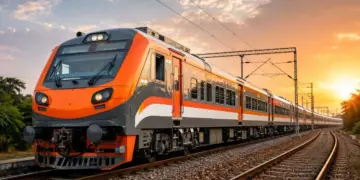



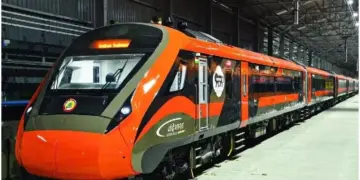
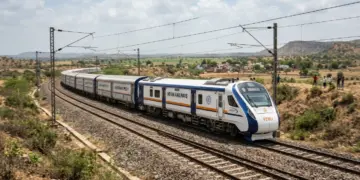
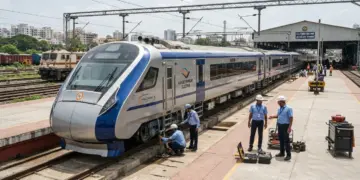

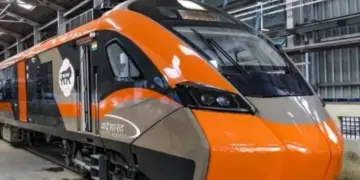


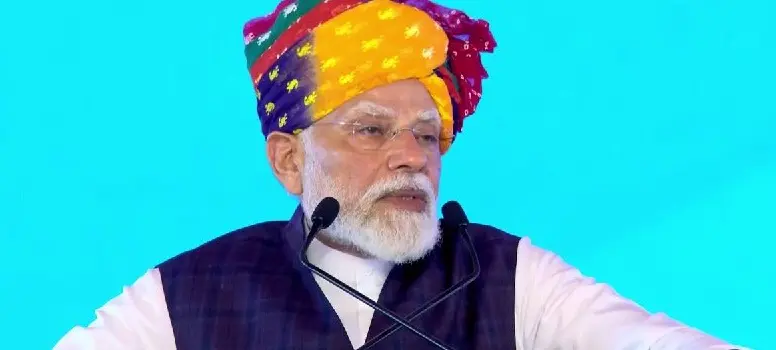

Prime Minister Narendra Modi officially launched India’s maiden hydrogen-powered train, the NaMo Green Rail, on Friday, July 17, 2026. Flagged off from Jind, Haryana, this historic milestone signifies a major transition toward sustainable rail travel and positions India at the forefront of global green energy adoption. The project is set to enhance local infrastructure while opening new job avenues for the youth in the region.
- Operational Route: The train will run on the 89-kilometre Jind-Sonipat section.
- Speed Specs: Designed for an operational speed of 75 kmph with a maximum limit of 110 kmph.
- Technology: Features Proton Exchange Membrane (PEM) fuel cell technology with near-zero emissions.
- Infrastructure: Jind now houses India’s largest hydrogen storage and refuelling facility.
Engineering and Technology Behind NaMo Green Rail
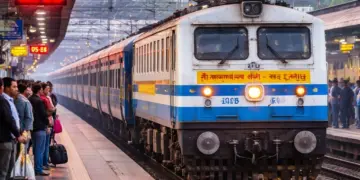
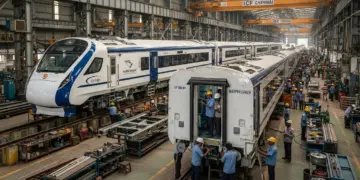
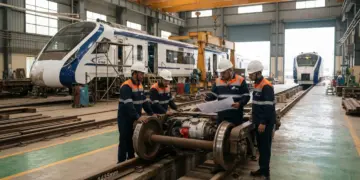
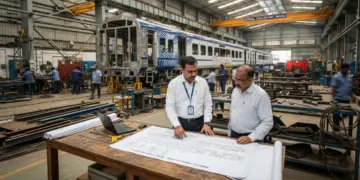
Manufactured by the Integral Coach Factory (ICF) in Chennai, this 10-coach train represents a leap in indigenous engineering. The PEM fuel cell system works by generating electricity onboard through the reaction of hydrogen and oxygen, leaving only water vapour as a by-product. To support this, a massive refuelling facility has been built in Jind, capable of storing 3,000 kg of hydrogen produced on-site via electrolysis. The project adheres to rigorous safety standards, having received design approval from the Research, Design & Standards Organisation (RDSO), licensing from the Petroleum and Explosives Safety Organisation (PESO), and a safety certification from TUV SUD, Germany.
Economic Impact and Future Vision
During the launch, Union Minister of Railways Ashwini Vaishnaw described the event as a pivotal shift in Indian Railways’ energy strategy. Haryana Chief Minister Nayab Singh Saini noted that the project reinforces the state’s role in technology-driven development. Beyond providing cleaner transit, the project is expected to stimulate local trade, logistics, and tourism.
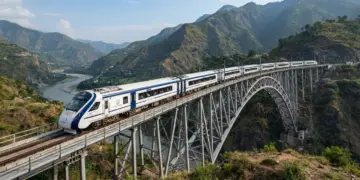
Looking ahead, Indian Railways intends to scale this pilot into a national program. Future plans include deploying hydrogen-powered rolling stock on scenic heritage routes, such as the Kalka-Shimla line. This initiative is a vital component of India’s National Green Hydrogen Mission, bringing the nation closer to its ambitious Net Zero carbon emission goals.