





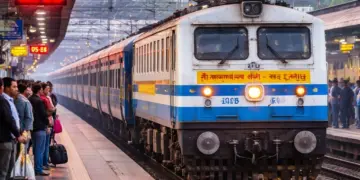

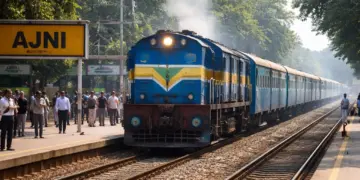
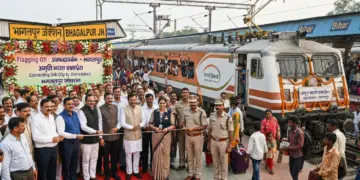






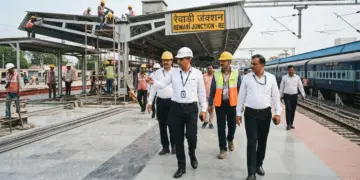

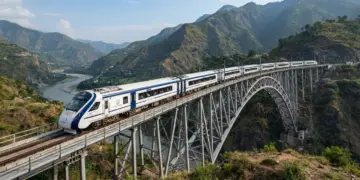
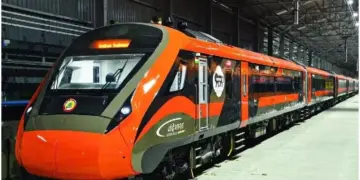
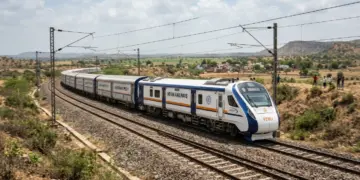
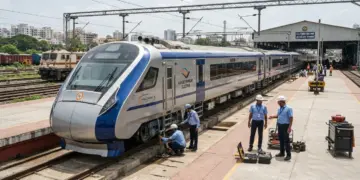
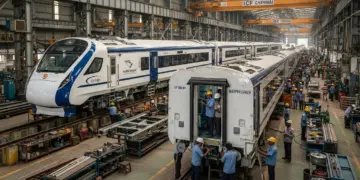
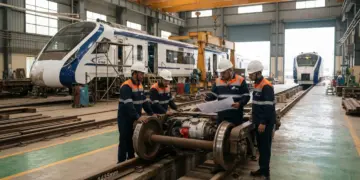

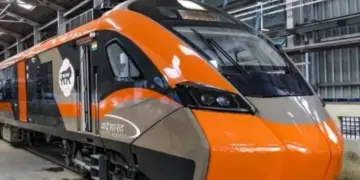
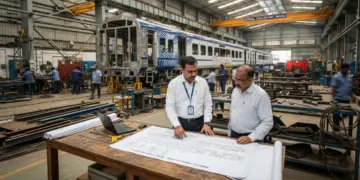


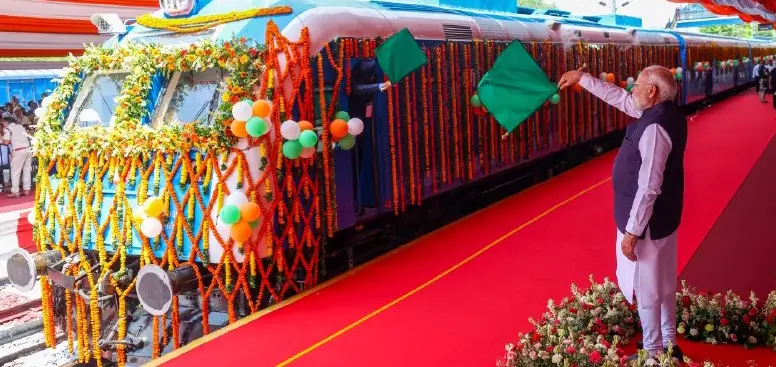

India has officially entered the era of sustainable rail travel with the launch of the country’s first hydrogen-powered train, the “NaMo Green Rail.” Flagged off by Prime Minister Narendra Modi on July 17, 2026, from Jind railway station in Haryana, this historic milestone places India among an elite group of nations leading the transition to zero-emission rail transportation.
Key details of the NaMo Green Rail launch include:
- Operational Route: The train will run on the 89-kilometer Jind-Sonipat section of the Northern Railway.
- Propulsion System: It utilizes advanced 1,200-kilowatt (3,200 HP) Proton Exchange Membrane (PEM) fuel cell technology.
- Capacity and Speed: The 10-coach train can carry approximately 2,600 passengers at an operational speed of 75 kmph.
- Environmental Impact: The process produces only water vapor and heat, effectively replacing diesel locomotives.
- Safety Standards: Certified by TÜV SÜD, Germany, featuring multi-layer leak detection and automatic shut-off systems.
A Leap Toward Net Zero Emissions
This project serves as a cornerstone of the “Atmanirbhar Bharat” initiative and aligns with the National Green Hydrogen Mission. Union Minister of Railways Ashwini Vaishnaw highlighted that the indigenous development of this technology not only supports the goal of achieving net-zero carbon emissions for Indian Railways by 2030 but also opens doors for future technology exports. The project, which involved a capital investment of approximately $12 million, is a testament to India’s growing expertise in green engineering.
Infrastructure and Safety
To support this new fleet, Indian Railways has established the nation’s largest railway hydrogen storage and refuelling facility in Jind, boasting a storage capacity of 3,000 kg of hydrogen. All infrastructure components have received the necessary clearances from the Petroleum and Explosives Safety Organisation (PESO).
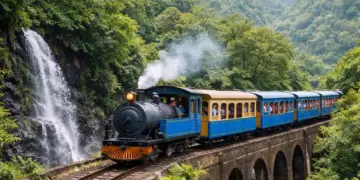
Beyond the Jind-Sonipat section, the government plans to leverage this technology to preserve the environment on sensitive heritage railway routes. By replacing traditional diesel engines with hydrogen fuel cells, Indian Railways is setting a new global benchmark for eco-friendly public transport, ensuring that the legacy of the Indian rail network continues to modernize while safeguarding the climate for future generations.