










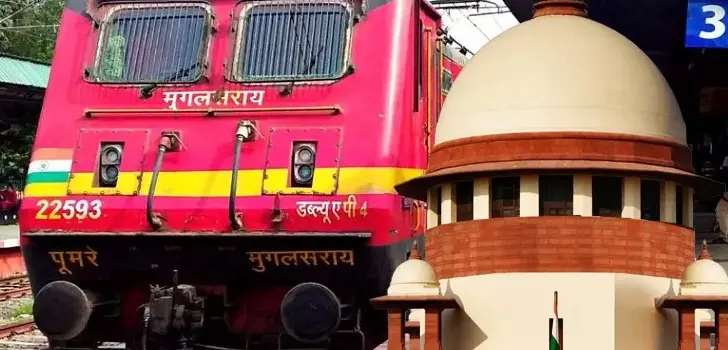

In a significant move to improve passenger safety and uphold dignity, the Supreme Court of India issued a series of directives to Indian Railways on Friday, July 17, 2026. The bench, comprising Justices Sanjay Karol and Nongmeikapam Kotiswar Singh, addressed the persistent issue of overcrowding and the problematic terminology used to classify railway travelers. The court emphasized that the safety of passengers must remain the top priority for the national transporter.
- Indian Railways must implement stricter measures to prevent overcrowding in trains.
- The term ‘Second Class Passenger’ should be removed from manuals to respect human dignity.
- Families of deceased passengers are entitled to ₹8 lakh compensation, even if a ticket is not found.
- The Railway Act is recognized as welfare legislation, placing the burden of proof on the railways.
- Better enforcement of existing crowd management guidelines is required.
Upholding Dignity and Safety
The Supreme Court observed that the current practice of labeling travelers as ‘Second Class Passengers’ is inconsistent with the constitutional principles of equality and dignity. The court clarified that the term ‘Second Class’ should strictly refer to the coach category and not be used to describe the individuals traveling. This observation came during the hearing of an appeal involving a 2015 incident where a man tragically lost his life after falling from an overcrowded train.
In a major relief for families, the court ordered ₹8 lakh in compensation to the victim’s widow. Crucially, the bench ruled that compensation cannot be denied simply due to the absence of a ticket, provided an affidavit is submitted. The court highlighted that as welfare legislation, the burden of proving that a passenger was traveling illegitimately rests with the Indian Railways, not the grieving family.
Improving Crowd Management
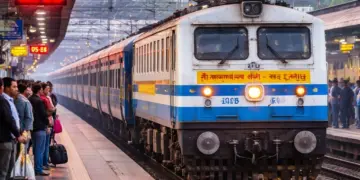
While acknowledging that the Indian Railway Commercial Manual already outlines detailed crowd management strategies, the court noted that implementation remains poor. To address this, the bench suggested that the railways consider recruiting more youth to help enforce safety protocols and manage crowds, which would simultaneously generate employment and boost security. Furthermore, the court reminded passengers of their own responsibility to prioritize safety by avoiding footboard travel and refraining from boarding dangerously overcrowded trains, as these behaviors are primary causes of avoidable fatalities.