




















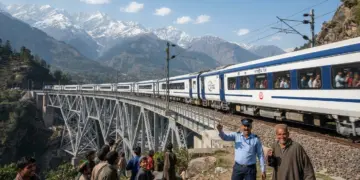

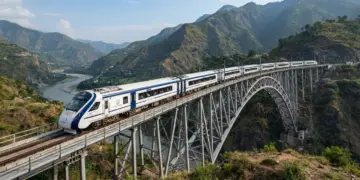





Indian Railways has expanded the scope of technical checks for all major and important rail bridges across the country. This decision follows several incidents of bridge collapses and structural failures. The goal is to ensure high quality and durability of the infrastructure to prevent future accidents.
👉: Southern Railway: ChicKing outlets to open at 10 railway stations in Kerala।
What are the new mandatory tests for railway bridges?
Previously, the strength of bridges was mainly checked using the Cube Test. Now, the Railway Board has made four levels of testing compulsory for all components like foundations, pillars, and superstructures. These tests include:
- Cube Test: Basic strength check of concrete.
- Core Test: Deep structural integrity check.
- Permeability Test: Checking the water seepage capacity of the concrete.
- Ultrasonic Pulse Velocity (UPV) Test: Using sound waves to find internal cracks or voids.
How will the monitoring and approval process work?
Executive Director of the Railway Board, Abhimanyu Lamba, has issued instructions to all railway zones to implement these rules immediately. A bridge component will only be accepted if it passes all four tests. To maintain transparency, every test report will be sent to the Railway Board through the PCDO system, with constant monitoring at both headquarters and field levels.
Recent incidents leading to these safety changes
Several recent events highlighted the need for stricter quality control. On May 31, 2026, a part of an under-construction overbridge collapsed in Adas village, Anand district of Gujarat. Similarly, on June 30, 2026, a railway bridge over the Simen river in Assam was partially damaged due to heavy rains. Additionally, a shed built under the Amrit Bharat Station Scheme at Banmankhi station in Purnia collapsed during the first rain on June 30, 2026.
Frequently Asked Questions (FAQs)
What are the four mandatory tests for new railway bridges?
The four mandatory tests are Cube Test, Core Test, Permeability Test (to check water seepage), and Ultrasonic Pulse Velocity (UPV) Test.
Which parts of the bridge will be covered under these tests?
The testing will cover all critical parts including the foundation, pillars, abutments, pier caps, abutment caps, and the concrete superstructure.