













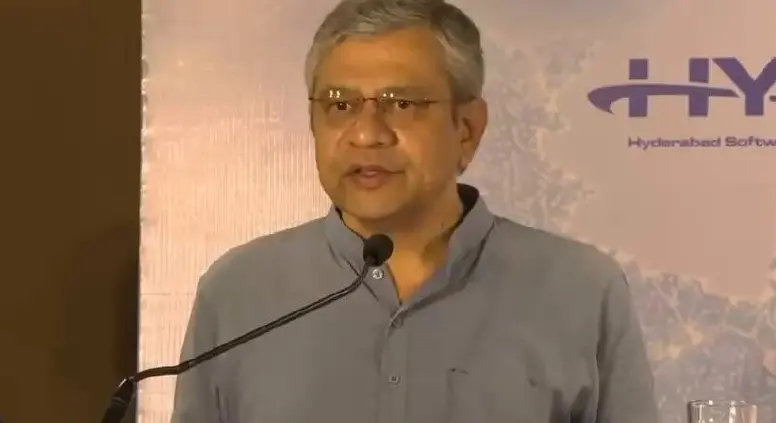

India’s dream of high-speed rail connectivity is inching closer to reality as the Mumbai–Ahmedabad High-Speed Rail (MAHSR) corridor prepares for a phased rollout. Union Minister for Railways Ashwini Vaishnaw confirmed that the nation’s first bullet train project is reaching significant milestones, with the initial stretch between Surat and Bilimora slated to open by August 15, 2027.
- Surat–Bilimora section is the first to open in 2027.
- The 508-km corridor is expected to be fully operational by 2029.
- The project has achieved approximately 80% physical progress.
- India has successfully mastered technology for 350 kmph operations.
- Recent breakthroughs include the launch of 13 heavy portal beams in Ahmedabad and the start of underground tunneling in Mumbai.
A Phased Approach to High-Speed Travel
Following the inaugural launch of the Surat–Bilimora section, the National High-Speed Rail Corporation Limited (NHSRCL) plans a strategic rollout of subsequent segments. Passengers can expect the Vapi–Surat, Vapi–Ahmedabad, and Ahmedabad–Thane sections to follow in quick succession. By 2029, the entire 508-km corridor is projected to be fully functional, bridging the gap between India’s financial capital and the commercial hub of Gujarat.
Minister Vaishnaw emphasized that this project is more than just a train; it represents India’s capability to design and manufacture infrastructure that supports speeds of 350 kmph. Leveraging Japanese Shinkansen technology, the project aims to create a world-class high-speed rail ecosystem that will redefine passenger travel in the country.
Infrastructure Milestones and Technical Progress
The pace of construction has accelerated significantly in recent months. On July 10, 2026, NHSRCL completed the launch of all 13 heavy portal beams in Ahmedabad, a massive engineering feat that includes a 1,640-metric-tonne precast-prestressed beam designed to cross existing railway lines. Simultaneously, the difficult task of underground tunneling continues; on July 8, a Tunnel Boring Machine began operations from Vikhroli toward the Bandra Kurla Complex (BKC) station, marking a vital step in the 21-km underground tunnel section in Maharashtra.
Beyond the tracks, travel experience is being reimagined. The Ahmedabad station is currently being transformed into a world-class multimodal transport hub, featuring a unique, modern design inspired by kites. As the project nears its final stages, it stands as a testament to India’s growing prowess in large-scale railway infrastructure.