









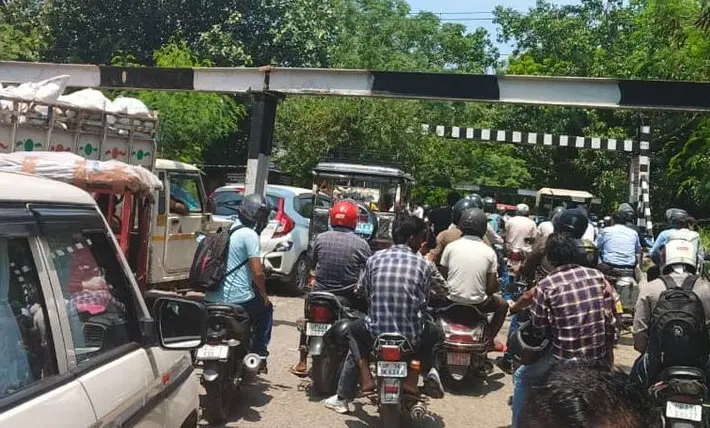

The Ghaziabad Development Authority (GDA) has officially launched plans to construct an underpass at the Rajnagar Railway Crossing, a move set to transform the daily commute for thousands of residents. This vital infrastructure project aims to eliminate the persistent traffic gridlocks caused by frequent train movements on the busy Delhi-Meerut Road. By replacing the existing surface-level crossing with a permanent underpass, authorities hope to provide a seamless transit experience for commuters traveling between key city hubs.
- Project Location: DPSG Railway Crossing, opposite Rajnagar Yojana Sector-2 on the Delhi-Meerut Road.
- Traffic Impact: The crossing gates close 12 to 15 times daily, causing 10 to 30-minute delays for commuters.
- Affected Population: Over 500,000 residents and 50,000 industrial workers rely on this route.
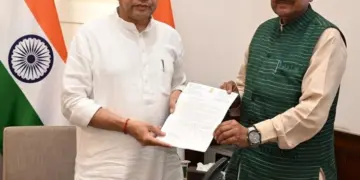
- Current Status: GDA officials, led by Vice Chairman Nand Kishor Kalal, have ordered an immediate Detailed Project Report (DPR) and technical surveys.
Addressing a Major Bottleneck
For years, the Rajnagar Railway Crossing has been a significant pain point for Ghaziabad residents. During peak hours, the closure of railway gates results in vehicle queues extending for several kilometers, severely impacting school children, office-goers, and logistics transport. The area serves as a gateway to major residential and commercial pockets, including Rajnagar, Kavinagar, Shastri Nagar, and the Meerut Road industrial area, which hosts over 500 manufacturing units.
Strategic Planning and Coordination
Following a high-level site inspection conducted on July 10, 2026, GDA Vice Chairman Nand Kishor Kalal emphasized the urgency of the project. He has instructed the engineering team to prioritize technical surveys and traffic studies to ensure the underpass is designed to handle current and future traffic loads efficiently. GDA Chief Engineer Alok Ranjan has been appointed to spearhead the preparatory phase. Given the site’s proximity to active rail lines, the GDA will work in close coordination with the Railway Department to ensure all safety protocols and technical clearances are met. This development is expected to be a game-changer for the city’s urban mobility, drastically reducing travel time and improving road safety for the half-million people who navigate this route daily.