





















Indian Railways has introduced a series of stringent measures to bolster passenger safety, privacy, and onboard discipline. Under the Jan Vishwas (Amendment of Provisions) Act, 2026, which came into effect on July 1, 2026, the national transporter has revised the Railways Act, 1989, to impose heavier fines for unauthorized travel and other prohibited activities. These changes are designed to ensure a more secure and comfortable environment for all commuters across the railway network.
- Male passengers in ladies’ coaches face an immediate ₹2,500 fine.
- Illegal occupancy of reserved seats now incurs a ₹2,000 penalty.
- Minimum fine for ticketless travel increased to ₹500.
- Smoking on trains or premises carries a fine of ₹2,000.
- Carrying dangerous goods now attracts a minimum penalty of ₹10,000.
New Rules for Coach Discipline
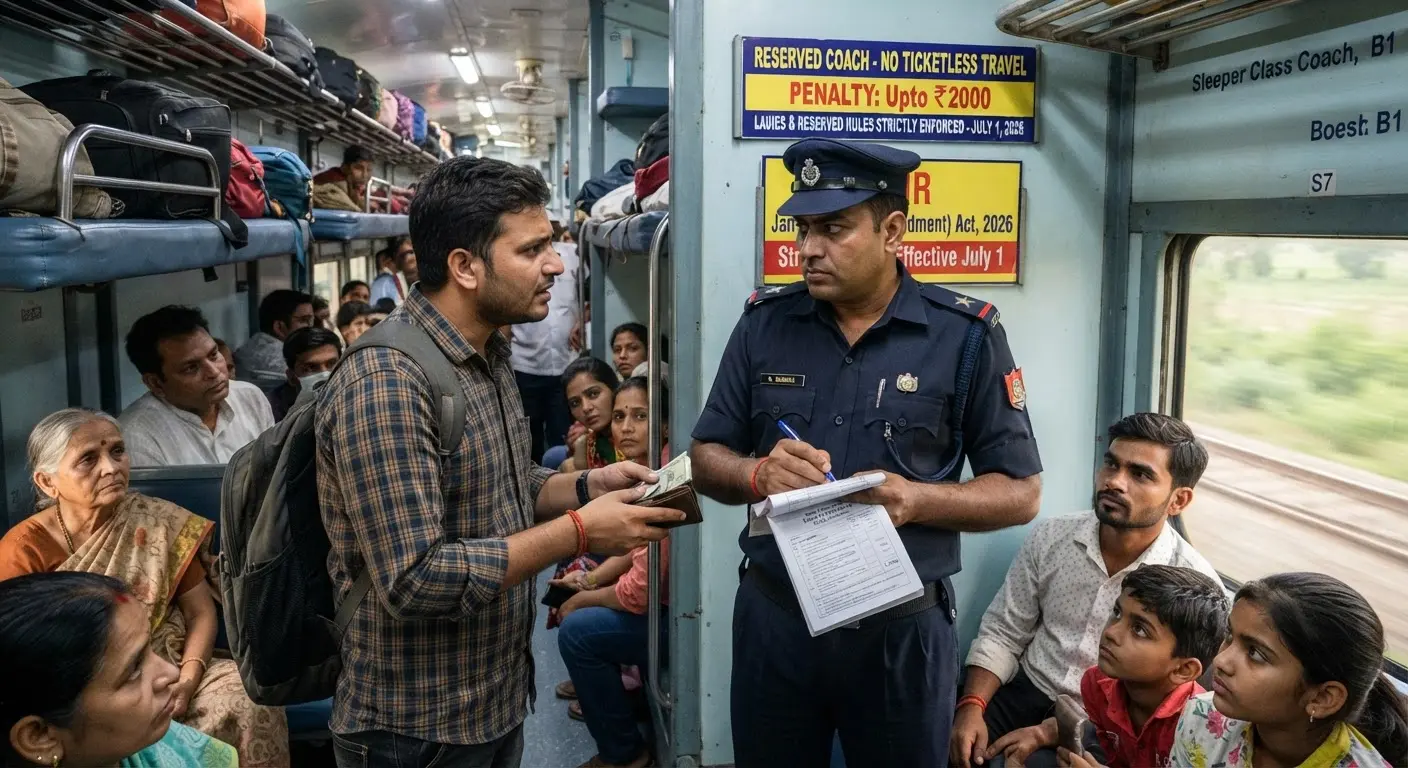
The most significant update concerns the protection of reserved spaces. Male passengers found traveling in coaches explicitly reserved for women will now be penalized with an immediate fine of ₹2,500. Should a passenger refuse to pay this on-the-spot penalty, the matter may be escalated to court, where the fine could reach ₹5,000, alongside potential legal action for repeat offenders. It is important to note that transgender persons are explicitly exempted from these specific provisions.
Furthermore, the railway has tightened rules regarding reserved seats in general coaches. Passengers who forcibly enter or occupy reserved berths without a valid seat allocation—including waitlisted passengers—are now categorized as traveling without a valid ticket for that specific compartment, resulting in a mandatory fine of ₹2,000.
Increased Fines for General Infractions
Beyond coach-specific regulations, the ministry has hiked penalties for common offenses to act as a stronger deterrent. The minimum fine for traveling without a valid ticket has been doubled to ₹500, up from the previous ₹250, excluding the actual fare due. Non-payment of this fine could lead to imprisonment.
Safety remains a top priority, with smoking inside trains or railway premises now punishable by a ₹2,000 fine. If the fine is not paid immediately, the offender may face court proceedings with penalties rising to ₹5,000. Additionally, the penalty for carrying prohibited or dangerous goods has been set at a substantial minimum of ₹10,000. The Railway Protection Force (RPF) and Ticket Checking Staff (TTEs) have been instructed to intensify surprise checks to ensure these new regulations are strictly followed by all passengers.