

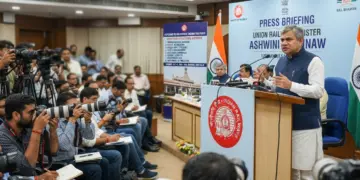
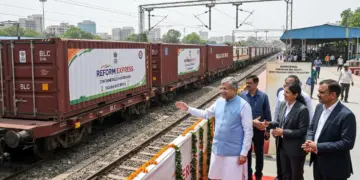
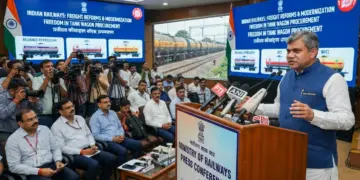

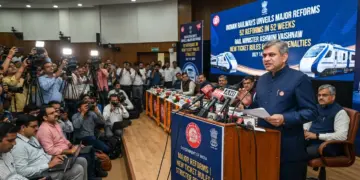



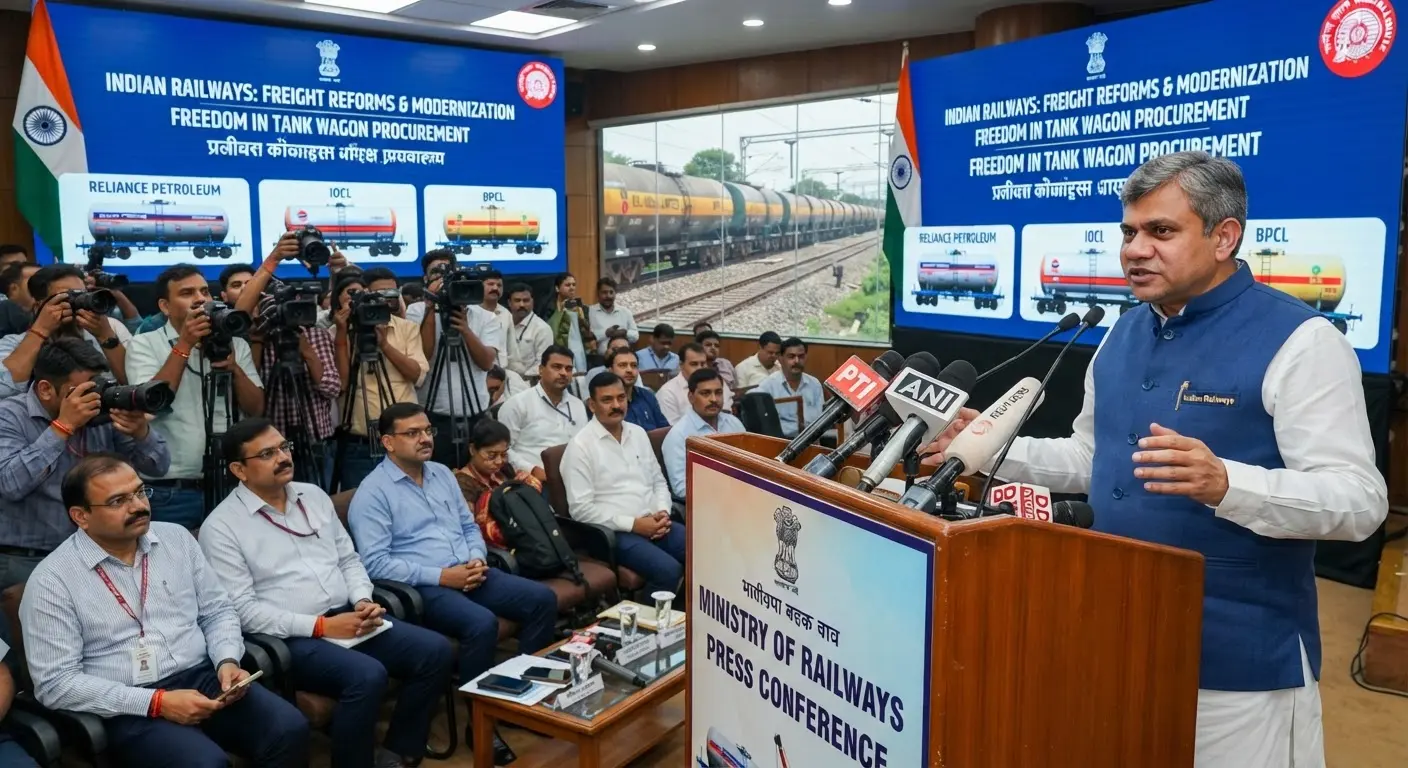

The Ministry of Railways has unveiled a transformative set of structural reforms aimed at modernizing freight operations and logistics across the country. Announced by Union Minister Ashwini Vaishnaw on July 14, 2026, these measures are part of the ambitious “52 Reforms in 52 Weeks” initiative, marking the 17th milestone in the series. The policy changes focus on granting greater autonomy to private players and streamlining administrative processes to enhance the efficiency of the national transporter.
Key highlights of the new railway reforms include:
* Oil companies gain independence to directly procure or lease specialized petroleum tank wagons.
* RDSO to fast-track approval for new, industry-designed freight wagons.
* Single all-India license introduced for Container Train Operators with a uniform ₹25 crore registration fee.
* Removal of renewal fees for container operators after 20 years.
* Rail Bhoomi Portal launch to reduce land acquisition timelines by 30-40%.
* New contractor norms requiring 10% upfront security and disqualifying firms with significant pending litigation.
Empowering the Petroleum Sector
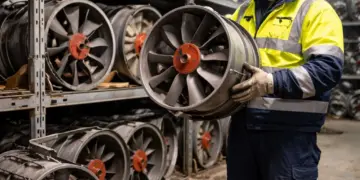
One of the most significant shifts involves removing the structural barriers that previously governed the design of petroleum tank wagons. By allowing oil companies to procure or lease specialized wagons directly, the Railways aims to improve logistics planning and lower overall transportation costs. Minister Vaishnaw highlighted that this move will encourage the movement of petroleum products via rail, which is safer and more environmentally friendly. By shifting from road to rail, the industry can drastically reduce carbon emissions and minimize risks such as product adulteration and transit losses. The Research Designs and Standards Organisation (RDSO) will play a pivotal role by prototyping and safety-certifying these new industry-led wagon designs.
Strengthening Logistics and Infrastructure
Beyond petroleum, the reforms target the broader logistics sector by streamlining the containerized transportation of essential goods, including fly ash, fertilizers, foodgrains, flour, and pulses. This is expected to improve handling efficiency and reduce contamination during transit.
To further boost private participation, the Ministry has simplified the licensing framework for Container Train Operators. By moving to a single, all-India license system and abolishing renewal fees after two decades, the Railways is creating a more predictable environment for investors. Additionally, the introduction of the Rail Bhoomi Portal is a strategic step toward accelerating project execution. By cutting land acquisition time by 30-40%, the Railways ensures that critical infrastructure projects stay on schedule, while the new contractor norms—requiring skill certification and performance security—ensure that only high-quality, reliable partners contribute to the growth of the Indian rail network.