







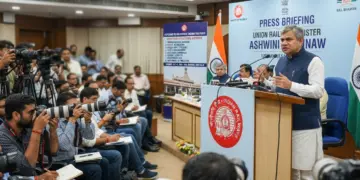
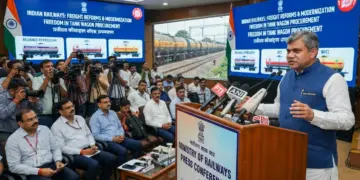


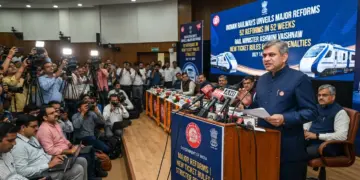



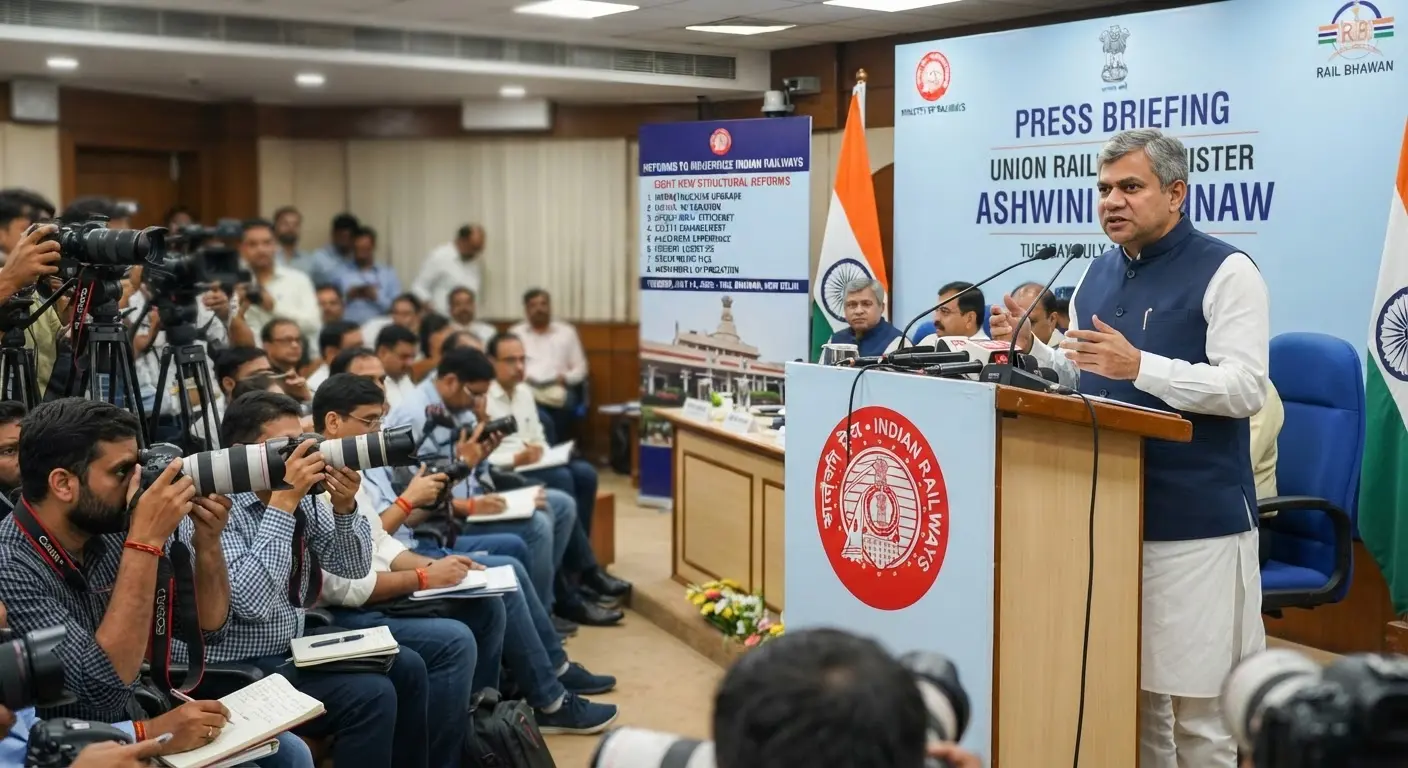

Union Railway Minister Ashwini Vaishnaw announced a significant set of eight structural reforms on Tuesday, July 14, 2026, during a press briefing at Rail Bhawan in New Delhi. These measures are part of the ambitious “52 Reforms in 52 Weeks” initiative, bringing the total number of implemented changes to 17. The reforms focus on enhancing efficiency, streamlining project execution, and upgrading freight logistics.
Key highlights of the new railway reforms include:
• New construction mandates requiring a 10% performance security upfront from contractors.
• Stricter eligibility criteria for bidders to ensure accountability and project quality.
• Introduction of a mandatory skill certification framework for infrastructure workers.
• Opening of wagon design policy to private industry players for enhanced innovation.
• Implementation of a single Pan-India Container Train Operator license with a ₹25 crore fee.
• Rationalization of freight tariffs for fertilizers and goods to a per-tonne, per-kilometer model.
• Launch of the Rail Bhoomi digital platform to accelerate land acquisition by 30-40%.
Strengthening Infrastructure and Construction
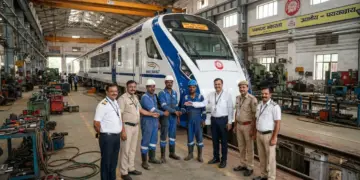
To ensure better project delivery, Reform 14 mandates contractors to provide a 10% performance security upfront, replacing the old system of deductions from running bills. Furthermore, the ministry has tightened eligibility, restricting participation to firms with pending litigation not exceeding 50% of their net worth. Contractors are now also required to hold All Risk and Professional Indemnity insurance. To ensure long-term quality, a new skill certification program for welders, plumbers, and masons will be rolled out across all projects within 24 months.
Innovation and Freight Logistics
Indian Railways is actively fostering private sector participation by allowing private entities to propose new wagon designs. The Research Designs and Standards Organisation (RDSO) will oversee the evaluation and safety certification process.
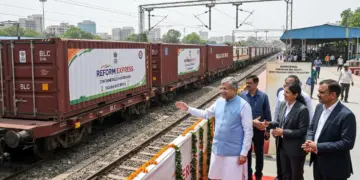
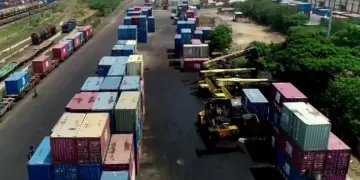
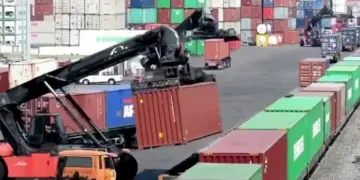
In a major shift for freight, the previous four-category container licensing system has been replaced by a single, unified Pan-India Container Train Operator (CTO) license, carrying a uniform registration fee of ₹25 crore. Additionally, the complex freight structure, which previously spanned 50 slabs, has been simplified to a straightforward per-tonne, per-kilometer pricing model. This move extends to the transportation of essential goods like food grains, pulses, and petroleum products. Finally, the introduction of the Rail Bhoomi digital platform is expected to reduce land acquisition timelines by 30-40%, ensuring that critical infrastructure projects face fewer delays and reach completion faster.