




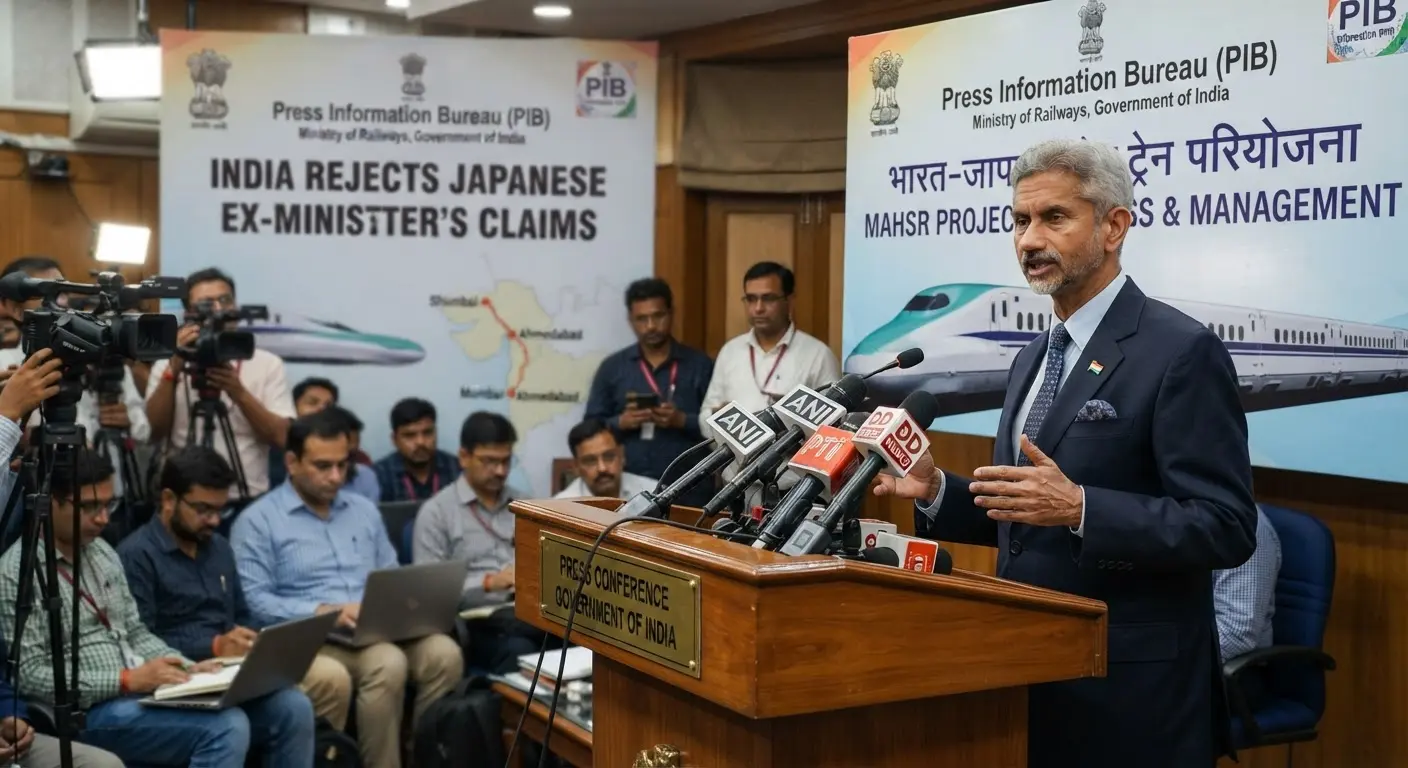

The Indian government has officially rejected recent criticisms leveled by former Japanese Justice Minister Hideki Makihara concerning the management and progress of the ₹1.08 lakh crore Mumbai-Ahmedabad High-Speed Rail (MAHSR) project. While reports regarding potential structural concerns have circulated online, the Ministry of External Affairs (MEA) has clarified that these allegations do not reflect the reality of the ongoing bilateral cooperation.
- The MEA stated that the comments were a personal opinion and at variance with established facts.
- India clarified that no formal offer for Japanese signalling equipment was received, justifying the move to ETCS Level-2.
- Construction of the 508-kilometer corridor is progressing rapidly, with 80 percent of the work already complete.
- The first operational section between Surat and Bilimora is on track for an August 15, 2027 opening.
Clarifying the Signalling Technology Debate
A central point of the recent controversy involved the choice of signalling technology for the Shinkansen-based corridor. Makihara had alleged that India’s decision to adopt the European Train Control System Level-2 (ETCS Level-2) was an act of exclusion towards Japanese firms that favor the DS-ATC system. However, the MEA has firmly countered this, noting that no Japanese offer was received for the signalling equipment. The selection of the ETCS Level-2 system was made based on international specifications to ensure the project meets global standards while maintaining operational efficiency.
Project Progress and Future Milestones
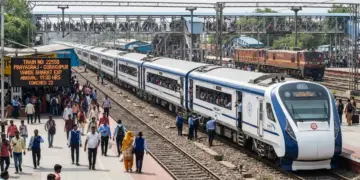
Despite the external criticism, the National High Speed Rail Corporation Limited (NHSRCL) remains focused on the ground reality. Officials have confirmed that construction is moving at a steady pace, with nearly 80 percent of the corridor infrastructure already completed. The project represents a massive leap in Indian rail infrastructure, bridging the distance between Mumbai and Ahmedabad with world-class high-speed connectivity.
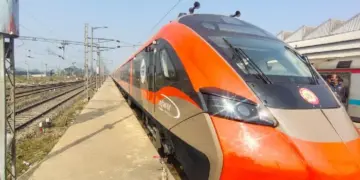
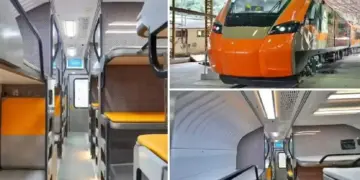
India is currently preparing to launch its own indigenous high-speed trainsets to begin services on the corridor. Looking further ahead, the introduction of Japan’s advanced E10 Shinkansen trains is anticipated by the early 2030s. With the Surat-Bilimora section scheduled to open by August 15, 2027, the government continues to signal its strong commitment to completing this landmark project in collaboration with its Japanese partners, ensuring transparency and technical excellence throughout the development process.