
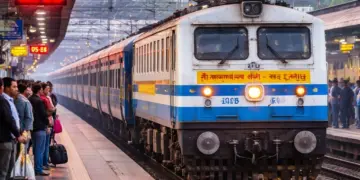
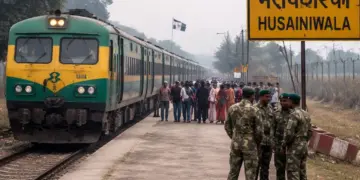
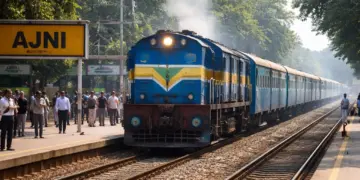




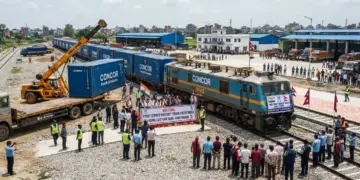
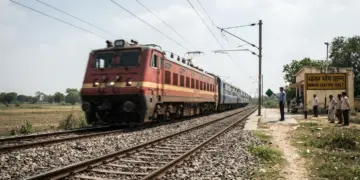
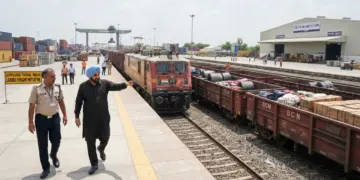



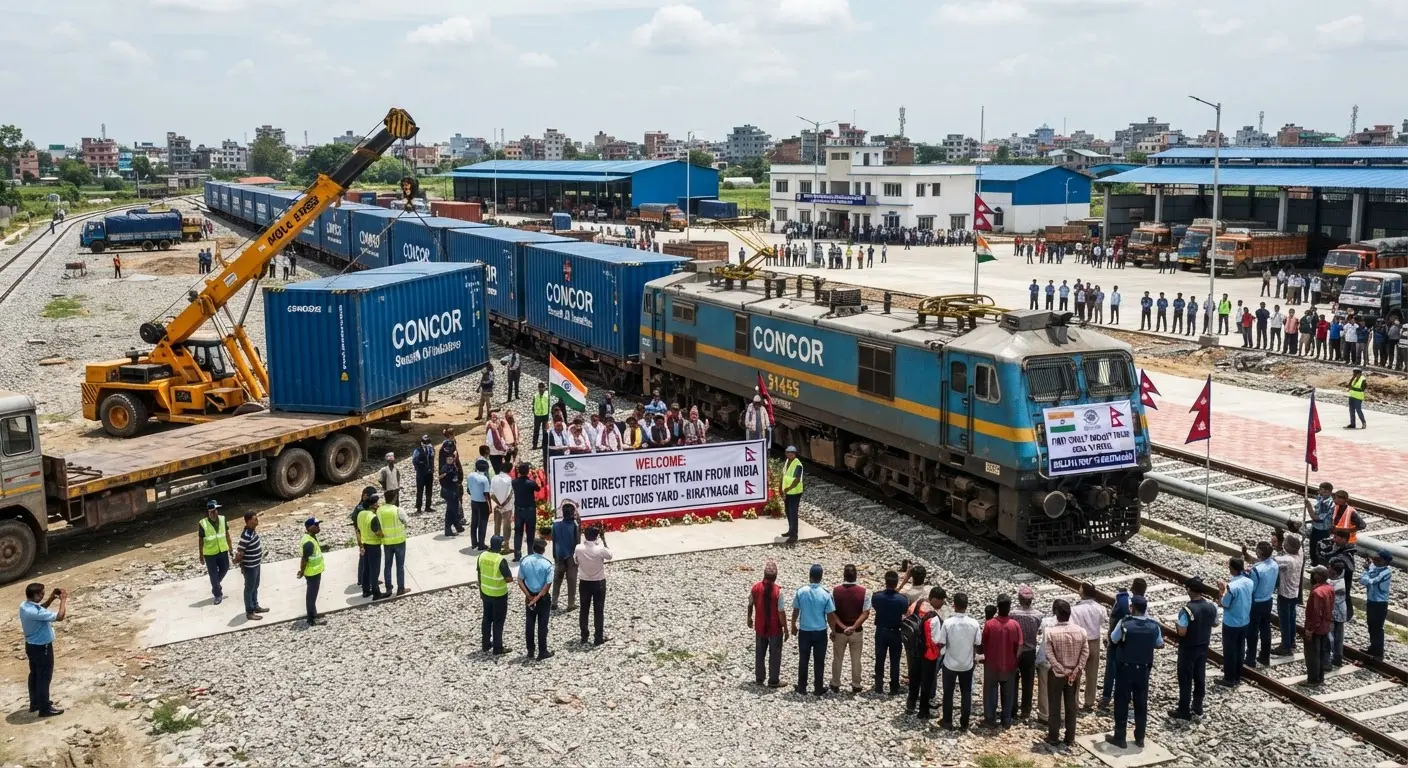

In a major boost to cross-border logistics, the first direct commercial freight train from India arrived at the Nepal Customs Yard in Biratnagar on July 20, 2026. This milestone marks the full operationalization of the rail link, streamlining trade between the two nations by bypassing previous logistical bottlenecks.
Key highlights of this development include:
• The train carried **40 containers of canola grains** originating from Kolkata Port.
• The service is operated by the **Container Corporation of India Limited (CONCOR)**.
• The goods are destined for **Swastik Oil Industries** in Nepal.
• The service utilizes the **Jogbani-Biratnagar broad-gauge rail link**.
• Businesses anticipate a **20-30% reduction in transportation costs**.
Strengthening India-Nepal Trade Framework
This direct movement follows the **Letter of Exchange (LoE) signed on November 13, 2025**, which amended the Protocol to the India-Nepal Treaty of Transit. This agreement allows for the seamless rail movement of both containerized and bulk cargo from India’s major ports, including Kolkata and Visakhapatnam, directly to designated rail points in Nepal. Furthermore, in November 2025, the **Central Board of Indirect Taxes and Customs (CBIC)** expanded the scope of the **Electronic Cargo Tracking System (ECTS)**, ensuring a secure and transparent transit process.
The infrastructure supporting this route, the **Jogbani-Biratnagar broad-gauge link**, was a landmark project inaugurated on **June 1, 2023**, by Prime Minister Narendra Modi and former Nepal Prime Minister Pushpa Kamal Dahal ‘Prachanda’.
Efficiency and Future Outlook
Umesh Shrestha, Chief Customs Officer at Biratnagar, confirmed that the **Integrated Check Post (ICP)** is now fully equipped to handle regular cargo services, effectively eliminating the time-consuming transhipment hurdles that previously hampered border trade.
For the local industry, this is a game-changer. Industrialists Nandu Rathi and Suyash Pyakurel noted that the rail link will significantly improve delivery timelines for essential commodities. Looking ahead, Nepali importers are already in active talks with CONCOR to begin the transport of **fertilizers and sponge iron** via this route. This development reinforces India’s role as a vital transit partner and signals a new era of economic connectivity for the region.