
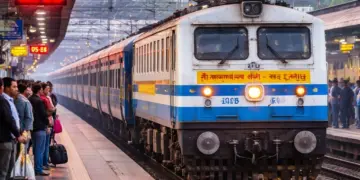

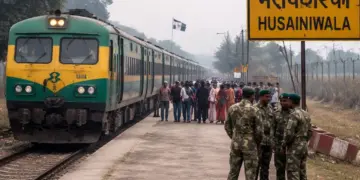
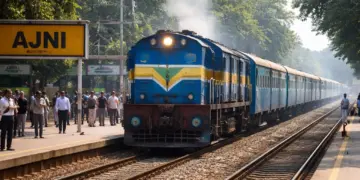



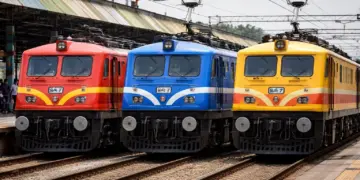
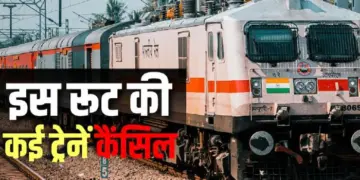



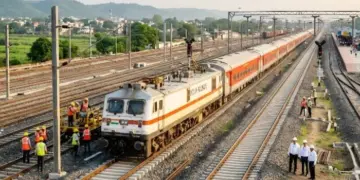

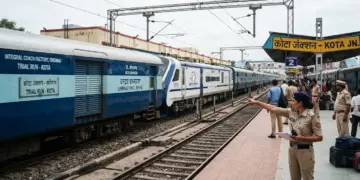





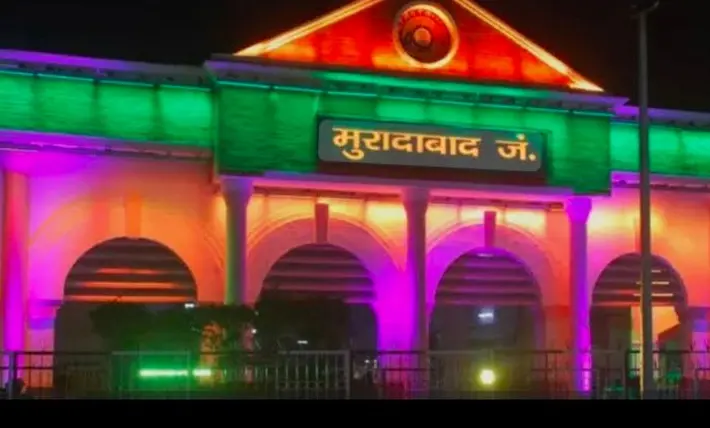

The Northeast Frontier Railway (NFR) has announced the diversion of seven long-distance trains, including the premium Rajdhani and Avadh Assam Express services, operating via the Moradabad route. This operational adjustment follows severe waterlogging at the Simalguri yard caused by the rising water levels of the Dechow River. The diversions will remain in effect for four days, starting from July 28 to July 31, 2026, to ensure the safety of passengers and railway infrastructure.
- Duration of impact: July 28 to July 31, 2026.
- Reason: Severe flooding and waterlogging at Simalguri yard caused by the Dechow River.
- Affected services: Major long-distance trains including Rajdhani and Avadh Assam Express.
- Passenger advisory: Check real-time updates via NTES, Rail Madad, or the 139 helpline.
Recurring Challenges at Simalguri
This is not the first time the Simalguri area has faced such disruptions this monsoon season. The region previously experienced significant flooding on July 20 and July 23, which caused major operational halts on the Simalguri-Namtiyali and Simalguri-Selengahat sections. Senior Divisional Commercial Manager Mahesh Yadav confirmed that these diversions are a temporary safety measure, as the tracks remain vulnerable to the ongoing weather conditions in the region.
Details of Diverted Trains
The diversions affect both inbound and outbound traffic. Trains heading towards Dibrugarh, including the 20503 Dibrugarh-New Delhi Rajdhani Express (July 28-30), 15903 Dibrugarh-Chandigarh Express (July 31), 15909 Dibrugarh-Lalgarh Avadh Assam Express (July 28-31), and 15933 New Tinsukia-Amritsar Express (July 28), are being rerouted via the Dibrugarh-North Lakhimpur-Rangapara North-Rangiya line.
Conversely, the return services, including the 15910 Lalgarh-Dibrugarh Express (July 28-29), 15904 Chandigarh-Dibrugarh Express (July 29), and 20504 New Delhi-Dibrugarh Rajdhani Express (July 28-29), are being diverted via the Rangiya-Rangapara North-North Lakhimpur-Dibrugarh route.
Railway authorities have stated that they cannot provide an estimated time for the restoration of normal services until the water levels recede significantly. This will allow engineering teams to conduct a thorough assessment of potential track damage. Passengers are strongly advised to monitor their train status via the NTES website, Rail Madad, the Rail One App, or by calling 139, as travel times are expected to be longer than usual due to the diverted paths.