
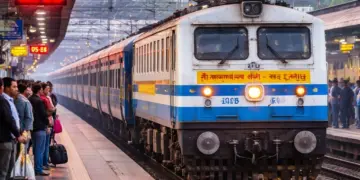

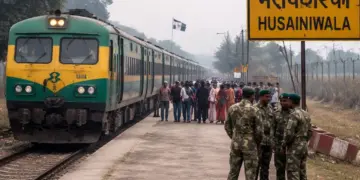
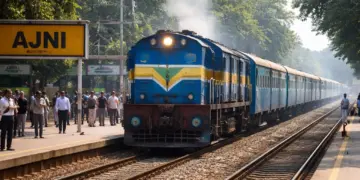






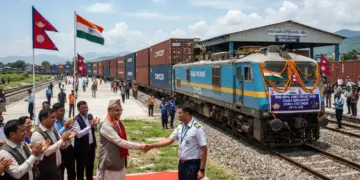



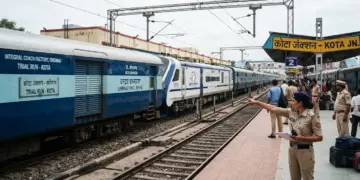


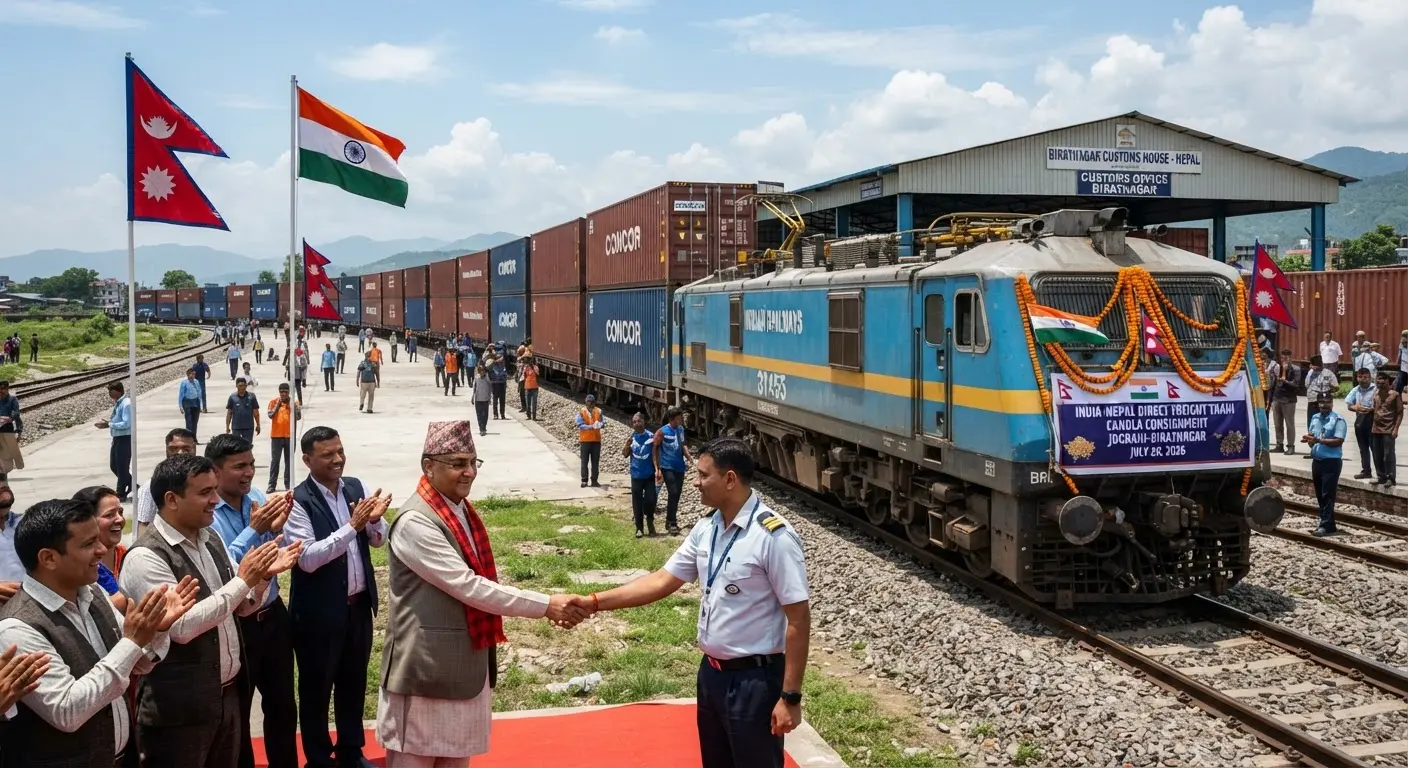

In a major stride for cross-border trade, the first direct commercial container freight train connecting India and Nepal successfully reached the Biratnagar Customs Yard on July 20, 2026. This landmark journey, which commenced on July 17, 2026, marks the official operationalization of the revised India-Nepal Rail Transit Protocol, streamlining logistics between the two nations.
Key highlights of this development include:
• The 40-wagon train transported a consignment of Australian canola.
• Direct rail movement is now possible from Kolkata Port to Biratnagar, eliminating the need for border transshipment.
• The service operates under an amended protocol signed in November 2025.
• Rail access has expanded to include Biratnagar and Nautanwa in addition to the existing Birgunj ICP.
A New Era for Cross-Border Logistics
The successful arrival of this freight train signifies a transformative shift in how goods are transported across the border. By removing the requirement to switch containers at the transit point, the new framework significantly reduces transit time and cargo handling efforts. This direct rail movement is expected to substantially lower logistics costs for businesses operating between India and Nepal, making trade more competitive and reliable.
Expanding the Rail Network
This initiative isn’t limited to a single route. The revised protocol opens up several critical corridors, including Kolkata-Jogbani, Kolkata-Nautanwa (Sunauli), and Visakhapatnam-Nautanwa (Sunauli). Furthermore, the protocol now permits the import of all types of goods, covering both containerized and bulk cargo. This flexibility is a massive boost for industrial supply chains that rely on efficient rail movement.
Kapinjal Kishore Sharma, CPRO of Northeast Frontier Railway, emphasized that this seamless connectivity is designed to make trade between the two neighbors faster and more efficient. The broad-gauge link between Jogbani and Biratnagar, which serves as the backbone for this service, was originally inaugurated in June 2023 by Prime Minister Narendra Modi and his Nepalese counterpart. By leveraging this infrastructure, India and Nepal are setting a new standard for regional rail connectivity that promises to benefit traders and consumers alike.