
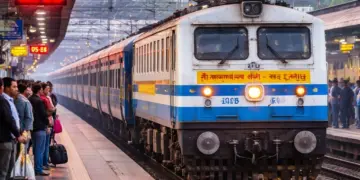


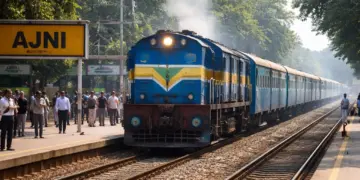




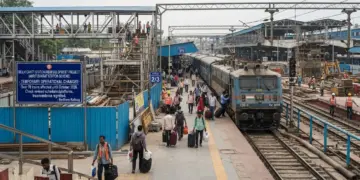









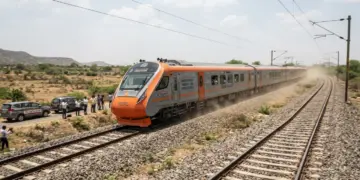

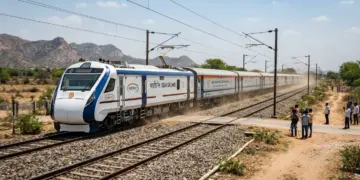
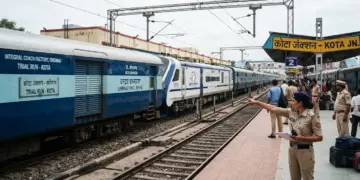


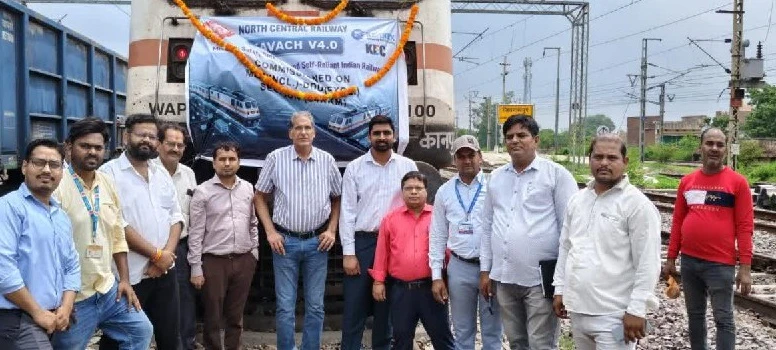

The Indian Railways is significantly upgrading the 636-kilometer Delhi-Howrah rail corridor by implementing the advanced ‘digital driver’ technology. This initiative, built upon the indigenous Kavach Automatic Train Protection (ATP) system, is designed to enhance safety standards and allow for higher operational speeds across one of the nation’s most congested rail routes. Key highlights of this infrastructure upgrade include:
- Kavach 4.0 system, certified to Safety Integrity Level-4 (SIL-4), acts as a digital assistant for loco pilots.
- The system automatically applies brakes if a loco pilot fails to respond to speed restrictions or signals.
- Enhanced performance in adverse weather conditions like fog, ensuring reliable operations at speeds up to 160 kmph.
- A continuous 636-kilometer Kavach-enabled stretch now exists from Chipyana to Pt. Deen Dayal Upadhyay Junction.
Understanding the Digital Driver Technology
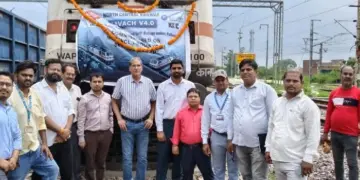
On July 31, 2026, the North Central Railway (NCR) achieved a major milestone by commissioning Kavach 4.0 on the 64-kilometer segment between Mirzapur and Deen Dayal Upadhyay (DDU) Junction. This integration is part of a broader push to modernize India’s high-density corridors. According to data from the Press Information Bureau (PIB) released on July 29, 2026, Kavach 4.0 is now operational across 2,569 route kilometers, with 1,146 route kilometers specifically covering the Delhi-Howrah route.
Massive Infrastructure and Training Scale
The deployment of this technology is a monumental engineering feat. To support the Kavach ecosystem, Indian Railways has laid 11,253 kilometers of optical fiber cable and installed 1,668 telecom towers nationwide. Furthermore, 958 station data centers have been established to manage real-time train movement data.
Beyond the hardware, the human element remains a top priority. Indian Railways has successfully completed training for over 94,000 personnel, including technicians and engineers, alongside 57,000 loco pilots and assistant loco pilots. Since its adoption as the National ATP system in July 2020, Kavach has evolved rapidly, with the current 4.0 version receiving approval from the Research Designs & Standards Organisation (RDSO) on July 16, 2024. This transition marks a new era in passenger safety and operational efficiency for the Delhi-Howrah corridor.