
















Indian Railways has officially announced a major revision to its penalty structure for passengers traveling without a valid ticket. Starting June 20, 2026, the standard fine for ticketless travel will be doubled to discourage unauthorized travel across the network. This move is designed to ensure that passengers adhere to ticketing norms and contribute to the system’s operational efficiency.
Key highlights of the new penalty structure include:
- New Penalty Amount: The flat penalty for ticketless travel is increased from ₹250 to ₹500.
- Total Liability: The total amount payable will be the ₹500 penalty plus the actual fare from the boarding station to the destination.
- Effective Date: These new rules will come into force starting June 20, 2026.
- Financial Impact: Depending on the distance and class of travel, the total cost for caught passengers could easily reach ₹700 to ₹800 or more.
Stricter Measures to Curb Ticketless Travel
For years, Indian Railways has struggled with the issue of passengers boarding trains without valid tickets, which often leads to overcrowding and inconvenience for genuine travelers. By increasing the penalty, the national transporter aims to make it financially unviable for individuals to attempt to bypass the ticketing system. Previously, the lower penalty of ₹250 meant that some passengers were willing to take the risk, but the new structure significantly raises the stakes.
What Passengers Need to Know
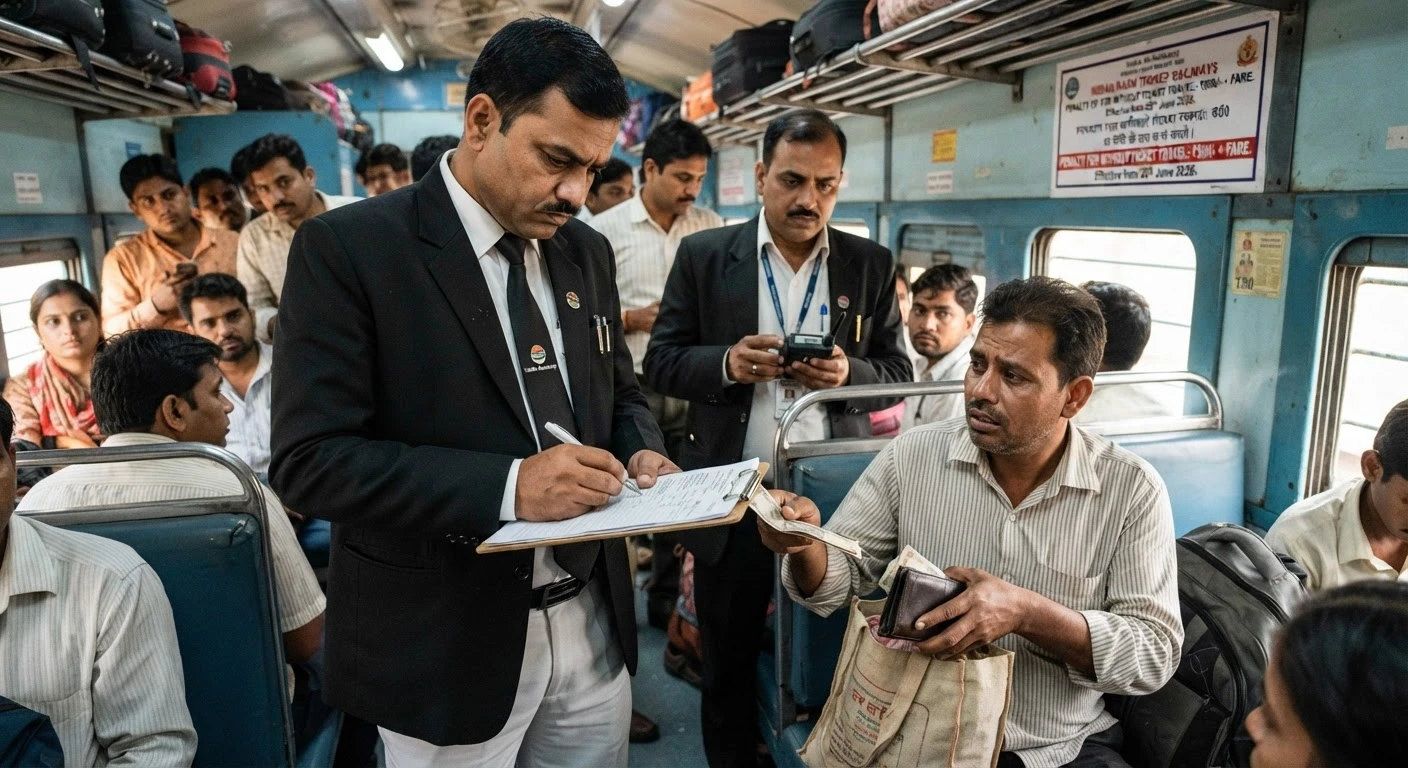
Under the revised regulations, the penalty is not a standalone figure. When a Ticket Examiner (TTE) catches a passenger without a ticket, the passenger will be charged the full fare from the origin station to the destination, in addition to the newly mandated ₹500 penalty.
Railway officials have strongly advised all passengers to ensure they have a valid ticket or a reserved seat before boarding any train. Travelers are encouraged to book their tickets through the IRCTC website, mobile app, or at station counters well in advance to avoid these substantial financial penalties. This policy shift is part of a broader effort to improve passenger experience and ensure that revenue collection remains robust to support the ongoing development of railway infrastructure across the country.