

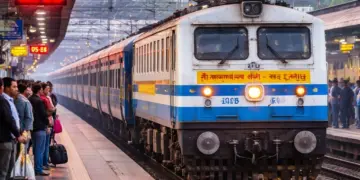

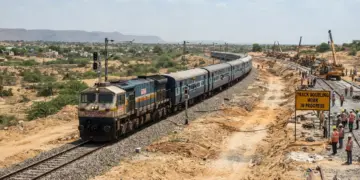
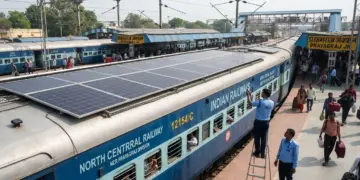





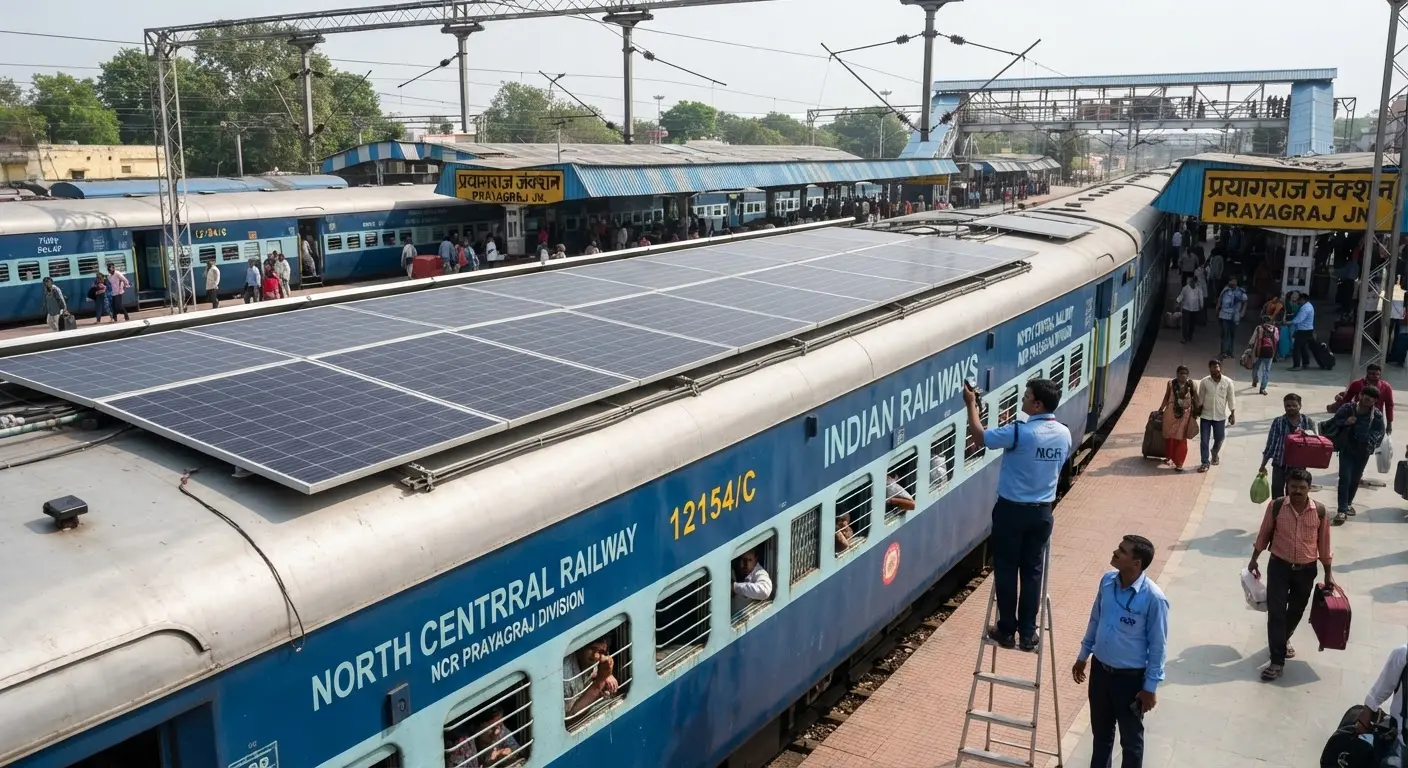

Indian Railways has taken a significant step toward greener travel by successfully deploying a 7-kilowatt peak (kWp) rooftop solar system on a passenger coach. Developed by the North Central Railway (NCR) in Prayagraj, this pilot project is designed to power essential onboard amenities using renewable energy. By reducing the reliance on traditional, fossil-fuel-dependent power sources, the national transporter aims to enhance sustainability and operational efficiency.
Key highlights of the solar-powered coach project include:
- A 7kWp solar capacity installed directly on the coach roof.
- Projected annual generation of 13,400 units of electricity per coach.
- Estimated annual savings of ₹2.80 lakh per coach in energy costs.
- Powers essential onboard features like lights, fans, and mobile charging points.
- Supports the national goal of becoming a Net Zero Carbon Emission Railway by 2030.
Reducing Dependence on Conventional Power
Traditionally, passenger coaches rely on axle-driven systems to power their electrical internal needs. By integrating solar technology, the railways can significantly decrease the load on these systems, leading to lower maintenance requirements and reduced fuel consumption. The current pilot project serves as a testing ground to evaluate how these panels perform under diverse weather conditions and operational demands across the Indian rail network.
A Greener Future for Indian Rail
This initiative is a core component of the broader sustainability roadmap set by the Ministry of Railways. As part of its commitment to environmental stewardship, the organization is aggressively pursuing solar and wind energy projects to minimize its carbon footprint. According to official data from the Press Information Bureau (PIB), the success of these trials is critical; if the results remain positive, Indian Railways plans to scale this solar integration across more trains in its fleet. This move not only promises long-term financial savings but also marks a major milestone in the modernization of India’s massive rail network, moving it toward cleaner, more sustainable operations for millions of daily passengers.