




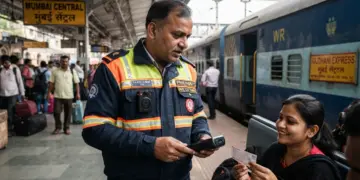





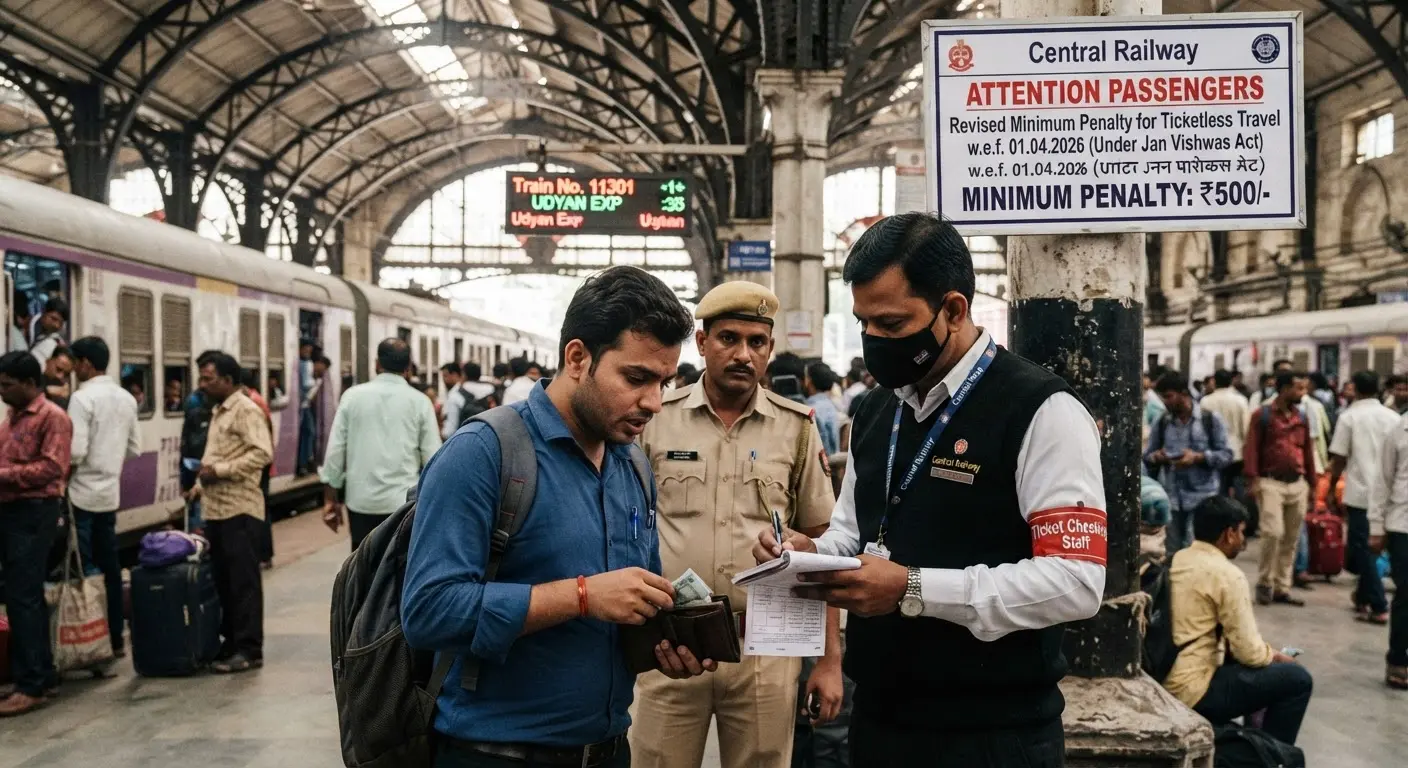

Central Railway has officially ramped up its enforcement against ticketless travel following the implementation of the Jan Vishwas (Amendment of Provisions) Act, 2026. This legislative change has effectively doubled the minimum penalty for traveling without a valid ticket from ₹250 to ₹500. Passengers found without proper authority are now subject to these stricter charges, and failure to pay can result in prosecution, additional fines, or even up to six months of imprisonment.
Key highlights of the recent enforcement drive include:
- The minimum penalty for ticketless travel has been increased to ₹500.
- Central Railway collected ₹20.10 crore in penalties during July 2026 alone.
- A total of 2.60 lakh passengers were penalized in July, compared to ₹16 crore collected in July 2025.
- Between April and July 2026, the zone recovered ₹121.31 crore from 15.46 lakh cases.
- The Mumbai Division remains the highest contributor with ₹49.50 crore in collected penalties.
Enhanced Enforcement and Revenue Growth
The surge in revenue highlights the effectiveness of the intensified checks being conducted by railway authorities. The Ministry of Railways has been proactive in deploying various strategies, including ambush, fortress, and mega-drives, across the entire network to ensure strict compliance. These measures are designed not only to boost revenue but also to ensure that the railway system remains orderly for genuine passengers.
Stricter Rules for All Passengers
Beyond the basic ticketless travel penalty, the authorities have clarified that the revised Railway Act brings a broader scope to penal actions. Penalties for other offenses, such as unauthorized entry into reserved coaches, have also been substantially increased. Railway officials have urged passengers to always carry a valid ticket and travel with proper authorization to avoid legal complications. The move is part of a larger national initiative to improve the efficiency and financial discipline of the Indian Railways network, ensuring that the burden of travel costs is shared equitably among all commuters.