

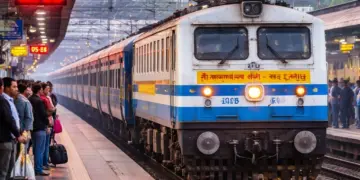





The Hardoi railway administration has announced a major infrastructure initiative aimed at streamlining traffic flow by automating six key railway level crossings along the busy Hardoi-Lucknow rail section. By transitioning to an automated system, the railway intends to ensure that these gates remain open to road traffic for the maximum possible duration, closing only strictly during the passage of trains. This move is designed to eliminate the long, unpredictable waiting periods that have historically frustrated local commuters and motorists in the region.
- Six specific level crossings on the Hardoi-Lucknow route are being upgraded to an automated system.
- The initiative aims to drastically reduce waiting times for local commuters and road traffic.
- Emergency services, including ambulances, will benefit from improved transit times.
- The system ensures gates close only when a train is approaching, synchronizing closures with precise train schedules.
Targeted Crossings for Upgrade
The railway authorities have identified specific locations that will undergo this technological shift to improve regional connectivity. The identified crossings include crossing number 246 between Sandila and Rahimabad, and crossing number 253 between Dalelnagar and Balamau. Furthermore, the plan covers crossing numbers 262, 264, and 267 located between Baghauli and Balamau/Masit, as well as crossing number 291 situated between Todarpur and Behta Gokul.
Improving Regional Connectivity
For residents of Hardoi and the surrounding rural areas, these railway crossings have long been a source of significant traffic congestion. By modernizing these barriers, the railway administration is addressing a critical pain point for local infrastructure. Beyond daily commuters, the change is expected to provide vital relief to emergency medical services, as ambulances will no longer be trapped at closed gates for extended periods while waiting for trains to pass.
This project is part of a broader commitment by the Indian Railways to enhance operational efficiency and passenger-centric infrastructure. By ensuring that gate operations are synchronized precisely with real-time train schedules, the administration hopes to create a more seamless transit experience, effectively balancing the needs of rail traffic with the movement of road vehicles in the Hardoi region.