


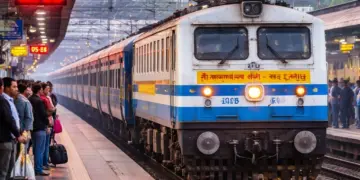
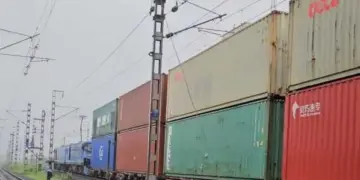

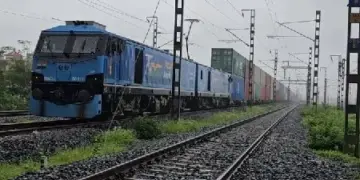


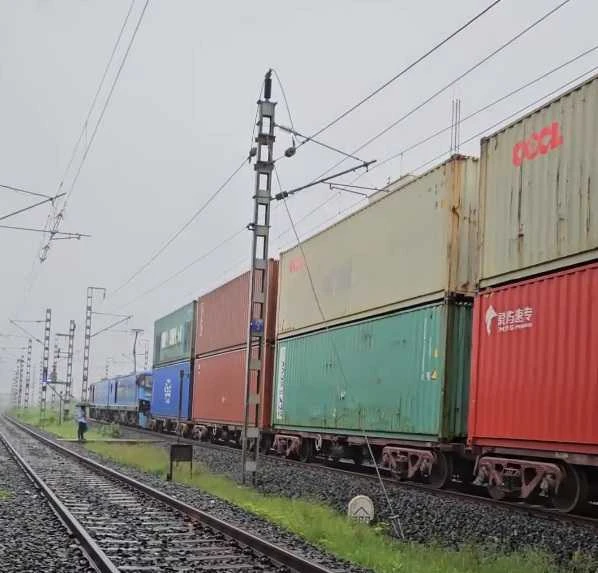

Indian Railways achieved a major milestone in sustainable freight transportation on August 21, 2026, by successfully operating its first long-haul double-stack container train from the Jawaharlal Nehru Port Trust (JNPT) in Mumbai to the Varnama terminal in the Vadodara Division of Gujarat. This landmark run underscores the national transporter’s growing capability in handling high-capacity cargo operations smoothly.
The service departed at 7:00 PM on August 21 and traversed along the Western Dedicated Freight Corridor (WDFC), covering a distance of approximately 422 kilometers. Measuring 1.3 kilometers in length, this massive freight movement consisted of two double-stack rakes joined together, carrying an impressive total of 360 TEUs (Twenty-foot Equivalent Units) of containers, with each individual rake transporting 180 TEUs. The leading rake was hauled by locomotive number 60311 with a weight of 1,817 tonnes, while the trailing rake was powered by locomotive number 24690 and weighed 2,105 tonnes. Both rakes carried loads of 45+1 containers and were entirely electrically hauled to reinforce green logistics.
Union Railway Minister Ashwini Vaishnaw celebrated this achievement by sharing a video of the operation on social media. This initiative forms a core part of the broader strategy to significantly enhance freight capacity and overall logistics efficiency across the country.
Boosting Green Logistics and Economic Efficiency
By successfully shifting heavy cargo movement from road to rail, Indian Railways aims to actively reduce road congestion, lower diesel consumption, and decrease transport-related emissions. Official figures indicate that rail freight is approximately 45 percent more cost-effective per tonne-kilometer compared to traditional road transport. Furthermore, a single freight train of this scale is capable of replacing more than 300 trucks on the highway. This successful operational milestone is anticipated to lead to much faster container evacuation from major ports, reduced terminal congestion, and optimized utilization of the expanding rail network.