




























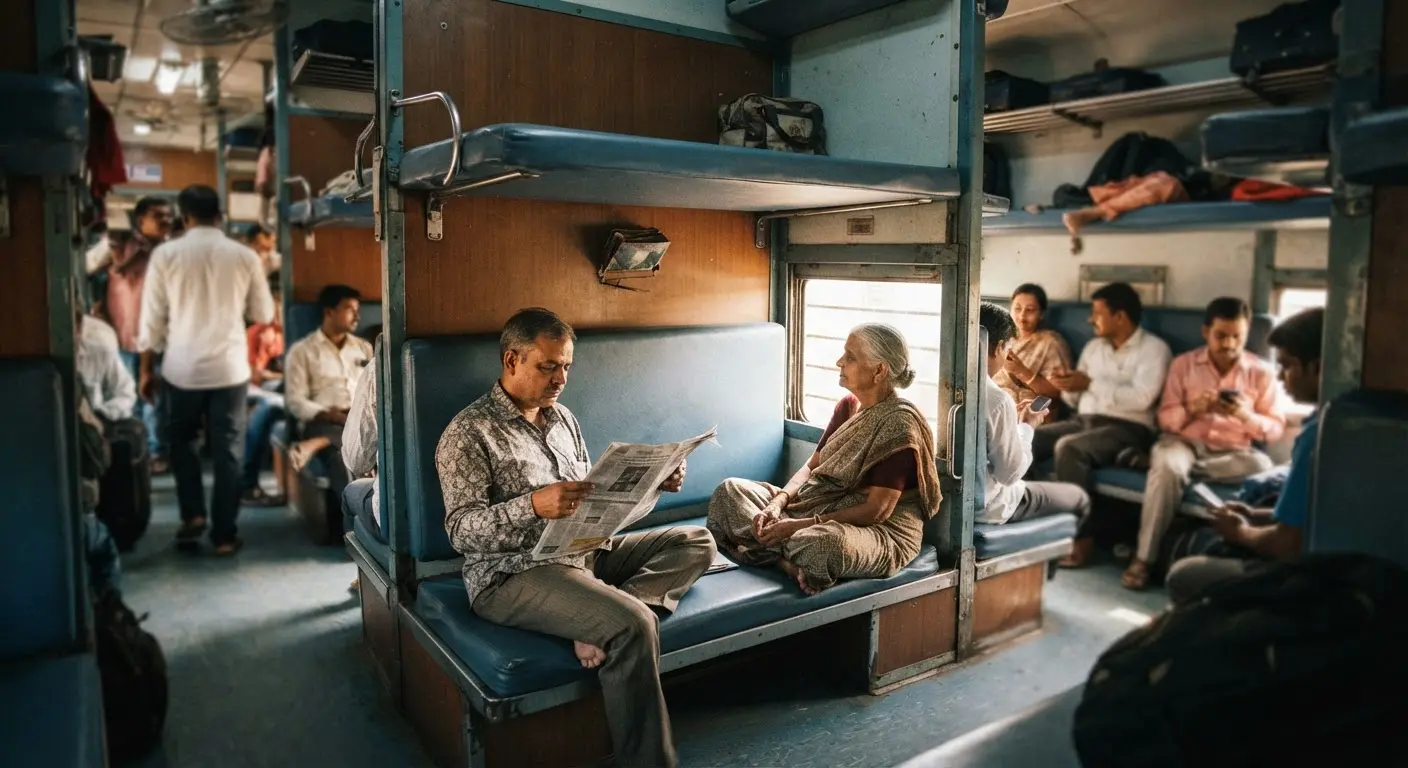

Indian Railways has reiterated its established regulations concerning the use of side lower and side upper berths in sleeper coaches to ensure equitable space sharing among passengers. Travelling by train often comes with questions about space sharing, especially regarding side berths in sleeper and AC coaches. Official guidelines clearly state that the period from 6:00 AM to 10:00 PM is designated for daytime seating, during which passengers with side upper berths are entitled to share the side lower berth for sitting. Conversely, the side lower berth is not considered the exclusive property of the assigned occupant during these hours.
Understanding Daytime and Nighttime Berth Rules
These rules, which also apply to Reservation Against Cancellation (RAC) passengers, mandate that during nighttime hours—specifically from 10:00 PM to 6:00 AM—passengers must occupy only their specifically assigned berths for sleeping. During these night hours, side upper berth passengers have no claim to the side lower berth. While regular upper berths are generally treated as 24-hour sleeping spaces, the side upper berths are fixed, making them unsuitable for comfortable upright sitting during the day without sharing.
Origins and Enforcement of the Policy
These seating and sleeping timings were formally established through a commercial circular dated August 31, 2017, which amended Para 652 of the Indian Railways Commercial Manual Volume–I. These regulations have been consistently reaffirmed through railway advisories, including one issued by Southern Railway in March 2026, and remain central to passenger operations. The Railway Board and various zonal railways oversee these protocols, with Travelling Ticket Examiners (TTEs) empowered to mediate and resolve disputes arising from berth usage. While no new rule changes have been introduced recently, the policy remains a cornerstone of train travel etiquette. Furthermore, Indian Railways continues to maintain related provisions, such as automatic lower berth allotment for senior citizens, women over 45, and pregnant women, policies that have been active throughout late 2025 and into 2026.